
Collaborative Parental Control: Reimagining IPTV Safety through Social Trust
IPTV parental control: A collaborative model for the Social Web
This paper proposes a collaborative parental control model for IPTV that shifts filtering from broadcaster-defined ratings to social-based consumer filtering. It introduces a "Blocking Index" (BI) derived from collaborative tagging and trust relationships within a parenting social network.
TL;DR
The explosion of IPTV content has rendered traditional "one-size-fits-all" parental ratings obsolete. This paper introduces a collaborative model where parents delegate blocking decisions to a trustworthy social circle. By utilizing collaborative tagging and social trust metrics, the system calculates a personalized "Blocking Index" to filter content based on a family's unique values rather than generic broadcaster labels.
Problem & Motivation: The Subjectivity Gap
Current parental control systems face a fundamental dilemma: subjectivity. What one family considers "educational," another might find "objectionable."
The authors identify three fatal flaws in the current status quo:
- Rigidity: Broadcasters cannot possibly label content in a way that satisfies every cultural or moral nuance.
- Unrealism: Parents rarely trust third-party criteria entirely.
- Overload: With hundreds of channels, parents cannot pre-screen everything.
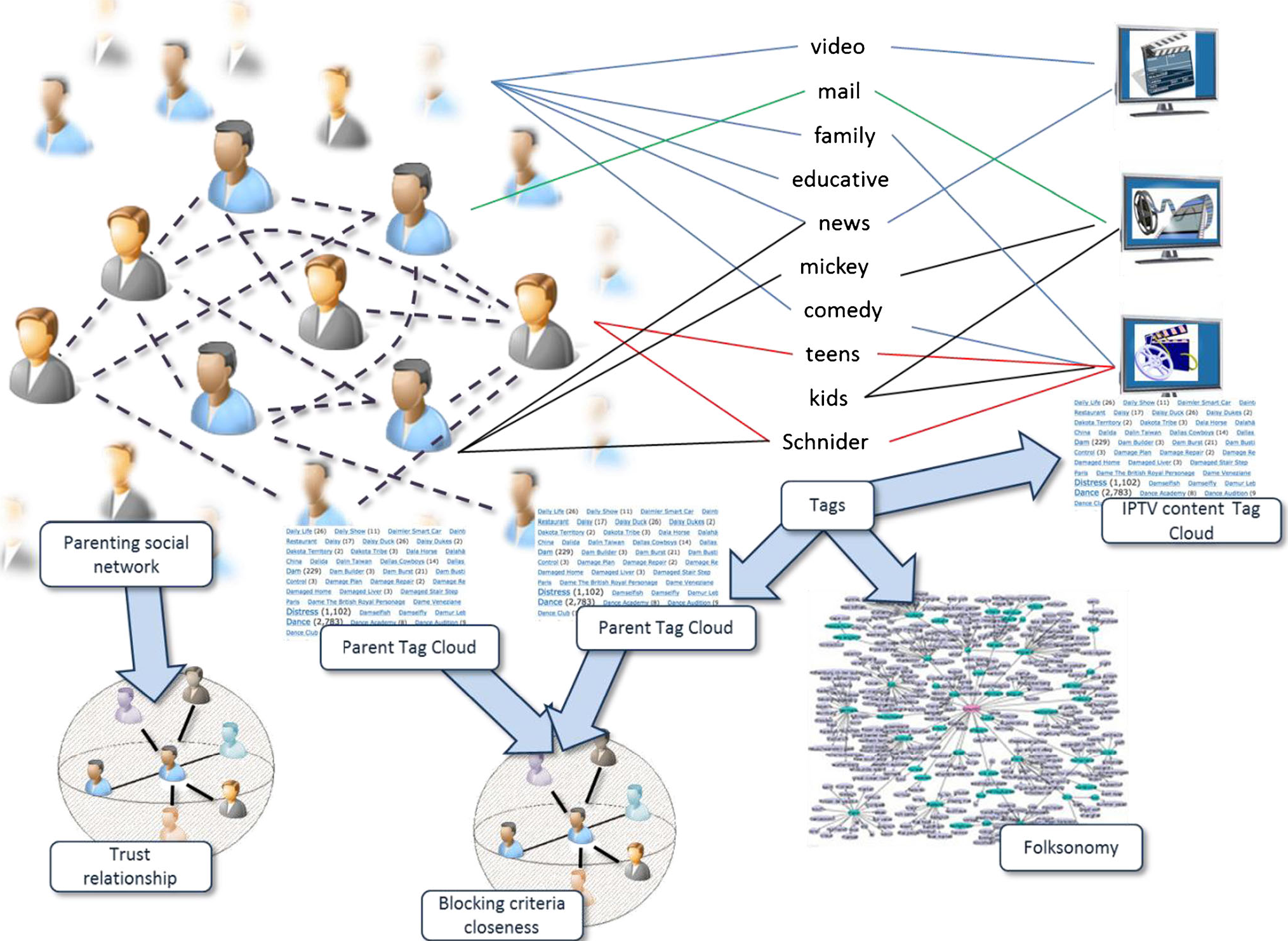
The insight here is to leverage the "Collective Intelligence" of the Social Web. If parents with similar values have already flagged a video, the system should proactively block it for like-minded families.
Methodology: The Three Pillars of Filtering
The researchers break down the decision-making process into three mathematical layers:
1. Content and Family "Tag Clouds"
Each program and each family is represented by a Tag Cloud.
- Content Tag (TC_c): A weighted vector of tags provided by both broadcasters and the community.
- User Tag (TC_u): A profile built from the tags of content that the parent has previously blocked.
2. Trust-Weighted Collaborative Filtering
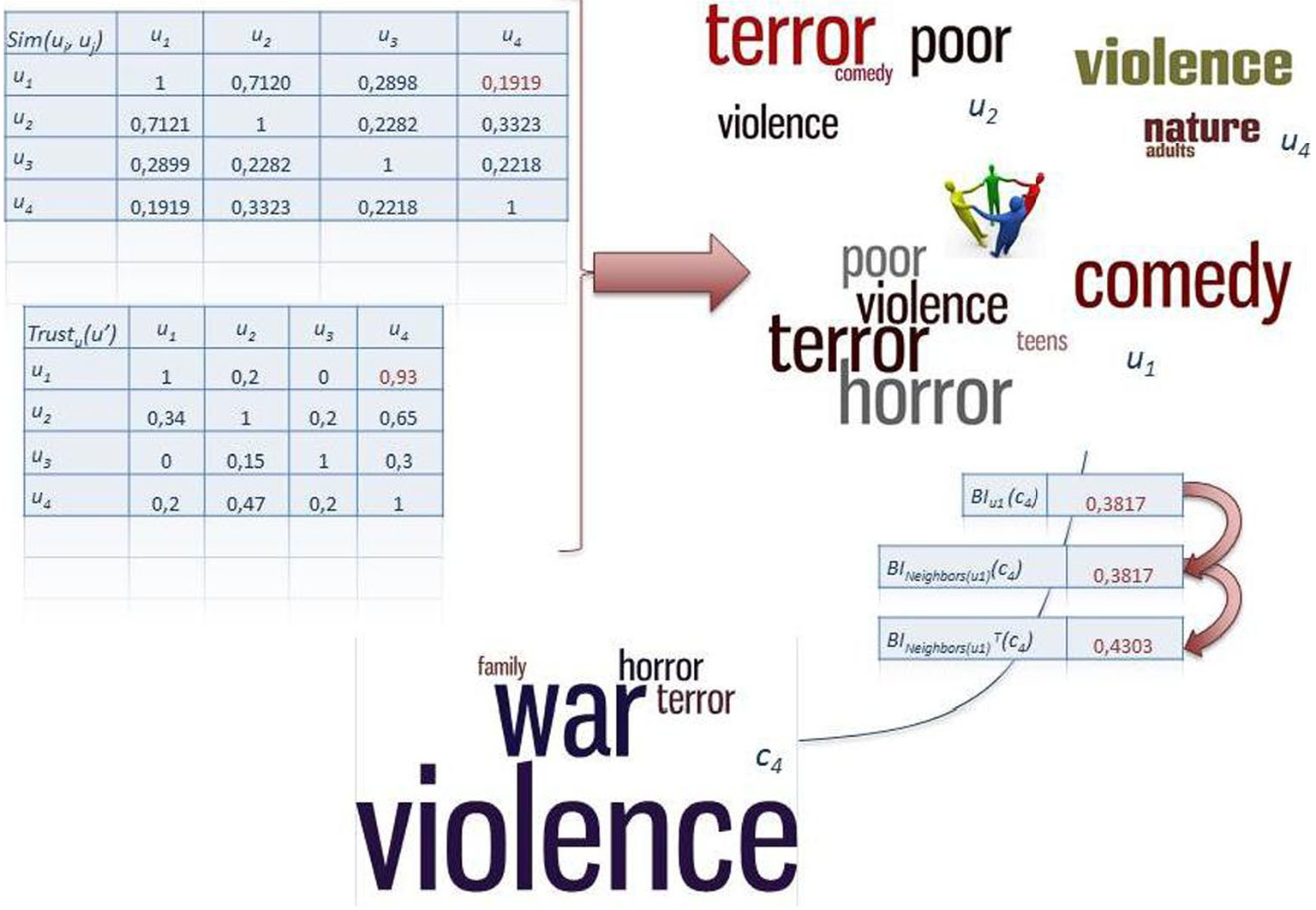
The system doesn't just look at who is similar; it looks at who is trusted. The BIT_Neighbors (Trust-based Blocking Index) ensures that if a highly-trusted friend blocks a show, that show is more likely to be blocked for you, even if your tag histories don't perfectly align yet.
3. FolkSim: Navigating the Folksonomy
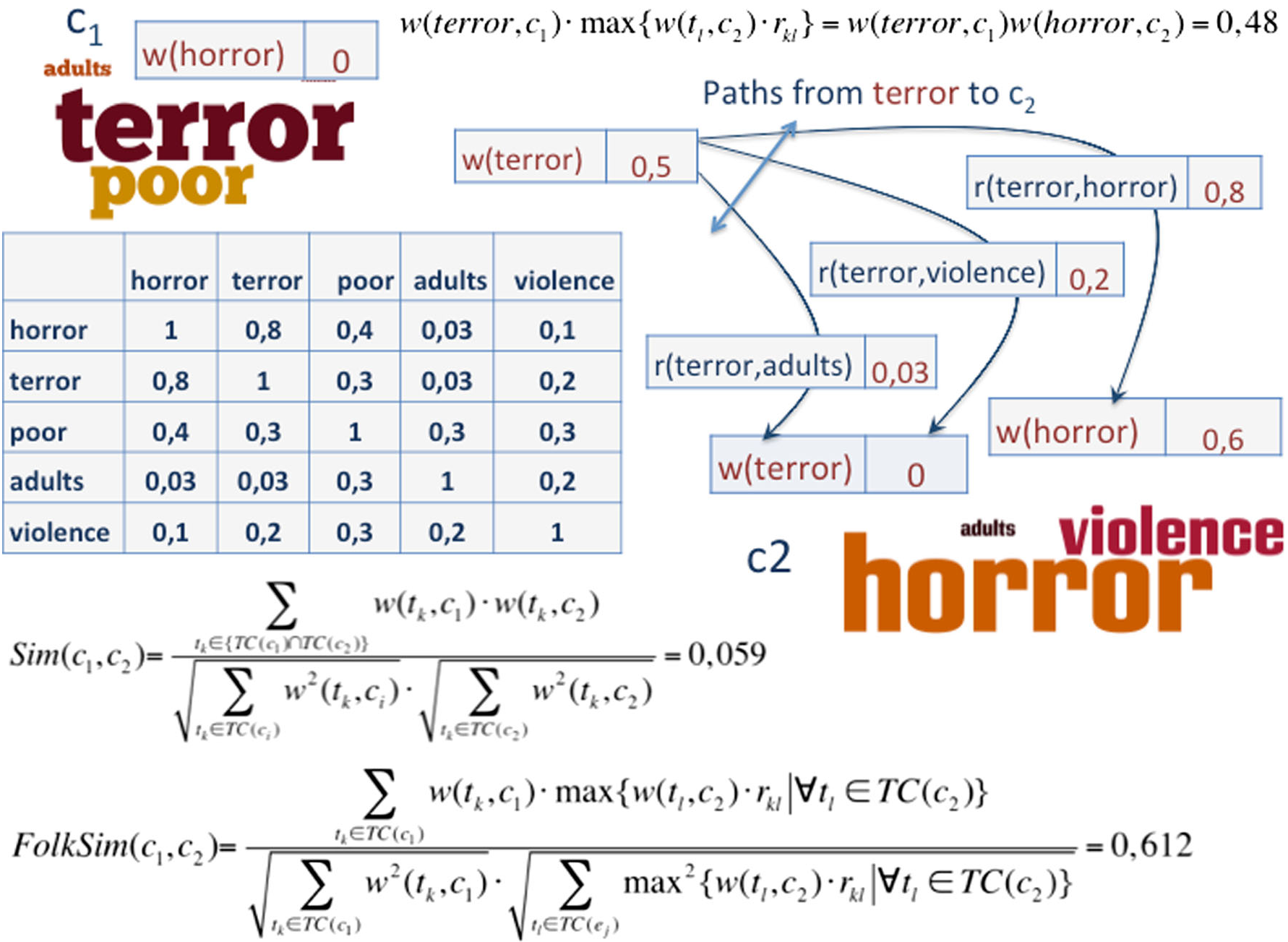
One of the most sophisticated parts of the method is FolkSim. Standard similarity measures fail if one person tags a video as "scary" and another as "horror." FolkSim uses the global folksonomy (the network of how tags are used together across the entire network) to recognize semantic closeness.
Experiments & Results
The authors conducted a month-long pilot with 50 parents. They compared the automated Blocking Index (BI) against subjective human grades ranging from "Totally Inappropriate" to "Highly Appropriate."
- Correlation: The median BI increased linearly with the degree of inappropriateness reported by parents.
- The Threshold Effect: The research suggested a dual-threshold approach—one to automatically block, one to allow, and a middle "gray area" to trigger an alert for parental review.
Critical Analysis & Conclusion
The core contribution of this work is the mathematical formalization of socially-aware filtering. It successfully moves beyond simple keyword matching by incorporating social trust and semantic folksonomies.
Limitations:
- Cold Start: The system requires an initial "seed" of tags and trust scores to be effective.
- User Friction: Parents may be reluctant to manually tag content or manage trust lists.
Future Outlook: To solve user reluctance, the authors suggest mining external data from IMDB Parents Guides or Facebook interaction strengths. Connecting the living room STB (Set-Top Box) to a user's broader "Social Sphere" could automate the trust-building process, making "Parental Control as a Service" a seamless part of the modern smart home.
Takeaway: The future of digital safety isn't better sensors—it's better social integration.