
Job Rotation in Software Engineering: Bridging the Gap Between Intuition and Theory
Uses, Benefits, and Limitations of Job Rotation in Software Engineering
This research establishes a substantive theory of Job Rotation (JR) in Software Engineering (SE) through a multi-method longitudinal study. It differentiates between Job-to-Job (J2J) and Project-to-Project (P2P) rotations, identifying JR as a significant driver for knowledge exchange and team flexibility in software firms.
TL;DR
Job Rotation (JR) is often used by managers to "shake things up," but does it actually help or hinder software development? This PhD research by Ronnie E. S. Santos moves beyond managerial intuition to build a formal theory. It reveals that while JR in SE reduces burnout and builds long-term skills ("Lasting Gains"), it also creates hidden "Permanent Losses"—specifically by breaking the vital feedback loops software engineers rely on to gauge their performance.
Background: The Managerial Gamble
In many software organizations, rotating developers between projects is a common tactic to solve resource shortages or spread technical knowledge. However, for decades, this has been a gamble. Does moving a developer from a Legacy Java project to a new Kotlin microservice boost their motivation or just cause a massive spike in cognitive load that tanks the sprint?
The research identifies two primary modes of rotation:
- Job-to-Job (J2J): Moving between departments (e.g., Engineering to Sales).
- Project-to-Project (P2P): Staying in the same role but moving to a different team—the most common scenario in SE.
The "Balanced Trade-off" Theory
The core of this research is the Initial Theory of Job Rotation in SE, which categorizes the effects into three distinct buckets:
1. Lasting Gains
These are the career-long benefits. By rotating, engineers acquire "Task Variety" and "Knowledge Acquisition." This isn't just about learning a new language; it's about organizational understanding and multicultural team support.
2. Temporary Losses
Whenever a rotation happens, there is a "Cognitive Workload" spike. Performance on project activities is temporarily impaired because the engineer must engage in knowledge transfer. However, these are strictly temporary—once the learning curve is conquered, productivity stabilizes.
3. Permanent Losses (The Hidden Risk)
This is the paper’s most critical insight. Because JR often involves moving someone before a project is finished, engineers lose the sense of "Well-Defined Work." This leads to a breakdown in Feedback on Performance. If you aren't there to see the code go to production or deal with the bugs later, you lose the feedback loop that drives professional growth.
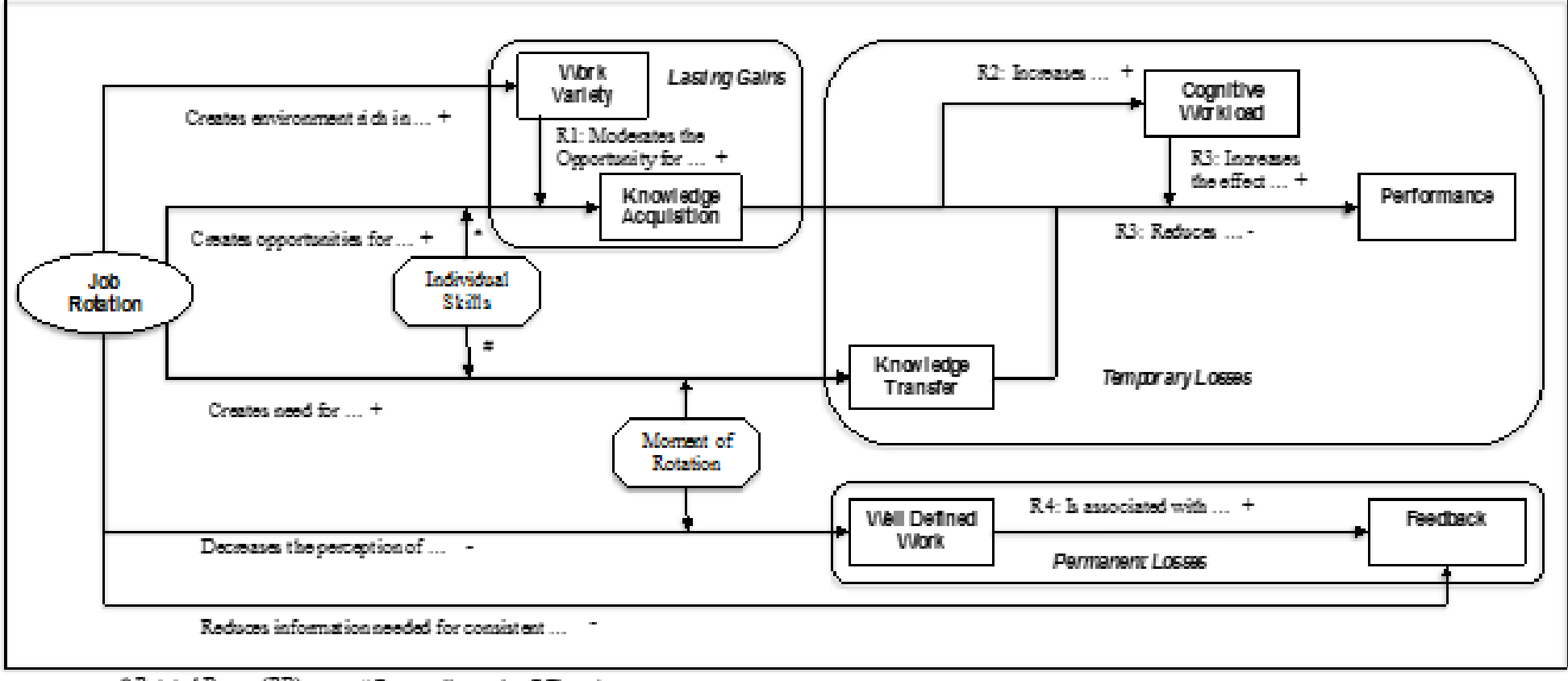 Figure 2: The conceptual model illustrating the interaction between Gains, Temporary Losses, and Permanent Losses.
Challenging the Status Quo: The Burnout Paradox
Earlier studies in Taiwan's high-tech industry suggested that Job Rotation actually increases burnout because the constant learning is too stressful. This paper finds the opposite for Software Engineering.
Preliminary survey results from 77 professionals suggest that in SE:
- Rotation is negatively related to job burnout.
- Unlike other fields, the variety provided by moving between software projects seems to outweigh the stress of the change, provided the "Temporary Losses" are managed.
Methodology Overview
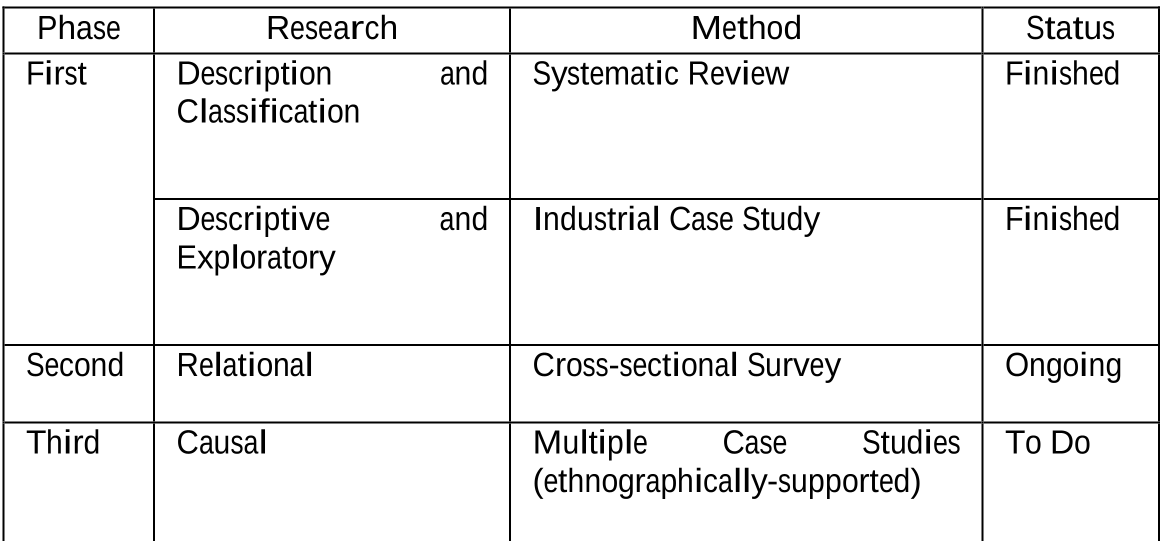
The researcher utilizes a robust multi-phase approach to validate these findings:
| Phase | Focus | Method |
|---|---|---|
| Discovery | Classification of JR benefits/limitations | Systematic Literature Review & Case Study |
| Relational | Correlation between JR and Burnout | Cross-sectional Survey |
| Causal | Long-term operational effects | Ethnographically-supported Case Studies |
Deep Insights & Summary
The work of Santos highlights that Job Rotation in software is not just a logistical move—it's a psychological one.
Key Takeaways for Practitioners:
- Don't rotate too early: Ensure engineers stay long enough to receive feedback on their work to prevent "Permanent Losses."
- Expect a dip: Plan for the "Temporary Loss" in productivity during the knowledge transfer phase.
- Combat Burnout: Use rotation as a strategic tool to keep talented developers engaged and reduce monotony.
Limitations: As a PhD work-in-progress, many results are based on cross-sectional data (a snapshot in time). The upcoming longitudinal studies will be vital to prove that rotation causes these benefits over 12-24 month periods.
Conclusion
This research provides a much-needed framework for software development process management. By understanding the "Lasting Gains" vs. "Permanent Losses," organizations can move away from ad-hoc staffing and toward a strategic, human-centered approach to workforce agility.