
Job Shop Scheduling at Your Fingertips: Augmenting Cloud Optimization with Human Intuition
Job Shop Scheduling at Your Fingertipsss & Planning Alternatives Off the Cloud
The paper introduces a Web-service-based architecture for Job Shop Scheduling (JSS) that combines cloud-based optimization with a client-side "Direct Media Manipulation" interface. It focuses on solving NP-complete manufacturing planning problems by leveraging human intuition to fine-tune machine-generated alternatives.
Executive Summary
TL;DR: This paper presents a hybrid approach to the notoriously difficult Job Shop Scheduling (JSS) problem. By offloading complex mathematical optimization to a Web Service (Cloud) and providing a sophisticated Direct Media Manipulation interface to the user, the authors bridge the gap between algorithmic raw power and human situational judgment.
Academic Positioning: This work positions itself as a bridge between NP-complete complexity theory and Human-Computer Interaction (HCI). It moves away from the "black box" optimization model toward a "co-pilot" system where the cloud suggests and the human refines.
The Motivation: Why Algorithms Alone Fail
Job Shop Scheduling—the assignment of tasks to machines over time—is a fundamental pillar of industrial management. However, as the paper notes, it is computationally intractable. Even with modern hardware, finding a truly "optimal" solution for a medium-sized factory is a process of exponential time complexity.
The authors identify a critical gap: traditional systems are either too "rigid" (automated but ignore real-world nuances) or too "complex" (local clients that are hard to maintain). Their insight is to treat planning not as a single calculation, but as an iterative exploration of a solution manifold.
Methodology: Cloud Logic, Human Control
The proposed architecture splits the burden into two distinct environments:
- Server-Side (The Cloud): Runs a variety of optimization algorithms and priority rules. It consumes problem data via XML and returns multiple "plan alternatives."
- Client-Side (The Fingerprint): A rich media interface where the user performs two key actions: Comparison and Deep Deep Inspection.
Architecture Overview
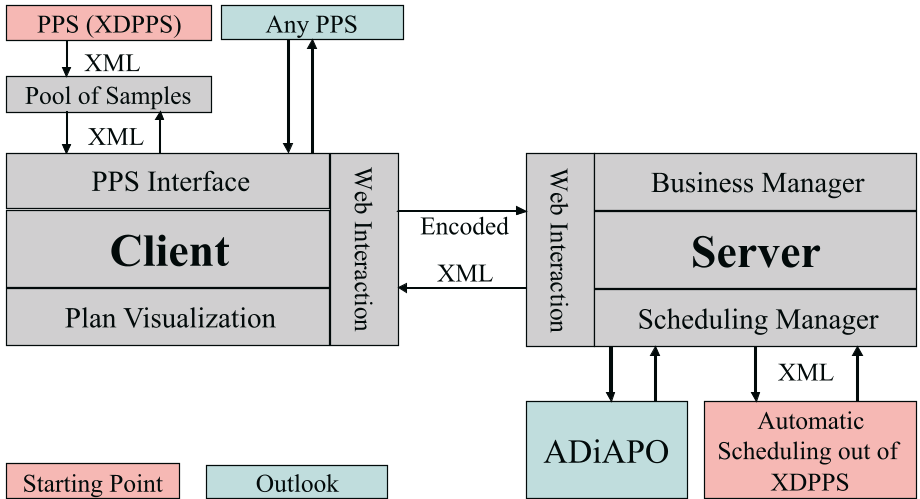 The architecture separates heavy lifting in the cloud from intuitive manipulation at the application site.
The Multi-Criteria Traffic Light
A standout feature is the Multi-Criteria Traffic Light. Instead of forcing users to analyze raw numbers, the system uses colors (Green, Yellow, Orange, Red) to signal constraint violations across various dimensions like delivery time, machine utilization, and cost. Users can adjust sliders to re-weight criteria, causing the "traffic lights" to update in real-time.
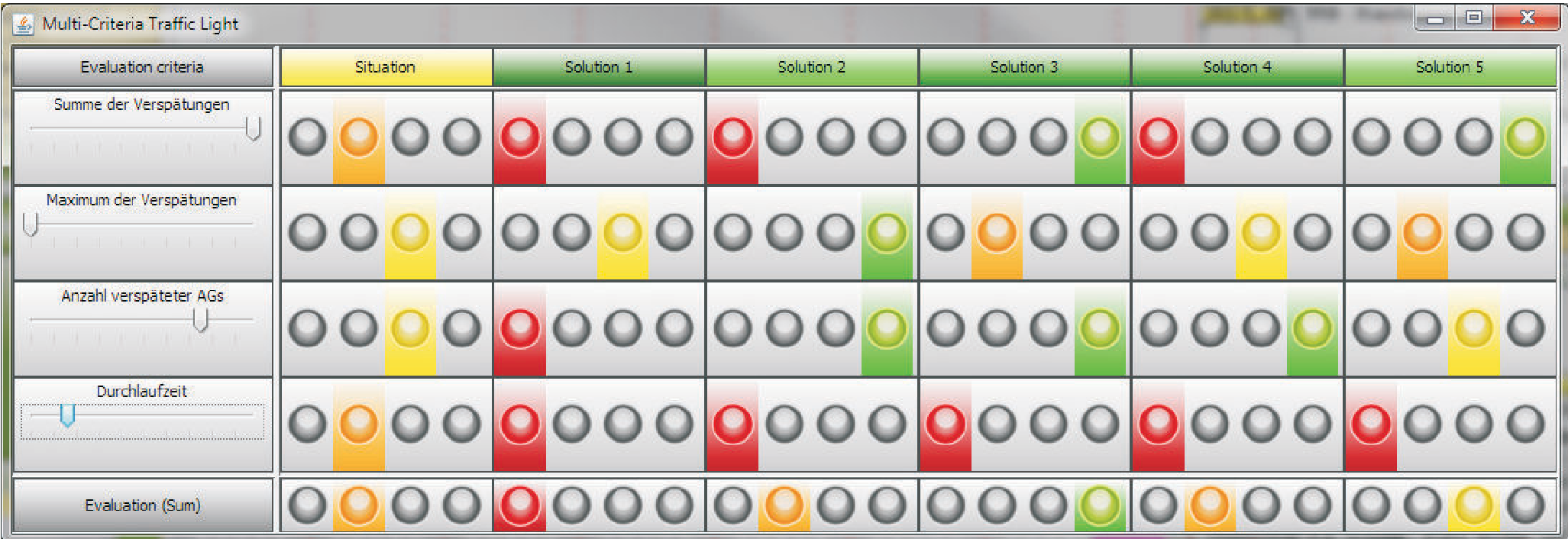 Figure 6: A multi-criteria view allowing users to rank five different cloud-generated plan variants against a prior solution.
Direct Manipulation: Playing with the Plan
Once a plan is selected, the user enters a detailed inspection mode. Applying Ben Shneiderman’s Direct Manipulation paradigm, the interface allows users to "grasp" operations and move them across the timeline.
This triggers a psychological effect known as self-efficacy: by physically interacting with the plan to resolve bottlenecks (visualized as overloads), the user gains a sense of control over an otherwise uncontrollable mathematical problem.
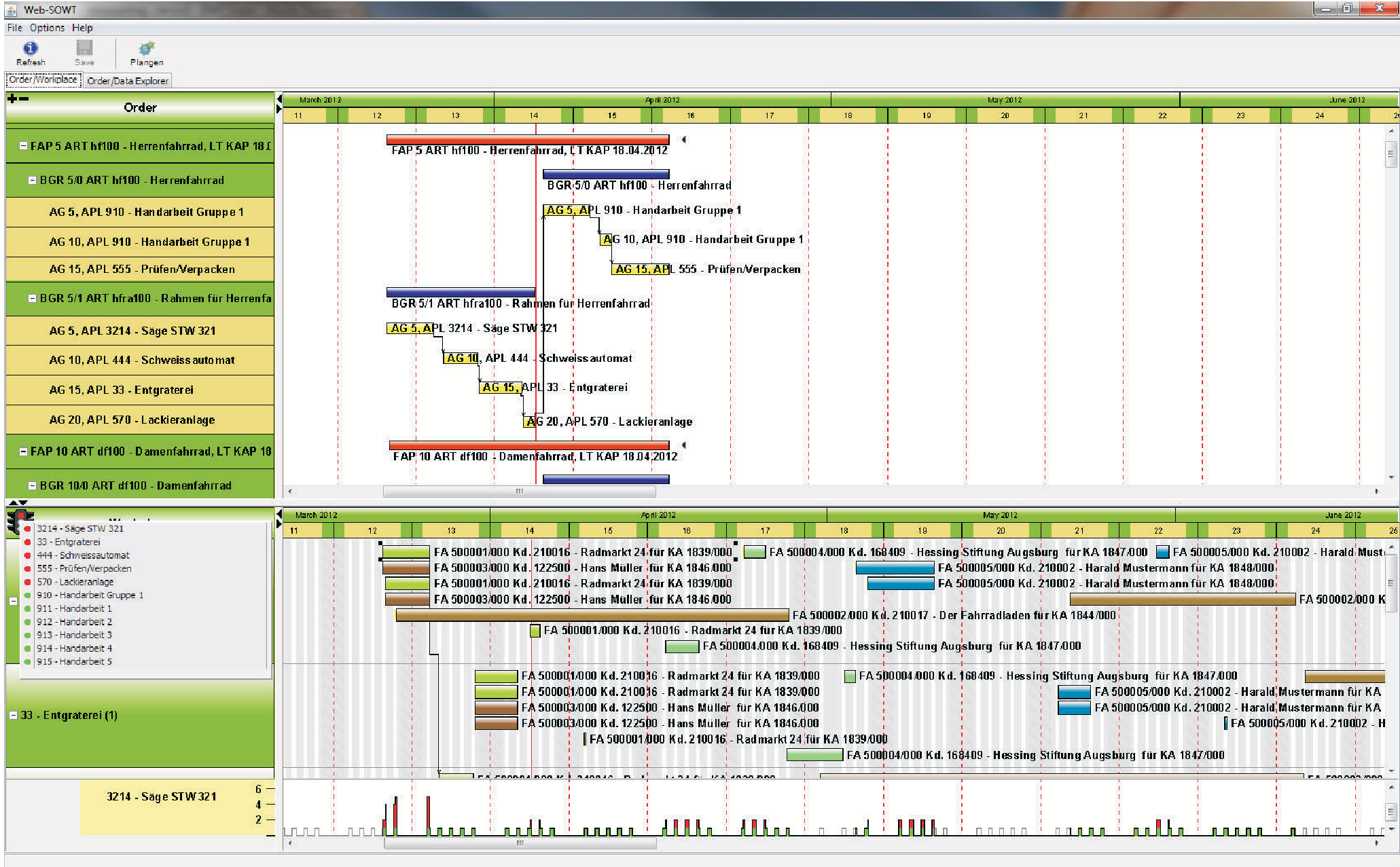 Figure 5: The manual fine-tuning interface where unresolved conflicts are highlighted for human intervention.
Critical Analysis & Future Outlook
The SOTA Edge: Unlike traditional "local" ERP modules, this Web Service approach allows for "Plan Revision"—incremental updates where new optimization runs take the current manual modifications as a starting point. This creates a feedback loop between human and machine.
Limitations:
- Latency: The paper doesn't deeply explore the network latency involved in sending large XML files back and forth for real-time iterative tuning.
- Scalability of the UI: While the traffic light works for 5-10 plans, it might become cluttered with 50+ alternatives.
Final Takeaway: This research reminds us that in the age of AI and Cloud, the goal isn't always to replace the human. Instead, the most effective systems are those that use the cloud to sweep the "exponential search space" and present the "optimal manifold" to a human expert who can apply the final touch of intuition.