
Harmonizing Large-Scale Decisions: A Joint Feedback Strategy Under Social Networks
A joint feedback strategy for consensus in large-scale group decision making under social network
The paper introduces a joint feedback strategy framework for Large-Scale Group Decision Making (LSGDM) that integrates Social Network Analysis (SNA) and optimization models. It achieves group consensus by coordinating the preference adjustments of multiple non-consensus decision makers simultaneously, utilizing "harmony degree" as a metric to preserve original individual opinions.
TL;DR
Reaching a consensus in large groups is often a slow, iterative "tug-of-war." This paper proposes a Joint Feedback Strategy for Large-Scale Group Decision Making (LSGDM) that uses Social Network Analysis to weight experts and optimization models to move all "outliers" toward consensus simultaneously. By maximizing Harmony Degree, the model ensures that consensus is reached without forcing experts to abandon their original insights more than necessary.
Problem & Motivation: The Consensus Bottleneck
In the era of e-commerce and massive collaborative platforms, decisions often involve dozens or hundreds of stakeholders. Current LSGDM frameworks face two primary hurdles:
- Trust Blindness: They treat all decision-makers as isolated islands, ignoring the social trust network that influences how opinions are formed.
- Inefficiency: Most feedback mechanisms are iterative. If Expert A changes their mind, the collective average moves, which might then push Expert B out of consensus, leading to endless rounds of modification.
The authors' insight is simple yet powerful: Why not adjust everyone at once? By treating consensus as a global optimization problem rather than a series of individual corrections, we can reach an agreement faster and more "harmoniously."
Methodology: Trust Networks and Optimization
The framework consists of two core phases:
1. SNA-Based Weighting
The model uses Trust In-degree Centrality (TDC) to determine the importance of an expert. If many people trust Expert , Expert receives a higher weight ().
- Insight: The paper proves that as the group size grows, the "dictatorship" of top experts is naturally diluted—a mathematical verification of democratic scaling.
2. The Joint Feedback Mechanism
Instead of asking experts to manually change their scores, the model calculates the minimum necessary adjustment using two strategy types:
- Consistent Behavior: Every non-consensus expert adjusts by the same factor .
- Inconsistent Behavior: Each expert gets a unique . This is more "harmonious" because someone who is 1% away from consensus isn't forced to change as much as someone who is 40% away.
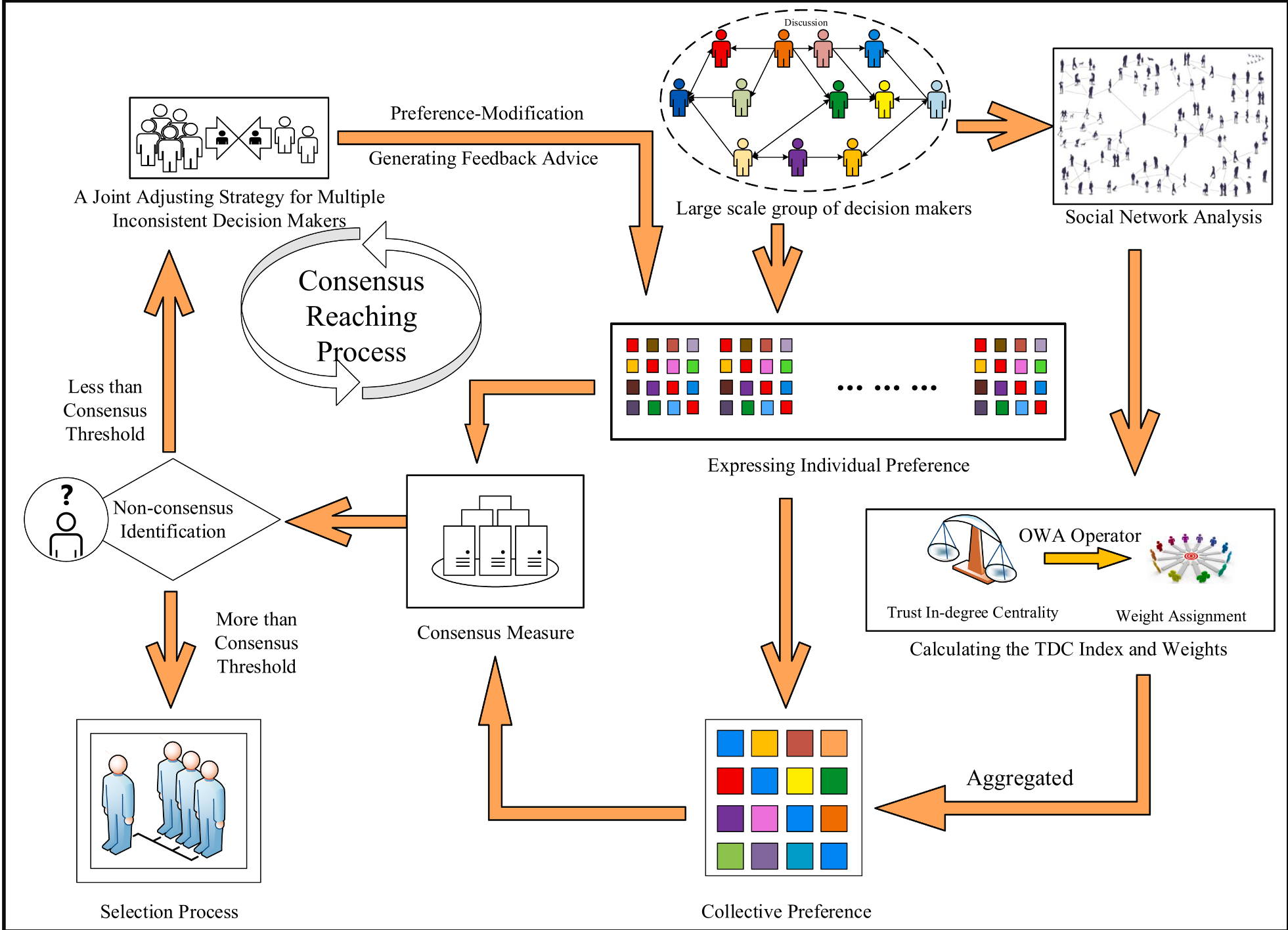 Fig 1: The proposed LSGDM framework integrating SNA and the Joint Feedback Strategy.
Experiments: Harmony vs. Consensus
The authors tested their model on a family enterprise expansion case involving 12 decision-makers. The goal was to reach a consensus threshold of .
| Indicator | Consistent Strategy | Inconsistent (Personalized) Strategy |
|---|---|---|
| General Harmony Degree (GHD) | 0.8830 | 0.8885 |
| Consensus Achievement | Reached in 1 round | Reached in 1 round |
The "Inconsistent" strategy won. By allowing personalized adjustment parameters, the model reached the exact consensus boundary for each expert without "overshooting," thereby preserving more of the original individual preferences.
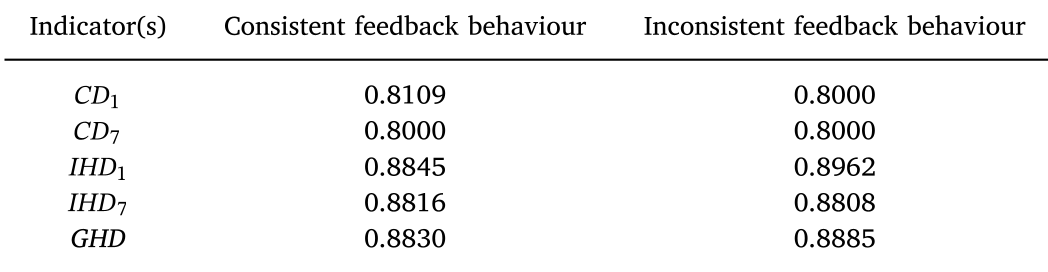 Fig 2: Comparison of Harmony and Consensus degrees across different strategies.
Critical Insight & Conclusion
The true value of this work lies in the Inconsistent Feedback Behavior model. In real-world management, forcing everyone to adopt the same "rate of change" is often met with resistance. By mathematically allowing experts to move at their own pace toward the group mean, the system respects individual expertise (Harmony) while achieving organizational goals (Consensus).
Future Outlook: While this model handles the "how" of adjustment, it assumes participants are willing to follow the algorithm's advice. The next frontier in this research is likely behavioral game theory—modeling what happens when experts refuse to adjust or try to manipulate the collective preference for personal gain.
Takeaway
In large-scale group decisions, Social Trust is the anchor, and Personalized Adjustment is the engine. This joint strategy effectively turns a chaotic debate into a structured optimization problem.