
Social Content Delivery: Bridging the Gap Between User Rewards and Wireless Realities
Joint optimization for social content delivery in heterogeneous wireless networks
This paper proposes a scalable two-phase scheduling framework for content delivery in heterogeneous wireless networks (HetNets). It introduces a joint optimization approach that combines social network user preferences with wireless capacity constraints, utilizing a "Greedy Decision Deduplication" algorithm and spectrum-sharing criteria to achieve SOTA-level efficiency in multi-base station environments.
TL;DR
As mobile consumption dominates social media, the "blindness" of recommendation algorithms to the physical limitations of wireless networks causes massive congestion. This paper introduces a joint optimization framework that reconciles user engagement (Social Layer) with spectrum efficiency (Physical Layer). By using a two-phase scheduling process, the system reduces transmission redundancy and can save up to 76% of pico-cell resources through intelligent spectrum sharing.
The "Wired-Thinking" Trap in a Wireless World
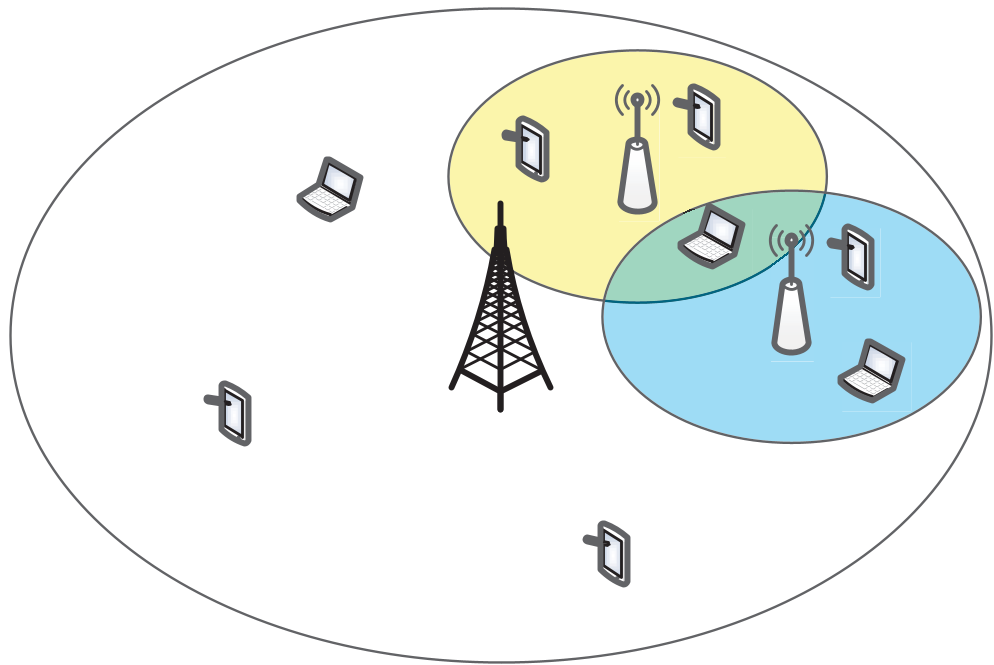
Most social media platforms (Facebook, YouTube, TikTok) were architected with a "wired" mindset: assuming unlimited bandwidth and low latency. However, mobile reality is different. In a crowded stadium or a dense city center, the wireless medium is shared and finite.
Current systems suffer from two major flaws:
- Layered Isolation: Social apps pick the "best" content for you without knowing if the network can actually deliver it.
- Unicast Inefficiency: Delivering the same viral video to 100 people in the same cell via 100 separate streams is a waste of radio spectrum.
Methodology: The Two-Phase Scheduling Framework
The authors propose moving away from a single, massive optimization problem (which is computationally impossible in real-time) toward a decentralized yet consolidated framework.
Phase 1: Distributed Delivery Decisions
Each base station (BS) independently decides what content to "push" to users based on local Reward/Cost ratios. This keeps the initial computation fast and scalable across thousands of cells.
Phase 2: Centralized Resource Consolidation
This is where the magic happens. The system looks at the individual BS decisions and performs:
- Decision Deduplication: Ensuring that if User A is covered by both a Macro and a Pico cell, they don't receive the same content twice.
- In-Band Coordination: Deciding if two cells should share the same frequency (Spectrum Sharing) or stay separate to avoid interference.
The Physics of Efficiency: Theorem 3
The paper provides a rigorous mathematical condition for Spectrum Sharing. They define a "rate decay ratio" (), which represents how much the transmission rate drops due to interference from other cells.
The Spectrum-Sharing Criterion states that sharing uses less resource only if: This provides a simple, computationally light threshold for the system controller to flip the switch between interference-limited and noise-limited modes.
Experimental Insights
Using real-world datasets from Yahoo and MovieLens, the simulation showed:
- Redundancy Risks: Without Phase 2, redundancy () could reach 65% in dense environments.
- Massive Savings: For In-Band systems, the framework saved significant spectrum by optimizing power allocation and sharing.
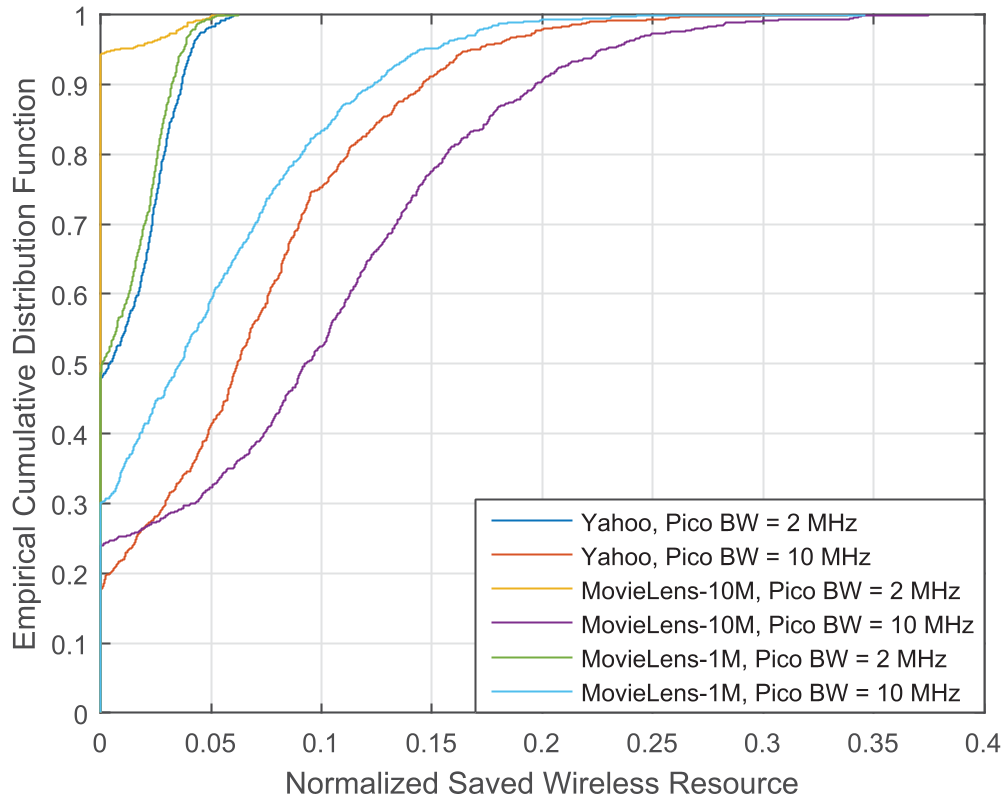 Fig 3 above shows that as Pico cell bandwidth increases, the potential for wasteful redundancy grows, making the proposed deduplication algorithm essential.
Critical Analysis & Future Outlook
While the framework is highly scalable (Phase 2 runs in less than 1ms), it assumes a "push-based" model. In the real world, user-generated requests are unpredictable. However, as the authors note, the reward values () can be dynamically modified to prioritize real-time requests.
The Takeaway: The future of 6G isn't just about "faster speeds"—it's about "smarter delivery." By making the physical network aware of the social value of the data it carries, we can support vastly more users without needing more spectrum.