
EDZ: Enhancing Privacy-Preserving Retrieval in Vehicle Social Networks via Spatial Entropy
4509_Toward Keyword Extraction in Constrained Information Retrieval in Vehicle Social Network.
This paper proposes a high-precision keyword extraction metric called EDZ for Constrained Information Retrieval (CIR) in Vehicle Social Networks (VSN). By analyzing the spatial distribution and entropy difference of words, the method enables efficient searching over encrypted vehicular data in decentralized cloud environments.
TL;DR
As autonomous vehicles become social nodes, they generate massive amounts of sensitive data that must be encrypted before being stored in the cloud. This paper introduces EDZ, a novel keyword extraction metric that uses the spatial distribution and entropy difference of words to identify highly relevant search terms. By distinguishing between "clustered" meaningful words and "randomly spread" noise, EDZ enables high-precision information retrieval with minimal communication overhead, achieving a 100% precision rate in top-N keyword selection.
Problem & Motivation
In a Vehicle Social Network (VSN), data security is paramount. Since cloud providers are not always trusted, documents are encrypted before outsourcing. This leads to the Constrained Information Retrieval (CIR) problem: how do you search through encrypted data without decrypting everything?
Prior work often assumed that high-frequency words make good keywords. However, the authors point out a fatal flaw: high-frequency words like "is" or "following" appear randomly throughout a text, whereas true keywords (like "universe" in a physics book) tend to cluster around specific topics. Existing searchable encryption schemes that use random or frequency-based keywords lead to poor precision and high computational costs—a luxury vehicular networks with strict Quality of Service (QoS) requirements cannot afford.
Methodology: The Power of Spatial Intuition
The core of the paper lies in the Entropy Difference (ED) measure. The authors distinguish between two statistical modes:
- Extrinsic Mode: Captures the positions of topics/clusters within a text.
- Intrinsic Mode: Captures the dynamics of words within those clusters.
The intuition is simple: if the distance between occurrences of a word deviates significantly from a random (geometric) distribution, that word is likely a key thematic pillar of the document.
The EDZ Metric
To make this robust, the authors proposed the EDZ Z-score. It normalizes the entropy difference against the expected distribution of a common word:
This formula allows the system to rank words not just by how often they appear (), but by how "meaningfully" they are clustered relative to their frequency.
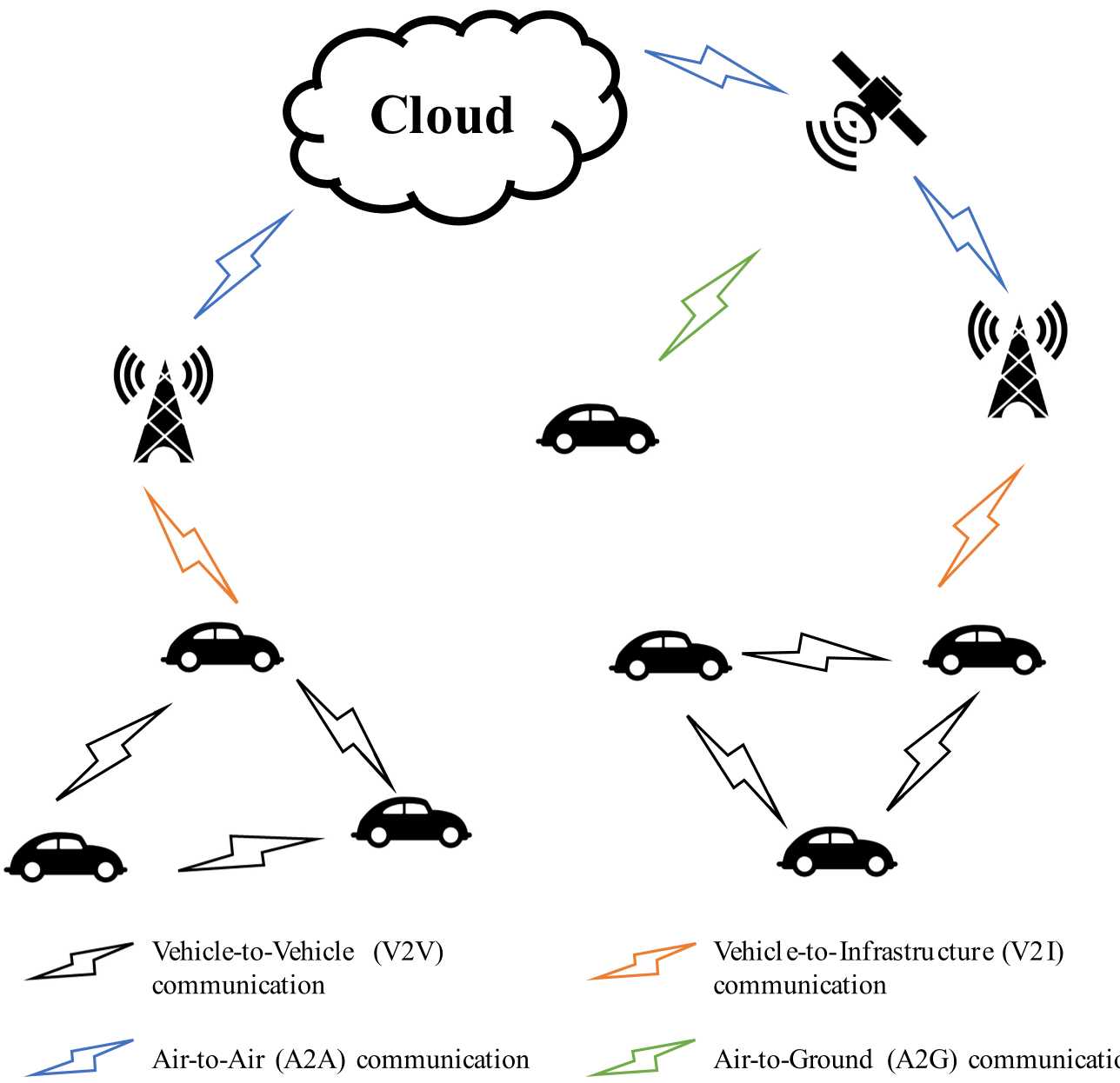 Figure 1: The proposed cloud-based vehicle social information retrieval framework (CIR@VSN).
Experiments & Results
The authors validated EDZ using two benchmark scenarios: keyword extraction accuracy and actual retrieval performance on the TREC corpus.
1. Extraction Precision
Using Darwin's Origin of Species and Einstein's Relativity, the authors compared EDZ against state-of-the-art methods like TextRank and TF-IDF.
- Result: EDZ achieved 100% precision for the top-10 keywords. This "extreme precision at low N" is vital for VSNs, as it reduces the size of the searchable index that needs to be transmitted over the air.
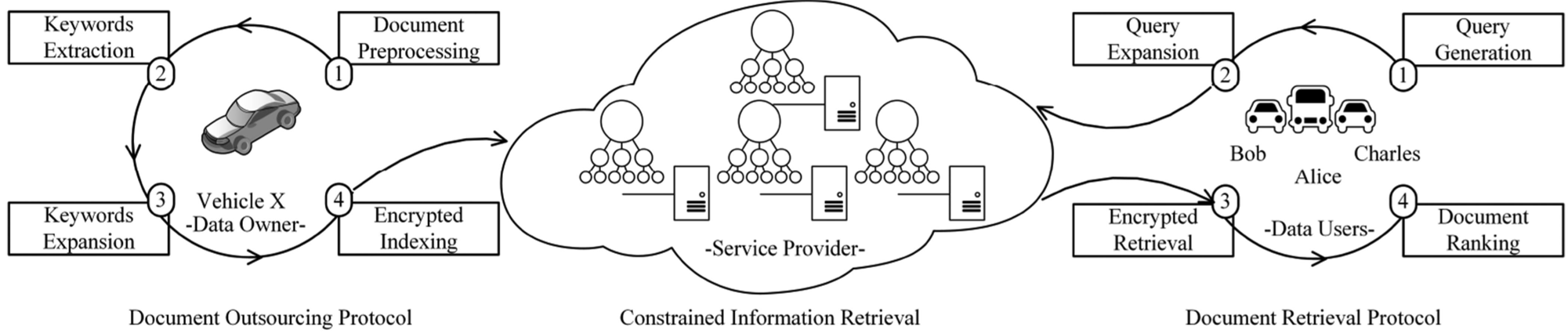 Figure 2: Comparison of precision (p(n)) across different metrics. EDZ consistently stays at the top of the curve.
2. Retrieval Gain
Integrating EDZ into a constrained retrieval framework showed that even adding just one or two keywords extracted via EDZ significantly outperformed random word indexing, providing a 2–8% boost in top-5 retrieval accuracy.
Critical Analysis & Conclusion
Takeaway
The shift from "what is the word" to "where is the word" is a powerful paradigm for unsupervised NLP. In decentralized, encrypted environments like VSNs, the EDZ metric provides a mathematically rigorous yet computationally efficient way to generate search indices that respect both privacy and performance limits.
Limitations & Future Work
While EDZ excels at identifying "clustered" topical words, it might struggle with documents that are extremely short (e.g., a single tweet/post) where spatial distribution is harder to define. Future research could explore combining EDZ with State Space Models (SSM) or Graph Neural Networks to capture semantic relations alongside spatial clustering, potentially extending this high-precision extraction to multi-modal vehicular data (audio and sensor logs).
Keywords: Constrained Information Retrieval, Vehicle Social Network, Keyword Extraction, Spatial Distribution, Searchable Encryption.