
Efficiency vs. Accuracy: Decoding Enzyme Families via Minimum Distance Classifiers
Efficiency analysis of KNN and minimum distance-based classifiers in enzyme family prediction
This paper evaluates the efficiency of K-Nearest Neighbor (KNN) and two proposed Minimum Distance-based classifiers for predicting enzyme family classes using Amino Acid Composition (AAC). The study demonstrates that while KNN (K=6) achieves a peak accuracy of 99%, the proposed parameter-free approaches offer more robust performance (95% accuracy) with significantly lower computational overhead.
TL;DR
Predicting enzyme function from sequences is a cornerstone of modern bioinformatics. While the industry-standard K-Nearest Neighbor (KNN) algorithm offers high accuracy (up to 99%), it suffers from hyperparameter sensitivity and high computational costs. This paper introduces two parameter-free Minimum Distance-based classifiers that achieve a robust 95% accuracy with significantly faster execution times, proving that simpler models can often be more viable for large-scale genomic data.
The Bottlecap: Why KNN Isn't Always the Answer
The rapid influx of biological sequence data from the Human Genome Project has made manual experimental analysis impossible. Computational classification based on Amino Acid Composition (AAC)—representing an enzyme as a 20-dimensional vector of amino acid frequencies—is the standard approach.
However, the prevailing method, KNN, has two major flaws:
- The "K" Problem: There is no theoretical way to determine the optimal number of neighbors; it must be found through expensive trial-and-error.
- Computational Latency: For every new sequence, KNN must calculate distances to every single entry in the training set and sort them, which scales poorly as databases grow.
Methodology: The Power of Centroids
The authors propose moving away from individual neighbor comparisons toward centroid-based logic.
The Two Proposed Approaches:
- Approach I (Centroid Distance): Calculate the mean vector (PF) for each of the six enzyme classes (EC-1 to EC-6). Assign the test sequence to the class with the closest mean.
- Approach II (Mean Shift): Calculate how much the mean vector of a class would change ("Added Frequency") if the test sequence were added to it. The smaller the shift, the more likely the sequence belongs to that class.
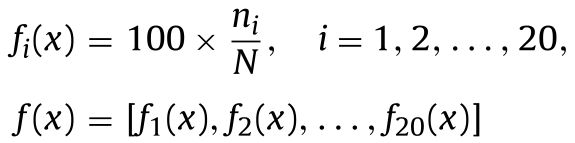 Fig 1: The encoding scheme transforms raw sequences into frequency vectors.
The Mathematical Insight
One of the paper's strongest contributions is a formal proof showing that if the number of enzymes in each training class is equal (), Approach I and Approach II are mathematically identical. This simplifies the pipeline, allowing researchers to use the simpler Approach I without losing the theoretical "influence" logic of Approach II.
Performance Benchmarks
The study compared these methods across 1,200 enzymes.
- Accuracy: KNN (at ) hit 99%, while the distance-based approaches hit 95%.
- Correlation: All methods maintained a Matthew’s Correlation Coefficient (MCC) above 0.7, indicating highly reliable predictions.
- Speed: As shown in the study's execution time graphs, the proposed approaches maintain near-constant latency, whereas KNN’s execution time scales sharply with the number of test cases.
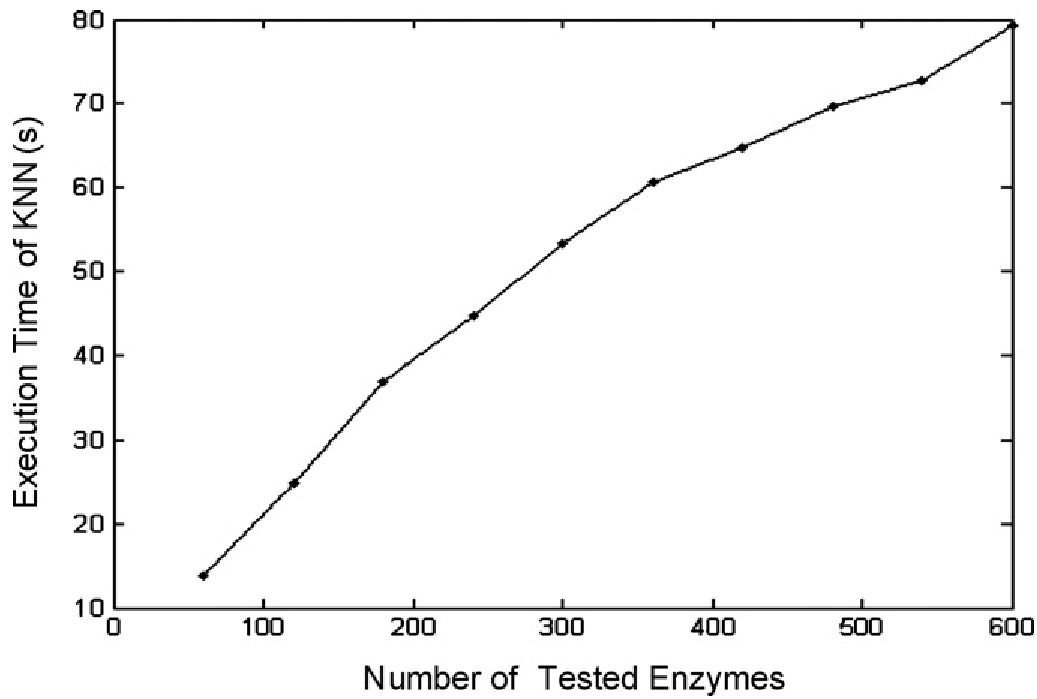 Fig 2: Minimalist approaches (top) versus the rising computational cost of KNN (bottom).
Critical Analysis & Conclusion
This work highlights an important trade-off in bioinformatics: Peak Accuracy vs. Robustness.
While KNN is slightly more accurate, its dependency on makes it "brittle." If the dataset distribution changes, must be re-tuned. The Minimum Distance-based Classifiers are "set and forget"—they depend only on the class averages, making them remarkably stable and fast.
Takeaways for the Industry:
- For real-time sequence annotation services, the distance-based classifier is likely the better production choice due to its speed.
- The 4% accuracy gap between KNN and the distance methods suggests that enzyme classes may have local clusters that a single mean-vector cannot fully capture—a potential area for future "Multi-centroid" research.
In the era of Big Data, sometimes the most "efficient" algorithm is the one that removes the human from the loop of hyperparameter tuning.