
ECRLNet: Deciphering the "Residual" Truth in Image Copy Detection
KNOWLEDGE‐BASED SYSTEMS
The paper introduces an Explainable Copy-Relationship Learning Network (ECRLN) for image copy detection, leveraging a novel residual visualization scheme. It achieves state-of-the-art performance, including a 0.9945 average MAP and significant improvements in training efficiency by transforming the copy detection task from a pairwise comparison into a single-image residual analysis.
TL;DR
Researchers have developed a new framework, ECRLN, that identifies illegal image copies with near-perfect accuracy (0.99 MAP) while successfully ignoring "visually similar but original" photos. By shifting the detection target from comparing two raw images to analyzing their geometric residual, the method achieves superior explainability and significantly faster training speeds.
The "Mirror" Trap: Why Similarity != Copy
In the world of social networks, distinguishing between a copy (a photo modified via Photoshop or filters) and a similar image (two different photographers taking a picture of the same sunset) is a nightmare for copyright enforcement.
Current SOTA models—typically Siamese Networks—treat this as a distance-matching problem. However, because they lack an understanding of the nature of the difference, they often mistake a different photo of the same object for a copyright violation. The black-box nature of these models means we don't know why they think two images are the same.
Methodology: The Power of Subtraction
The core insight of this paper is that the "clues" of a copy are hidden in the residual domain.
1. Residual Visualization
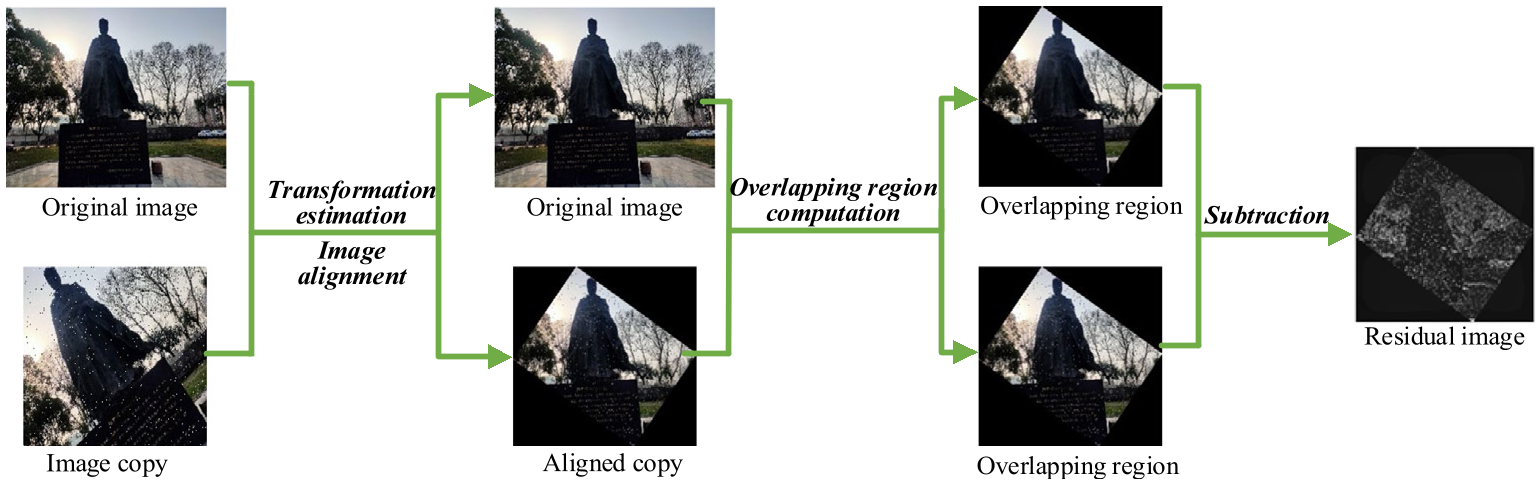
Instead of feeding two images into a network, the authors first perform Geometric Alignment (using MSER and RANSAC) to ensure the images overlap perfectly in space. By subtracting the original from the test image, they create a Residual Image.
- Copies produce residuals showing local outlines, shadows, and specific noise patterns.
- Similar Images produce residuals with high-level semantic shapes and global differences.
2. The ECRLN Architecture
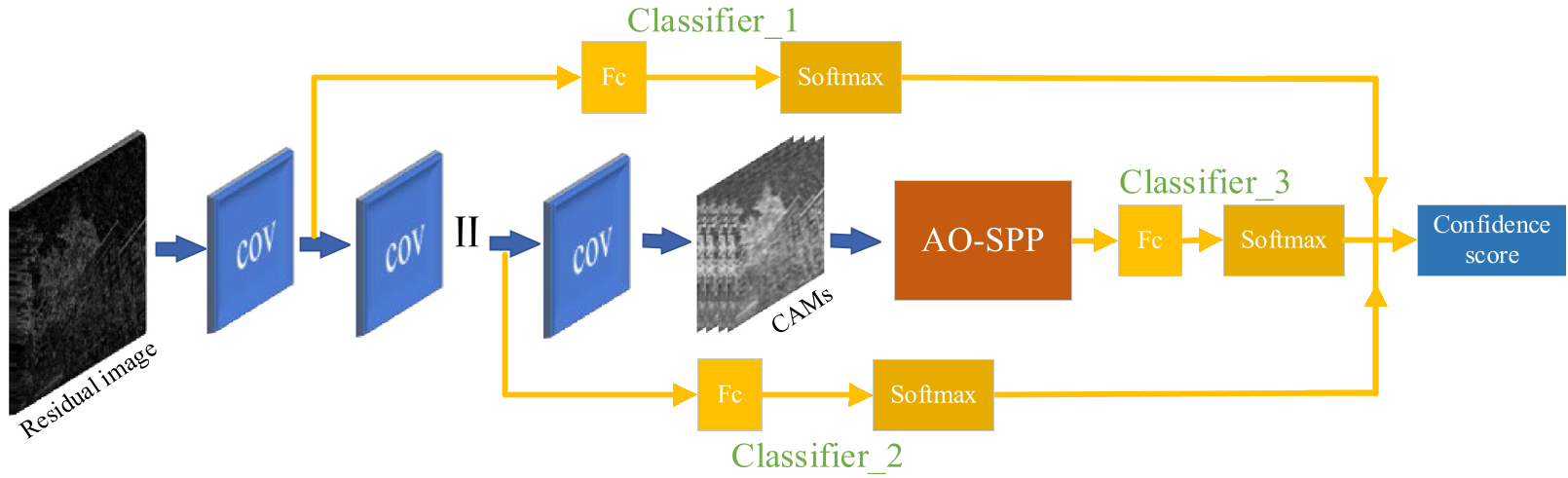
The Explainable Copy-Relationship Learning Network (ECRLN) processes these residuals through two clever strategies:
- AO-SPP (Activation Order-Based Spatial Pyramid Pooling): Unlike standard SPP which only looks at the strongest signals, AO-SPP sorts activations to ensure that even moderate and low-value patterns (often indicative of subtle editing) are preserved.
- MC-CRCM (Multiple Classifier-Based Confidence Measurement): The model doesn't just look at the final output. It places classifiers at different depths of the ResNet backbone to catch both low-level pixel manipulations and high-level semantic changes simultaneously.
Experimental Breakthroughs
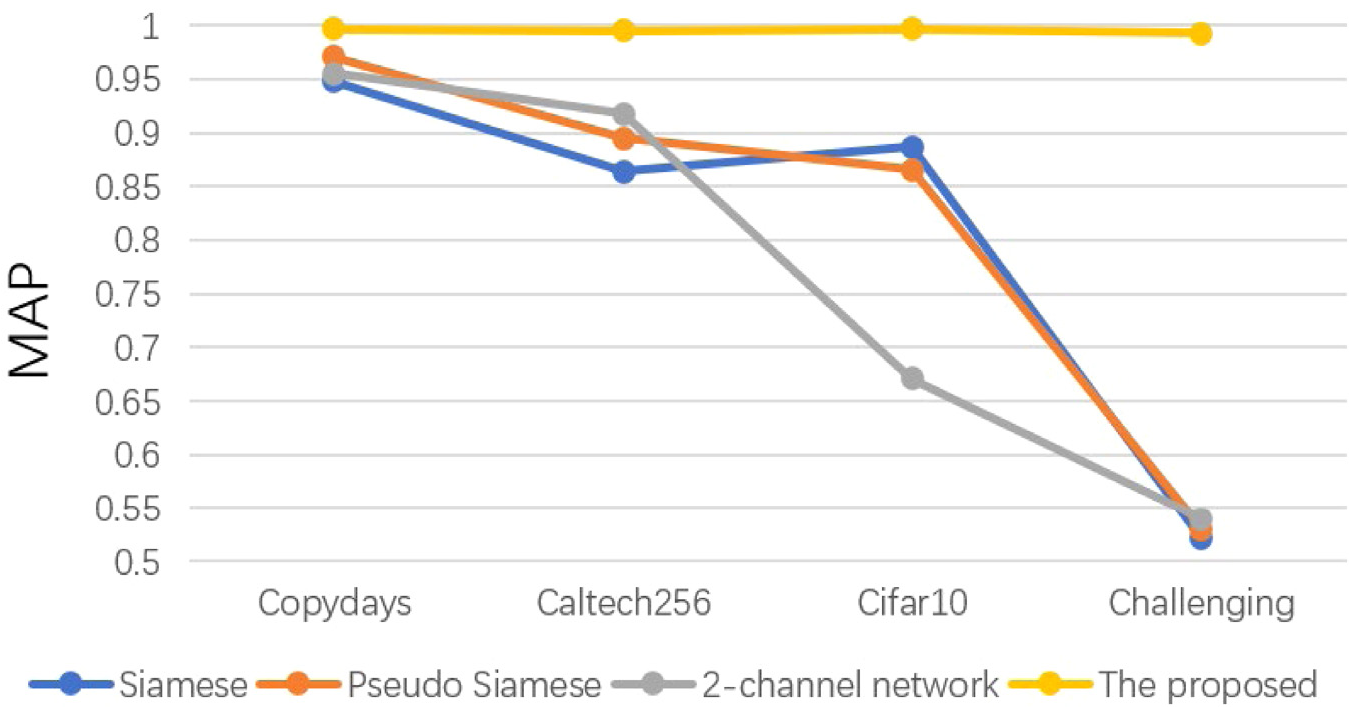
The team tested ECRLN against a "Challenging Dataset" specifically designed with frames from the same video (extremely similar but not copies).
- Accuracy: ECRLN maintained a 0.9930 MAP on the challenging set, while Siamese and Pseudo-Siamese models plummeted to roughly 0.52-0.53 MAP.
- Efficiency: Because the network only processes one "residual" image instead of a pair, the training time was slashed by nearly half compared to traditional dual-branch networks.
Critical Insight: Why This Matters
This work highlights a critical shift in AI for forensics. Moving from black-box similarity to visualizable residuals makes the model’s "decision logic" transparent. We no longer just ask "Are these similar?" but "Is the difference between them consistent with digital manipulation?"
Limitations & Future Work
The primary bottleneck currently lies in the manual alignment algorithm (RANSAC/MSER). If the alignment fails, the residual is useless. The authors suggest that the next frontier is an end-to-end learnable alignment and residual generation system that can handle extreme distortions without human-tuned parameters.
Academic Note: This research provides a robust foundation for building automated copyright protection tools that are less prone to "false alarms," ensuring that original creative work isn't accidentally flagged as a copy.