
Beyond Patterns: A Knowledge Mining Framework for Actionable Business Insights
A knowledge mining framework for business analysts
The paper introduces a Knowledge Mining Framework designed to bridge the gap between complex data mining algorithms and actionable business intelligence. It specifically focuses on "Frequent Sequence Mining" and "Data Enrichment," yielding a system that transforms raw mining outputs into interactive, multi-dimensional business reports, notably achieving a 90% reduction in analysis time in industrial case studies.
TL;DR
While data mining can find "needles in haystacks," those needles are useless if a business analyst doesn't know which one represents a million-dollar loss. This paper proposes a Knowledge Mining Framework that doesn't just find patterns—it enriches them with business context. By applying this to the vehicle manufacturing industry, the author demonstrated how to turn raw sequences of mechanical failures into a roadmap for design and manufacturing improvements, cutting analysis time by over 90%.
The "Interpretation Gap" in Data Mining
For years, the "Holy Grail" of data mining has been algorithmic efficiency—making processes run in linear time. However, a significant gap remains: the Business Analyst's Dilemma.
Traditional outputs like Fail A -> Fail B (Support: 0.05) are mathematically sound but contextually bankrupt. An analyst needs to know:
- Which manufacturing plant produced these vehicles?
- Is the labor cost higher than the part cost?
- Does this pattern only occur in the 2023 engine model?
Without this "enrichment," the mining results are just noise, not actionable knowledge.
Methodology: The Enrichment Pipeline
The paper proposes a structured flow that moves from raw data to a customized user interface.
1. Frequent Sequence Mining
The framework utilizes algorithms like Apriori or Winepi to identify "Frequent Failure Patterns." In a vehicle context, this means identifying sets of failures that occur chronologically across thousands of unique Vehicle Identification Numbers (VINs).
2. Data Enrichment (The "Secret Sauce")
This is the core innovation. Once a pattern is identified, the framework automatically joins it with metadata from other business databases:
- Demographics: Vehicle model, engine type, build year.
- Geographics: Manufacturing plant, dealership location.
- Financials: Part cost vs. labor cost breakdown.
- Technical: Specific cause codes (e.g., "rust," "shorted," "leaking").
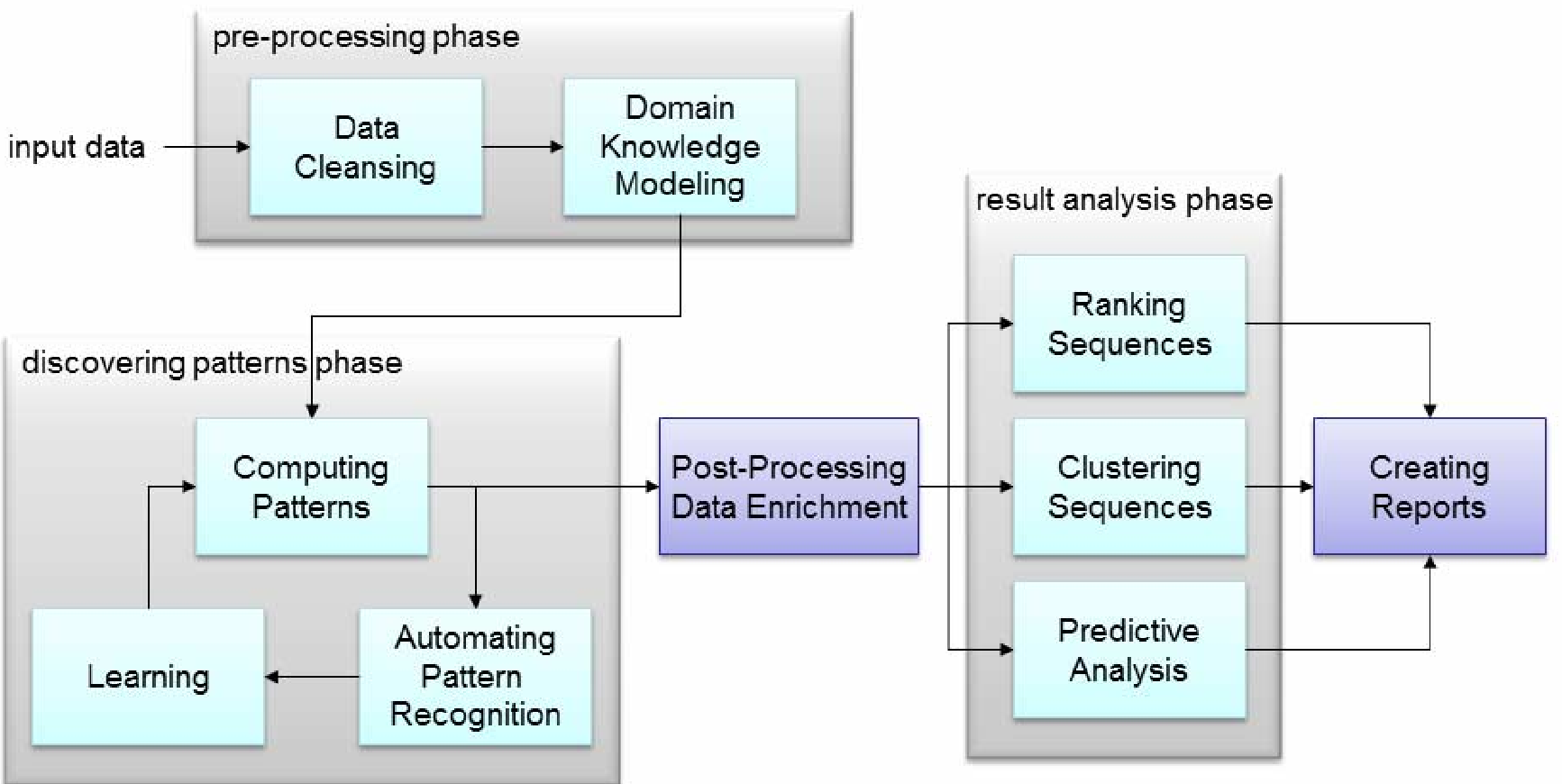 Figure 1: The Knowledge Mining Framework Pipeline.
3. Multifaceted Analysis
The enriched data is then passed through three specific modules:
- Ranking: Prioritizing patterns by total financial impact or frequency.
- Clustering: Grouping similar failure patterns to find systemic "root causes."
- Predictive Analysis: Forecasting future warranty claims based on historical pattern trends.
Industrial Case Study: The $300M Opportunity
The framework was tested on two massive vehicle manufacturing datasets. One dataset contained 2,000,000 warranty claims across 250,000 vehicles.
Key Insight: The Labor vs. Part Cost Paradox
One of the most striking findings from the case study was revealed via the framework's visualization. As the number of failures in a vehicle's sequence increased, the Labor Cost began to dominate, while Part Cost plummeted.
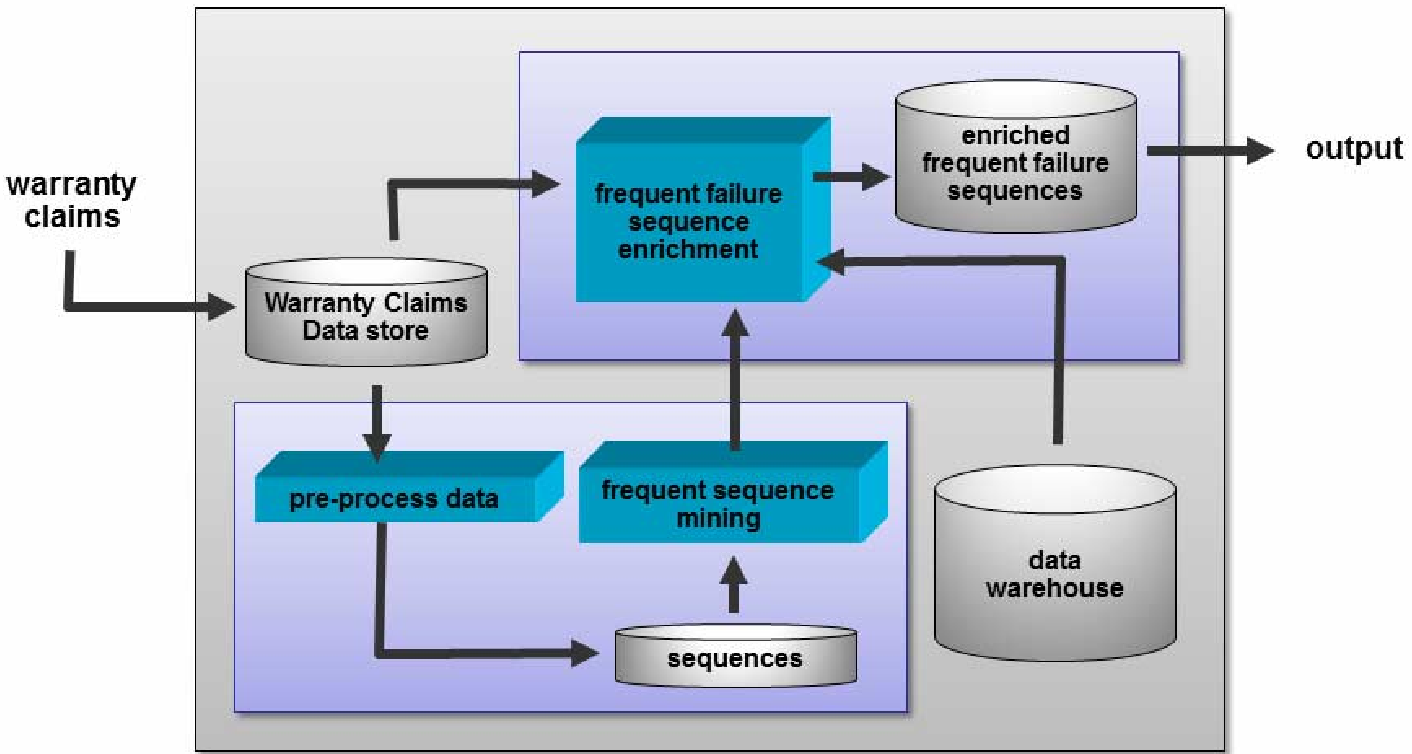 Figure 2: Workflow for Frequent Failure Mining in the automotive sector.
The Actionable Discovery: This suggested that frequent repeat visits to the mechanic were often caused by human error or poor accessibility of parts, rather than the parts themselves being defective. For an OEM (Original Equipment Manufacturer), this means they don't need to redesign a bolt; they need to redesign the access panel or improve service training.
Quantifiable Impact
- Efficiency: Analysis time dropped from 45 days to just a few days.
- Financials: Shortening the warranty resolution cycle by just 10 days was estimated to save an OEM $300 million.
Critical Analysis & Conclusion
This work stands as a vital bridge between the "ivory tower" of data mining algorithms and the "factory floor" of business operations. By shifting the focus from how we mine to what we do with the results, the author provides a template for industrial AI applications.
Limitations: The paper acknowledges that the specific choice of mining algorithm is orthogonal to the framework. While this makes it flexible, it also means the framework's success is heavily dependent on the quality of the underlying enterprise data and the "Semantic Equivalence" of codes from different sources.
Future Outlook: As we move toward more complex architectures like LLMs and Graph Neural Networks, the principle of Knowledge Enrichment remains the same. The future of AI in the enterprise isn't just bigger models; it's more contextually aware ones.
Note: This framework is complementary to standard methodologies like CRISP-DM, acting as a specialized implementation for the 'Evaluation' and 'Deployment' phases.