
Beyond Centralized Repositories: A Socio-Technological Architecture for Dynamic Virtual Enterprises
Knowledge sharing in dynamic virtual enterprises: A socio-technological perspective
The paper proposes a socio-technological solution for knowledge sharing in dynamic virtual enterprises (VEs) using an agent-mediated community model. It introduces a Knowledge Resource Space (KRS) to represent heterogeneous knowledge and leverages semantic ontologies to establish multi-dimensional ties between agents and knowledge items.
Executive Summary
In the hyper-competitive landscape of global business, firms increasingly form Dynamic Virtual Enterprises (DVEs)—temporary alliances created to seize specific market opportunities. However, the "dynamic" nature of these alliances often leads to a knowledge vacuum: how do partners share expertise rapidly without a common infrastructure? This paper proposes a decentralized, human-centered agent society that uses semantic ontologies to bridge the gap between explicit data and implicit human experience. By shifting from a process-centered to a social-centered view, the authors demonstrate a path toward "Collective Intelligence" that survives even after a VE is dissolved.
The Pain Point: The Agility-Knowledge Paradox
Most Knowledge Management (KM) systems are designed for stable, hierarchical organizations. In a DVE, these systems fail for three primary reasons:
- Structural Volatility: Members join and leave too quickly for solid infrastructures to take root.
- Heterogeneity: Different firms use incompatible data formats and taxonomies.
- The Protectionism Risk: The fear of losing "core competencies" leads firms to silo their most valuable knowledge.
The authors argue that the missing link is the Socio-Technological perspective. Knowledge isn't just a file in a database; it is a social artifact residing in the minds of experts.
Methodology: The Three Layers of Knowledge Connectivity
The core of this work is a multi-layered architecture that maps physical resources into a conceptual, navigable space.
1. The Knowledge Resource Space (KRS) Model
To handle heterogeneity, the authors define knowledge as a point in a 3D coordinate system: KS (Owner, Category, Location). Whether it is a PDF manual (explicit) or a senior engineer's contact info (implicit), every resource becomes a "Conceptual Instance of Knowledge Resource" (CIKRI).
2. Multi-Agent Community Framework
Instead of a central server, every node runs an autonomous agent. These agents establish three types of ties:
- Agent-to-Item: Reflects an agent's specific interests.
- Item-to-Item: Semantic links (e.g., Subclass, PartOf, Sequence) that allow for logical reasoning.
- Agent-to-Agent: Social ties based on "Contribution Degree" (how often has this partner helped me?) and "Preference Similarity."
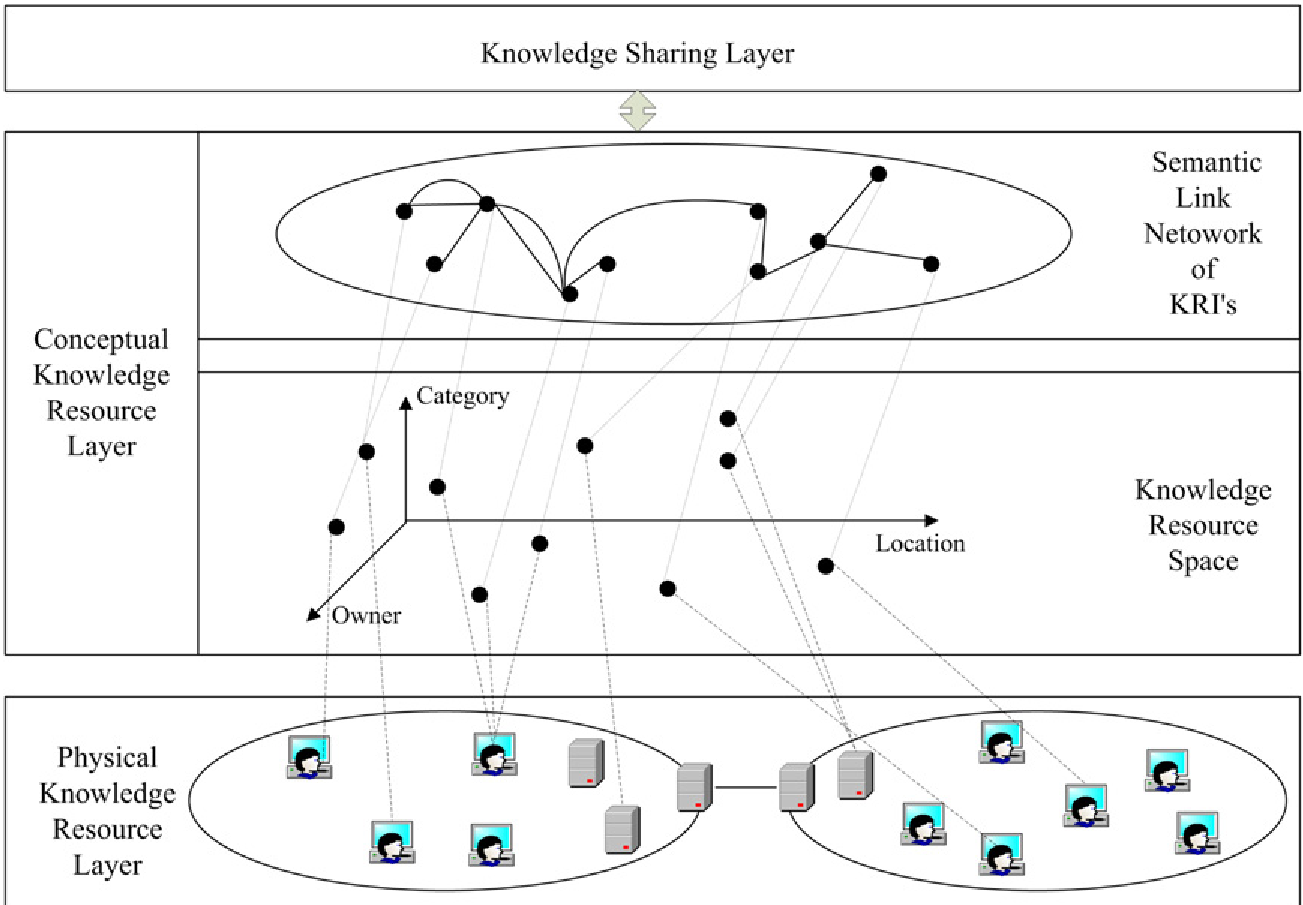 Figure 1: The three-level community model integrating the Physical Society, Virtual Community, and Goal-Oriented VE.
Measuring "Value" in Social Ties
The research introduces a mathematical way to quantify trust and relevance. Using Semantic Similarity (Formula 1) and Agent Contribution Degree (ACD), agents can autonomously decide which peer is most likely to have the answer to a query. This mimics the "personal contact" behavior of human experts but at machine scale.
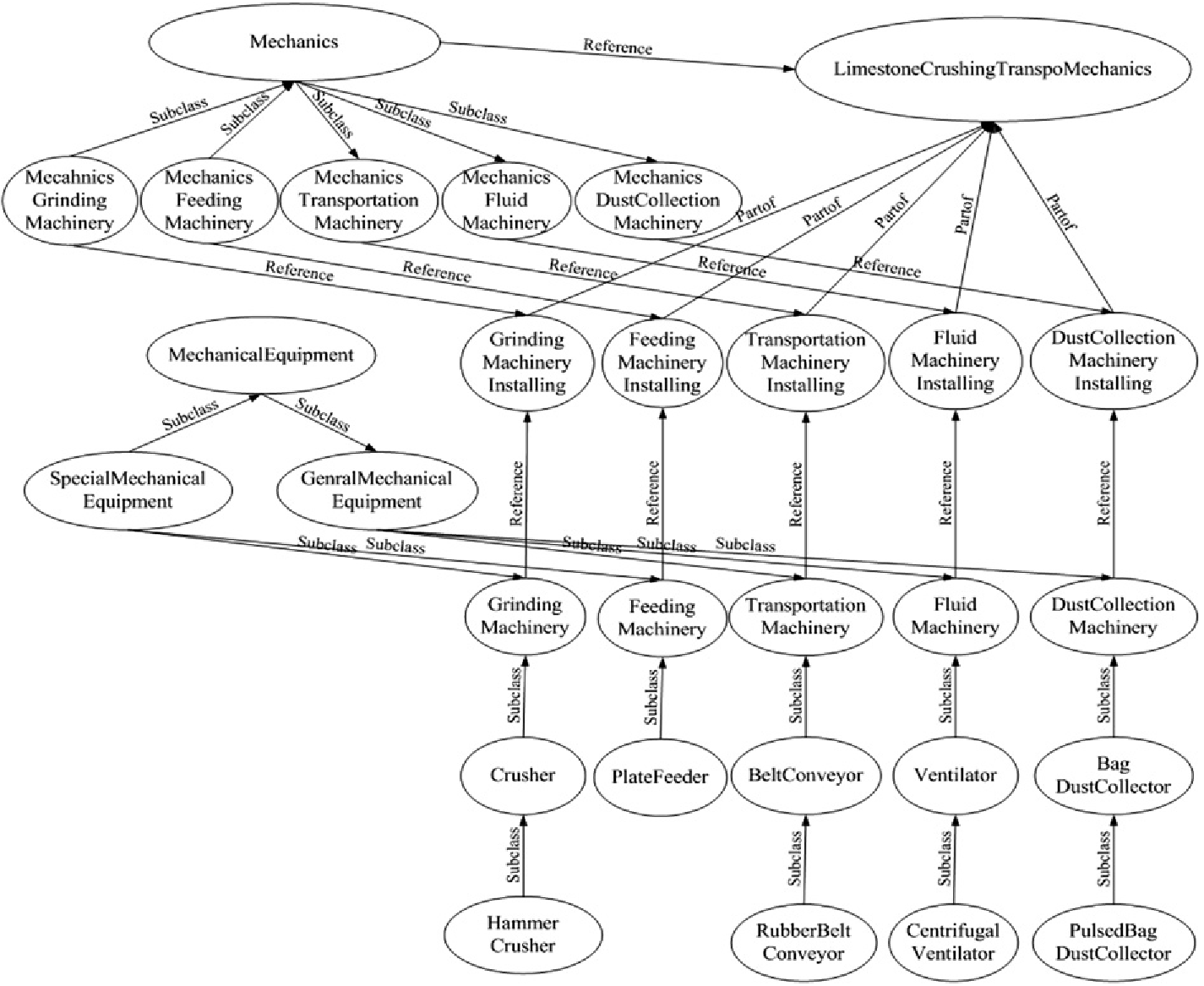 Figure 2: Example of semantic links involved in a subtask, showing how different engineering domains intersect.
Real-World Validation: The CNBMEEC Case Study
The system was tested within a Chinese cement-plant construction firm operating overseas. In this environment, where external factors (local laws, specific machinery) change with every project, the agent-based system allowed subcontractors to locate specialized knowledge (e.g., "Hammer Crusher" specifications) across different partner networks.
Key Experimental Outcome:
- Successful Discovery: Agents were able to bypass administrative hurdles to locate relevant information using recursive community searching.
- Accumulation Effect: As more VEs were formed and dissolved, the agent-to-agent ties remained, creating a persistent "organizational memory" that transcended the lifespan of a single project.
Critical Insight & Limitations
While the socio-technological approach is powerful, the authors note a critical limitation: Topic Saturation. When too many items fall under a single semantic class (e.g., "General Mechanics"), users are overwhelmed by results. The takeaway for future researchers is the need for Attribute-based filtering—shifting from "find me something about X" to "find me the specific technical parameter Y for machine X."
Conclusion
This paper serves as a blueprint for the "Social Web of Enterprises." It reframes knowledge sharing not as a storage problem, but as a routing and relationship problem. By equipping organizations with autonomous agents that understand both the "what" (semantics) and the "who" (social contribution), we can build virtual enterprises that are as intelligent as they are agile.