
The Knowledge Transfer Model: Bridging Individual Expertise and Collective Wisdom
Knowledge Transfer Model in Collective Intelligence Theory
This paper proposes a preliminary theory of Collective Intelligence (CI) by modeling knowledge transfer as the intersection of Personal Intelligences (PI). It introduces a systematic framework comprising four phases—Understanding, Idea Generation, Reasoning, and Implementation—to facilitate collaborative goal attainment in multi-agent systems.
TL;DR
This research moves beyond simple swarm-based algorithms to propose a formal Collective Intelligence (CI) Theory. By analyzing human group dynamics, the authors define CI not as a sum of parts, but as the iterative intersection of Personal Intelligences (PI). They provide a structured framework of four phases and meta-rules designed to transform individual knowledge into successful group action.
Background & Motivation: Beyond Simple Coordination
In a typical multi-agent environment, agents often focus on individual goals that eventually align. However, true Collective Intelligence requires a shared goal from the outset, achieved through complex communication. The authors argue that existing systems lack a "systematic approach" to design. By observing real-world human meetings, they identified that knowledge is the "focal interaction attribute" that must be cross-fertilized to achieve SOTA-level coordination in fields like UAV search and surveillance.
The Anatomy of Emergence: Methodology
The authors identify that CI emerges through a specific "Knowledge Transfer Model." This model isn't just about sharing data; it's about the transformation of proven beliefs.
The Four Phases of CI
- Problem Understanding: Identifying the domain and forming a common goal.
- Obtaining Ideas: Postulating solutions based on individual PI.
- Reasoning Process: The most critical phase involving Argumentation (challenging ideas) and Negotiation (resolving conflicts).
- Implementation: Executing the agreed-upon idea and storing it for future reference.
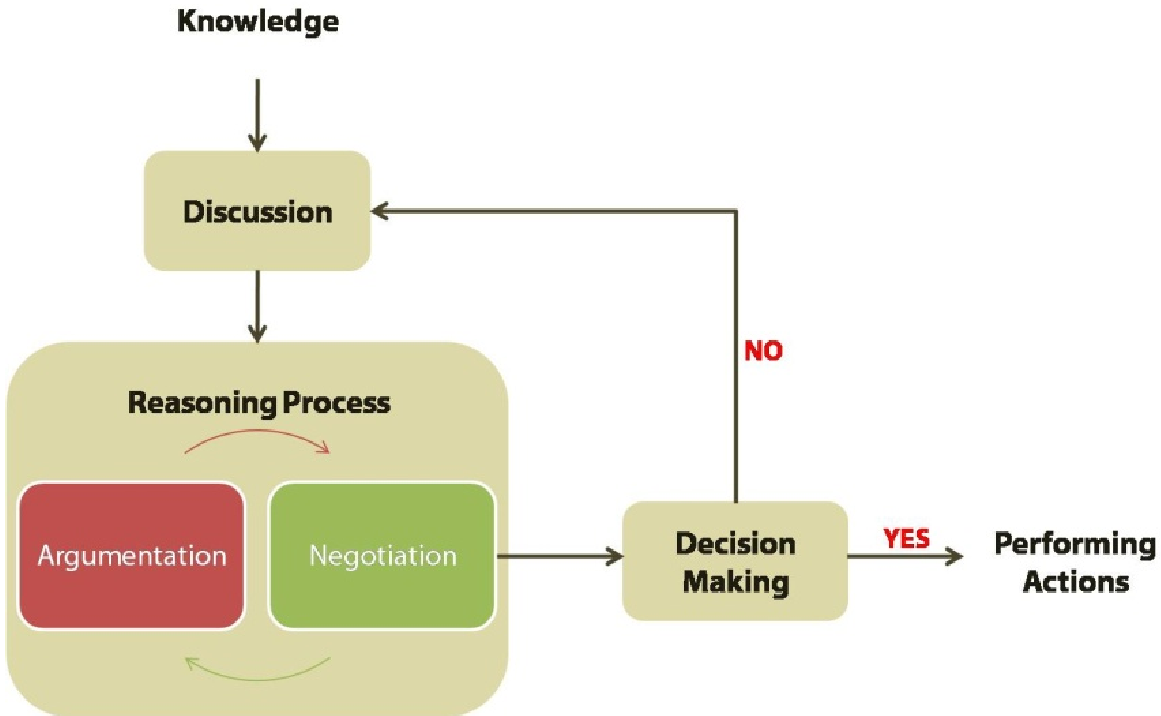 Fig 1: The flow of knowledge from initial discussion to the realization of Collective Intelligence.
Detailed Mechanism & Meta-Rules
The paper translates human behavior into Meta-rules—logical structures that can be programmed into artificial agents.
- The Argumentation Loop: If knowledge is rejected, agents enter a reasoning process.
- The Consensus Check: If negotiation reaches an agreement, it diffuses into decision-making.
- The CI Equation: The paper formalizes the output as: This emphasizes that CI is the overlap of what agents collectively validate, not just a collection of everything they know.
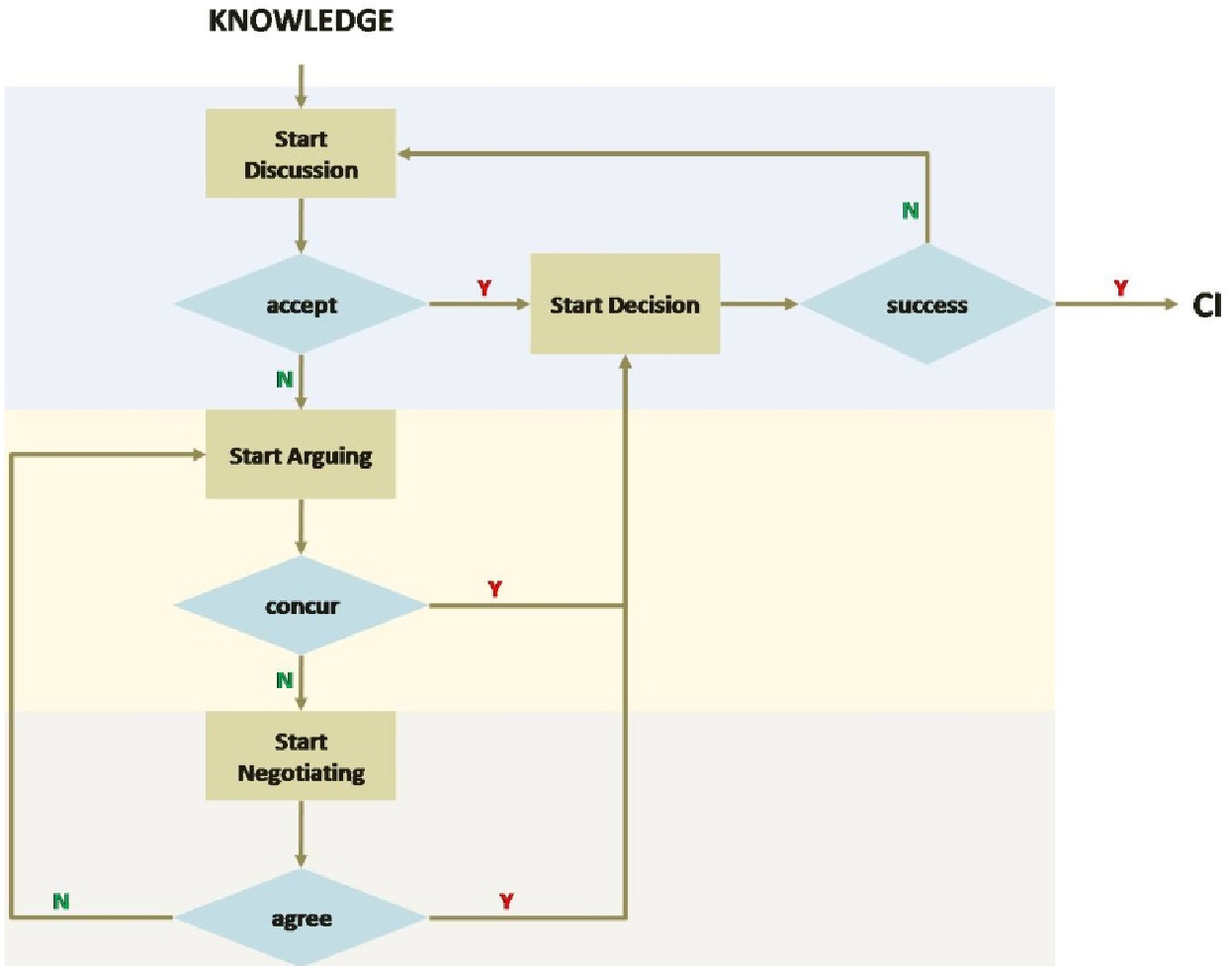 Fig 2: The logic flow determining whether a group achieves CI or restarts the discussion loop.
Key Insight: Attributes of Knowledge
The researchers mapped 13 technical attributes to the CI phases. For example, "Domain Familiarity" occurs in Phase 1, while "Idea Organization" and "Counter Idea" generation characterize the reasoning in Phase 3. This granularity provides a blueprint for developers to build agents that don't just "talk" but actually "deliberate."
Critical Analysis & Conclusion
Takeaway
The paper's strength lies in its Inductive Bias—the assumption that modeling human collective reasoning is the most efficient path to robust AI collaboration. It provides a rare bridge between social science observations and algorithmic structure.
Limitations & Future Work
While the logic is sound, the paper remains largely a preliminary theory. The mathematical intersection () is conceptually elegant but requires more rigorous quantification for complex, high-dimensional knowledge spaces. The authors' future intent to integrate the BDI (Belief-Desire-Intention) model is a logical next step to add "personality" and "persistence" to these agents.
Future Outlook
As we move toward "Agentic Workflows" in the era of LLMs, this Knowledge Transfer Model provides a timeless framework for how multi-agent systems should handle disagreements and reach consensus without human intervention.