
KryptoOracle: Balancing Big Data Resilience with Adaptive Sentiment Forecasting
KryptoOracle: A Real-Time Cryptocurrency Price Prediction Platform Using Twitter Sentiments
This paper introduces KryptoOracle, a modular real-time cryptocurrency price prediction platform that integrates Twitter sentiment analysis with Apache Spark. By leveraging VADER for sentiment processing and XGBoost for adaptive online learning, the system achieves precise 1-minute interval Bitcoin price forecasts.
TL;DR
KryptoOracle is a real-time, adaptive platform designed to predict cryptocurrency prices by analyzing the "wisdom of the crowd" on Twitter. By fusing Apache Spark for fault-tolerant data ingestion, VADER for specialized social media sentiment analysis, and XGBoost for incremental online learning, the system achieves a remarkable $10 RMSE for 1-minute Bitcoin price predictions.
Background & Motivation
Cryptocurrencies are notoriously volatile, often driven more by social sentiment and narrative than traditional economic fundamentals. While many researchers have tried to correlate tweets with prices, two major technical hurdles remained:
- Data Velocity: Processing thousands of tweets per minute alongside market data requires more than a simple Python script; it needs a distributed Big Data backbone.
- Model Stale-ness: A model trained on last week's data is often useless today because crypto market "regimes" shift rapidly.
KryptoOracle addresses these by treating prediction as a streaming engineering problem rather than just a static modeling task.
Methodology: The Architecture of Real-Time Insight
The core of KryptoOracle is built on the Apache Spark ecosystem, utilizing Resilient Distributed Datasets (RDDs) to ensure that if a node fails, the data lineage allows for instant recovery.
1. Sentiment Weighting: Beyond Binary Polarity
Standard sentiment analysis often treats all users equally. KryptoOracle introduces an "Influence Factor":
- VADER Score: Determines the basic polarity (Positive/Negative/Neutral).
- Weighting: The score is multiplied by
UserFollowerCount,Likes, andRetweetCount. This filters out "bot noise" and amplifies the voices of market movers.
2. Adaptive Learning via XGBoost
Unlike static models, KryptoOracle employs Online Learning. As shown in the workflow below, once the actual price of the next minute arrives, the model calculates the error and immediately retrains its weights.
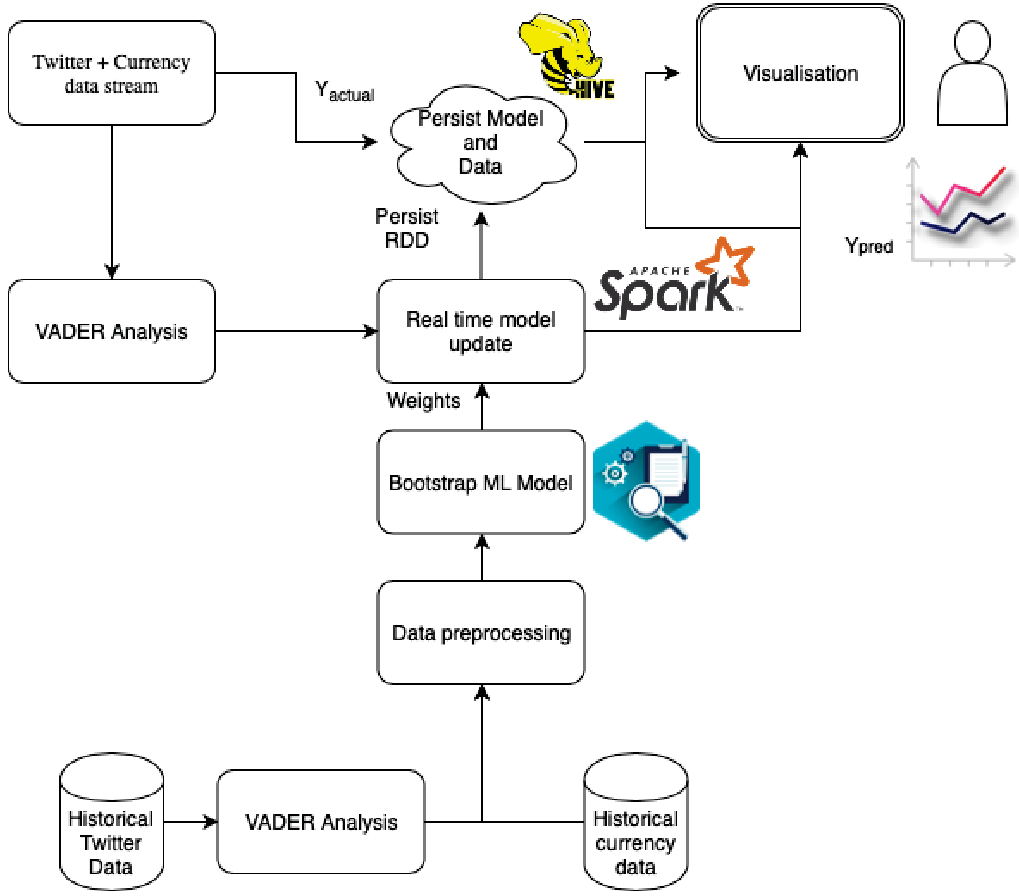
Fig 1: The integration of Spark streaming with the persistent Hive data warehouse and the adaptive XGBoost engine.
Experiments & Key Findings
The authors tested the system on Bitcoin (#BTC) over a month-long period.
Feature Engineering
The model's success didn't just come from sentiment. The authors engineered several "momentum" features:
- Moving Average of Close Price: Captures the immediate technical trend.
- Moving Average of Normalized Sentiment: Smooths the high-frequency volatility of Twitter noise.
Performance Results
In a 5-hour evaluation window, the "Predicted vs. Actual" curve shows an uncanny overlap. The model captures the micro-fluctuations of the market with an average error of only $10 USD.
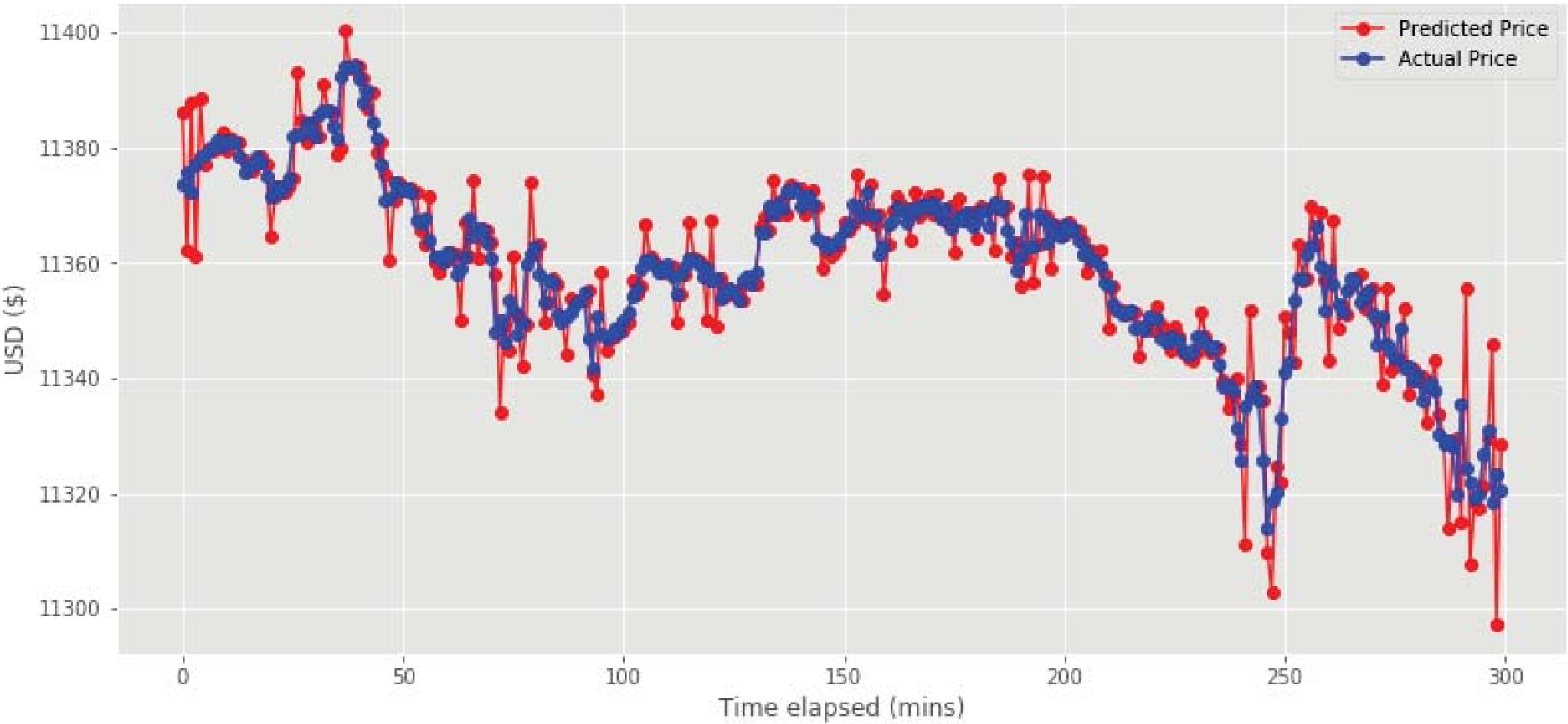
Fig 2: Comparison of actual Bitcoin prices vs. KryptoOracle's 1-minute lead predictions.
The error analysis (Fig 3) demonstrates that while the error spikes during sudden regime shifts, the adaptive online learning mechanism quickly recalibrates the model to descend back to a baseline error state.
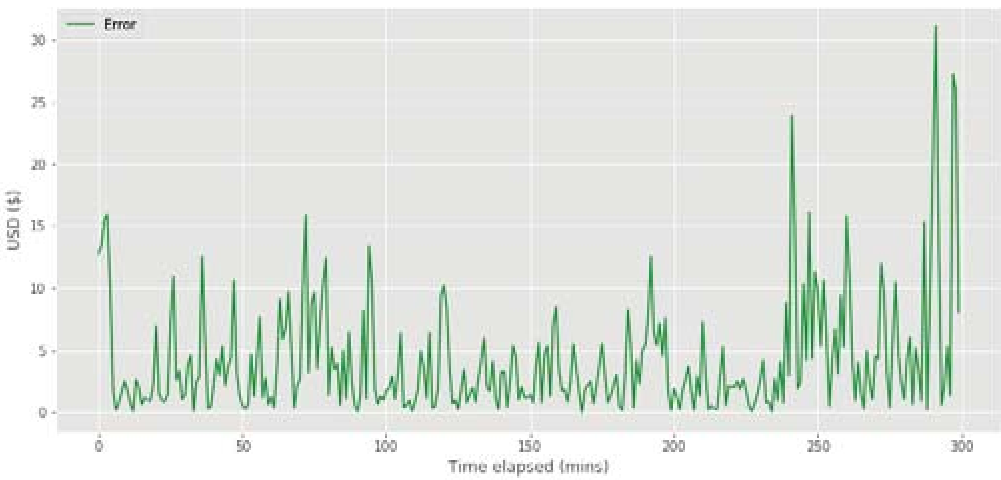
Fig 3: RMSE measured over a 5-hour period showing the system's stability.
Critical Insight & Conclusion
KryptoOracle’s primary contribution isn't a new "Black Box" algorithm, but rather a robust pipeline that bridges the gap between social media sentiment and financial execution.
Takeaways for the Industry:
- Persistence is Key: Using Hive and Spark RDDs ensures the system can survive memory overloads—a common occurrence in real-time trading.
- Sentiment relies on Influence: In decentralized markets, who is talking is often as important as what is being said.
- Future Evolution: While XGBoost is powerful for tabular data, the next frontier for KryptoOracle will likely involve integrating LSTMs or Transformers directly into the Spark streaming context to better handle the long-term dependencies of financial time series.