
Language Grid Revisited: Democratizing Multilingual Collaboration through Service-Oriented Intelligence
Language Grid Revisited: An Infrastructure for Intercultural Collaboration
The paper revisits the Language Grid, a service-oriented infrastructure designed to facilitate intercultural collaboration by wrapping existing language resources (dictionaries, translators, etc.) into atomic and composite Web services. It establishes a global, federated operation model that integrates diverse technical resources and stakeholders into a unified "collective intelligence" ecosystem.
TL;DR
The Language Grid is a pioneering infrastructure that transforms static language resources (like dictionaries and translation software) into interoperable Web services. By solving the "Why" and "How" of resource sharing, it enables diverse communities—from schools to hospitals—to build custom translation tools in weeks rather than months. Its core value lies in a federated operation model that balances intellectual property rights with ease of use.
Background & Motivation: The Language Barrier Beyond Words
Despite the ubiquity of the Internet, language remains the "Great Wall" of digital collaboration. While 65% of the online population does not speak English, most technical tools are siloed. The authors identify a critical bottleneck: researchers and NPOs often have the resources (dictionaries, parallel texts) but lack the technical or legal framework to combine them.
The Language Grid was born from a pivotal shift in philosophy: "From Language Resources to Language Services." Instead of downloading data, users invoke services via standardized APIs, bypassing the nightmare of incompatible formats and complex licensing negotiations.
Methodology: The Architecture of Collaboration
The system is built on a robust four-layer architecture designed to handle the complexities of distributed computing and human-centric needs.
1. The Four-Layer Stack
- P2P Service Grid Layer: Manages the core nodes and shares service registration data globally.
- Atomic Service Layer: Wraps raw code or data (e.g., a Japanese-English dictionary) into a standard Web service.
- Composite Service Layer: The "magic" layer where users create workflows. For example, a Japanese-to-Portuguese translator can be synthesized by cascading Japanese-English and English-Portuguese services.
- Application Layer: Where end-user tools (like chat systems or web portals) reside.
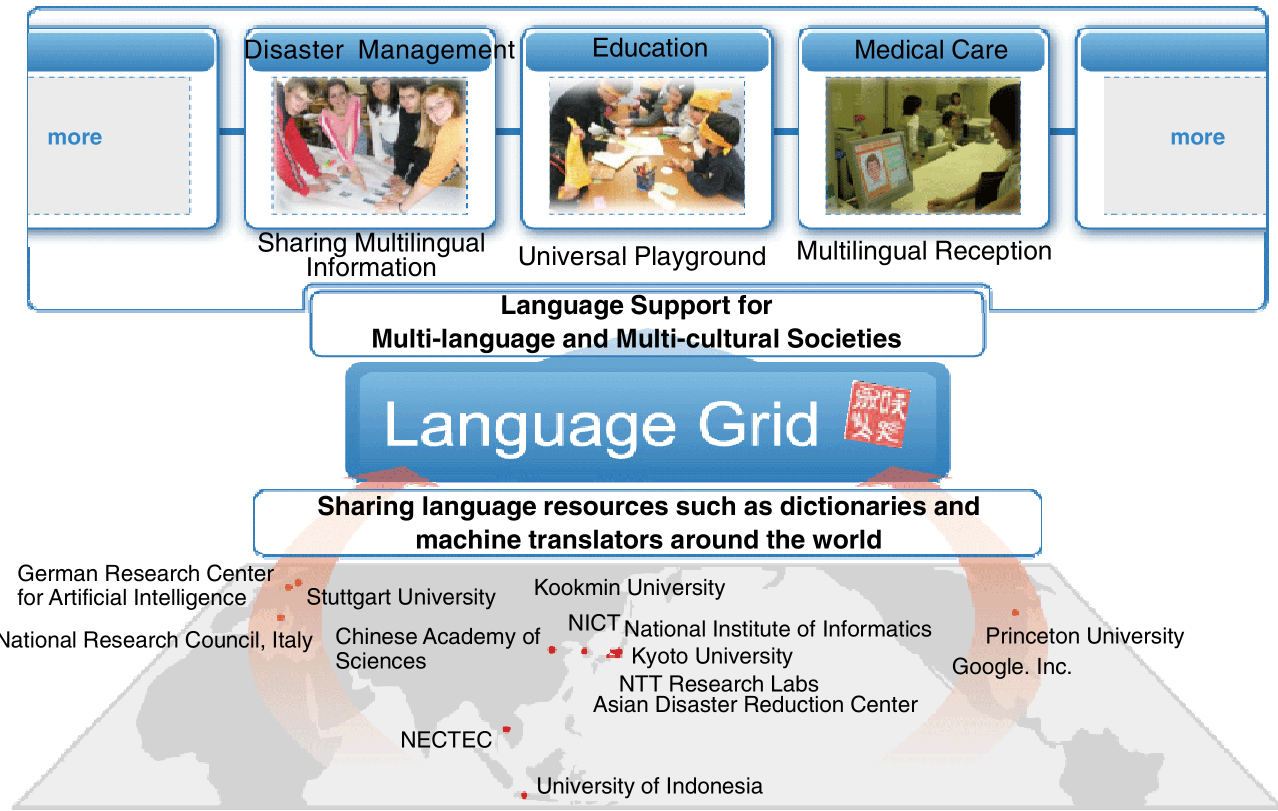 Fig 1: The Design Concept showing the interplay between Service Providers, Users, and Grid Operators.
2. Solving the IP Dilemma
One of the paper's greatest insights is its Institutional Design. Intellectual Property (IP) often prevents sharing. The Language Grid solves this by allowing providers to set distinct usage categories: Non-profit, Research, or Commercial. This transparency motivates entities like Google or the Chinese Academy of Sciences to contribute to the same grid without fear of misuse.
Experiments & Real-World Impact
The Language Grid is not just a theoretical framework; its effectiveness is proven through extensive field deployments.
Case Study: Multilingual Medical Reception
In Kyoto City Hospital, a system was deployed to help foreign outpatients. Because general machine translation is often too inaccurate for medical contexts, the grid allowed the community to plug in Parallel Medical Text Services specifically curated by volunteer interpreters.
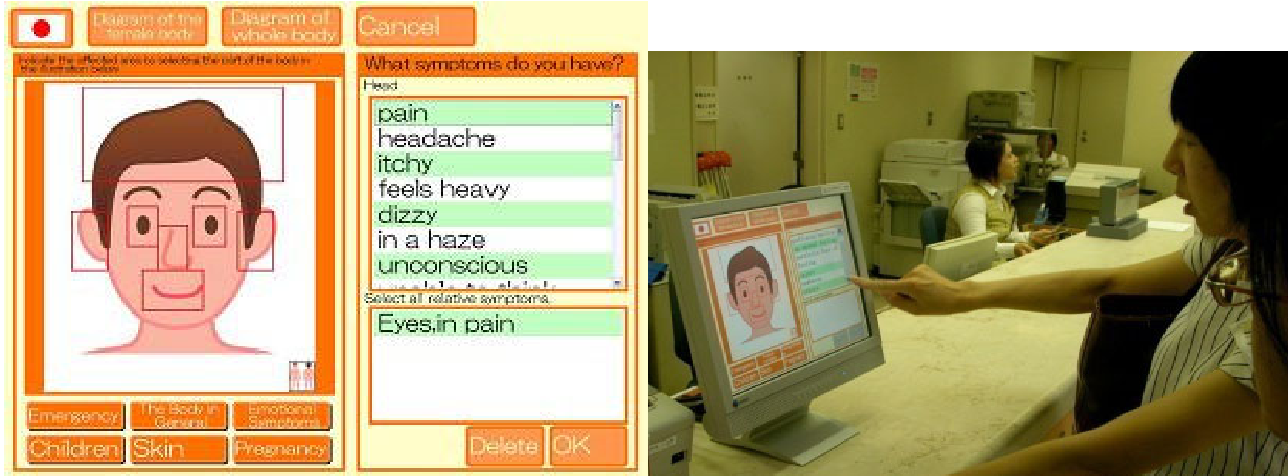 Fig 2: The Multilingual Reception System used in hospital settings.
Quantifiable Scale
The diversity of services supported is vast, ranging from morphological analysis to Speech-to-Text.
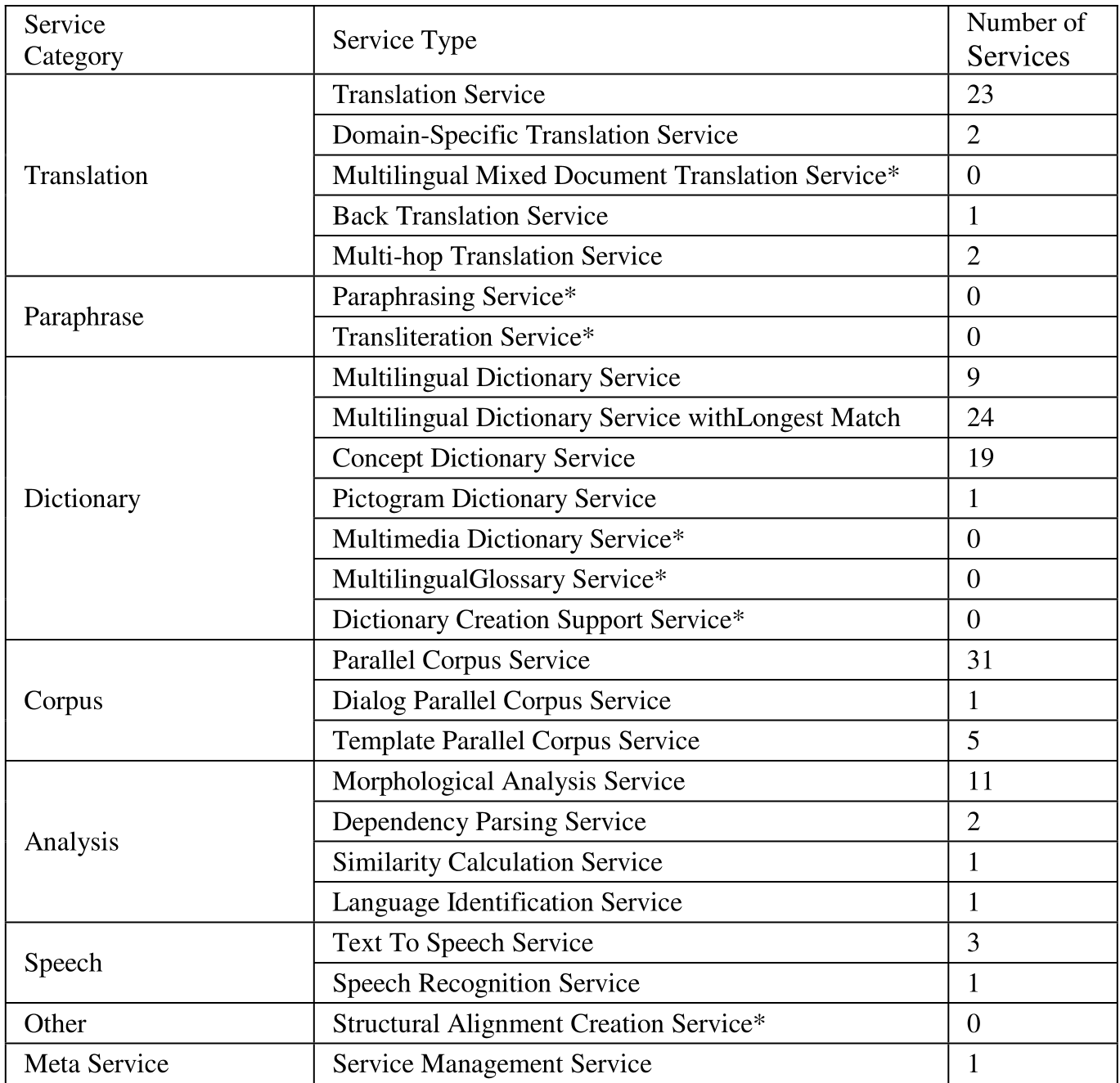 Table 1: The extensive variety of atomic and composite services available.
Federated Operation: Scaling Beyond Kyoto
To avoid a single point of failure (and a single point of control), the authors introduced Federated Operation. This allows different organizations (like centers in Bangkok or Jakarta) to operate their own grids while remaining "affiliated." This peer-to-peer network ensures that local language resources (like a specific Thai dialect) can be managed locally but accessed globally.
Critical Analysis & Conclusion
Takeaway
The Language Grid teaches us that interoperability is the prerequisite for innovation. By standardizing the "Language Service" API, it lowered the barrier for non-experts to create sophisticated, context-aware tools.
Limitations & Future Work
The paper, written in the pre-LLM era, focuses heavily on rule-based and early statistical translation. In a modern context, the "Atomic Services" would likely be replaced by LLM agents. However, the governance model and the focus on domain-specific dictionaries remain highly relevant today, as general LLMs still struggle with hyper-local context and specialized terminology.
The Language Grid revisited serves as a blueprint for how we might build the next generation of "AI Grids"—where models, data, and human expertise are woven into a collaborative, global fabric.