
Deciphering Gender through the Lens of Color: A Language-Independent Approach to Twitter Analytics
Language independent gender classification on Twier
The paper introduces a novel approach for gender classification on Twitter using five color-based features from user profiles. By leveraging color preferences instead of text, the method achieves language-independent classification with a peak accuracy of 71.4% using the NB-Tree classifier.
TL;DR
While most AI models "read" your tweets to guess who you are, this research proves that your profile's color palette says just as much. By analyzing just five profile color settings—such as background and link colors—researchers achieved over 70% accuracy in gender prediction. This method is completely language-independent, computationally "cheap," and bypasses the need for complex NLP.
Background Positioning
In the ecosystem of Social Network Analysis (SNA), gender classification usually falls under the "Text Mining" umbrella, requiring massive N-gram models and localized linguistic knowledge. This paper shifts the paradigm toward Visual Stylometry, treating a user's aesthetic choices as a stable, cross-cultural biometric.
The Problem: The High Cost of "Reading"
Existing SOTA methods for gender classification on Twitter are resource-heavy. Models like those by Burger et al. utilize over 15 million features extracted from text. This creates three critical bottlenecks:
- Language Dependency: A model trained on English tweets fails on the 50% of Twitter content that is non-English.
- Computational Complexity: Processing high-dimensional spaces for millions of users is inefficient and slow.
- Data Sparsity: Many users have empty bios or rarely tweet, leaving text-based models with nothing to analyze.
Methodology: The "Aesthetics-as-Data" Pipeline
The authors realized that Twitter users exert significant agency when customizing their profile layouts. They extracted five specific color features:
- Background Color
- Text Color
- Link Color
- Sidebar Fill Color
- Sidebar Border Color
The Secret Sauce: Quantization and Sorting
Raw RGB data is messy (over 16 million possible combinations). To make this data "learnable," the authors implemented a crucial preprocessing step:
- Color Reduction (Quantization): RGB values were shrunk from 8-bit to 3-bit, reducing the search space to just 512 colors.
- HSV Sorting: To help classifiers understand that "light blue" is similar to "dark blue," colors were sorted by Hue and Value (HSV) before being fed into the system.
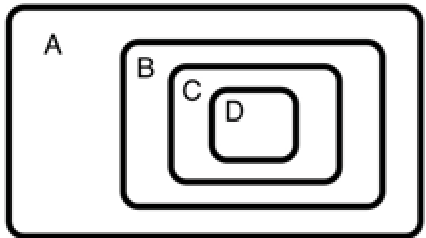 Figure 1: The study categorized users into subsets (T1-T4) to account for default vs. custom design choices.
Experiments & Results: Efficiency Wins
The researchers tested four classifiers: Probabilistic Neural Network (PNN), Decision Tree (DT), Naïve Bayes (NB), and a Hybrid NB-Tree.
Key Findings:
- The Power of Five: Using all five color features consistently outperformed using just the background color.
- The "Quantization Boost": Preprocessing wasn't just a compression step—it was a performance driver. It increased accuracy by up to 13% by reducing noise and clustering similar aesthetic preferences.
- SOTA Comparison: While text-based models might hit higher raw percentages in single-language tasks, the NB-Tree classifier in this study reached 71.4% accuracy with virtually zero linguistic overhead.
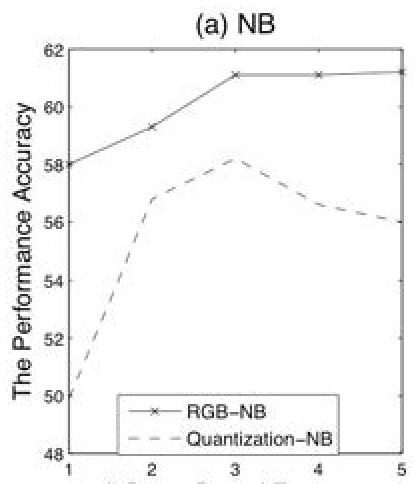 Figure 2: Accuracy comparison showing the massive gains provided by color quantization across different classifiers.
The visual breakdown of color preferences (Figure 4) revealed a clear "hot/cold" divide: female users gravitated toward a broader spectrum of warm tones (pinks, purples), while male users concentrated on cooler or darker default tones.
 Figure 3: Distinct color preference clusters for female (left) and male (right) users.
Critical Insight: Why This Matters
This work highlights a significant Inductive Bias in social media: our digital "room decoration" reflects our identity just as much as our speech.
Strengths:
- Extreme Scalability: It takes orders of magnitude less memory to store 5 integers (colors) than a history of 1,000 tweets.
- Privacy-Friendly(ish): It identifies gender without needing to scrape the actual content of private conversations.
Limitations:
- Platform Specificity: The method relies on the platform offering customization. Modern "clean" UIs (like the current X or Facebook) limit these features, potentially neutralizing this specific method.
- Gender Binary: The study adheres to a binary classification, which may not capture the full spectrum of identity expressed through color in modern social contexts.
Conclusion
"Language Independent Gender Classification on Twitter" is a masterclass in feature engineering. By looking at how a user presents their page rather than what they write, the authors found a shortcut through the complex world of NLP, proving that in social data science, sometimes a few pixels are worth a thousand words.