
Beyond the Screen: How "Laptoping" Redefines the Modern Learning Situation
Laptopers in an educational practice: Promoting the personal learning situation
This paper presents an ethnographical study of "laptoping" in university lectures, utilizing Goffman's involvement theory to categorize student behaviors. It introduces the "Laptoper" as a human-technology hybrid and demonstrates how digital activities can be strategically aligned with a "Personal Learning Situation" rather than merely serving as distractions.
TL;DR
Is the laptop a "Sage on the Stage"'s worst nightmare or a student's most powerful ally? This study moves beyond the "ban vs. allow" debate by analyzing the Laptoper—the hybrid unit of student and machine. Using sociolinguistics and ethnography, the authors reveal that what looks like distraction is often a sophisticated "alignment" of digital tools to a student's personal learning journey.
Contextualizing the Conflict: Why Bans Fail
The academic world has long been stuck in a polarized debate. On one side, the " Sage on the Stage" view demands undivided attention; on the other, the digital age demands connectivity. Previous research often treats the lecture as a static environment where any deviation from the lecturer is "inappropriate."
The authors argue this is a fundamental misunderstanding of Digital Competence. The problem isn't the laptop; it's the failure to design didactical practices that acknowledge the "Personal Learning Situation."
Methodology: Goffman in the Classroom
To understand what is happening behind the screens, the study applies Erving Goffman's Involvement Theory.
- Dominant Involvement: The culturally accepted core activity (listening to the lecturer).
- Subordinate Involvement: Side activities (taking notes, glancing at a neighbor, or checking a message).
The key insight is Alignment. A subordinate activity can be aligned with the lecture (e.g., looking up a technical term on Wikipedia to better understand the current slide) or unaligned (e.g., playing a penguin game).
 Figure 1: The Laptoper as an analytical unit in the educational habitat.
Key Findings: The "Spreading Effect" and "Glancing"
The ethnography revealed several unique digital behaviors:
- Glancing: Students watch each other's screens to stay in sync. If a peer is taking notes, it validates that the current lecture point is important.
- The Spreading Effect: Content (both educational URLs and entertainment links) moves through a classroom via Instant Messaging (IM) like a digital contagion.
- The Laptop as "Glue": Digital notes and bookmarks created during the lecture serve as "breadcrumbs" that connect the lecture to future group work and home study.
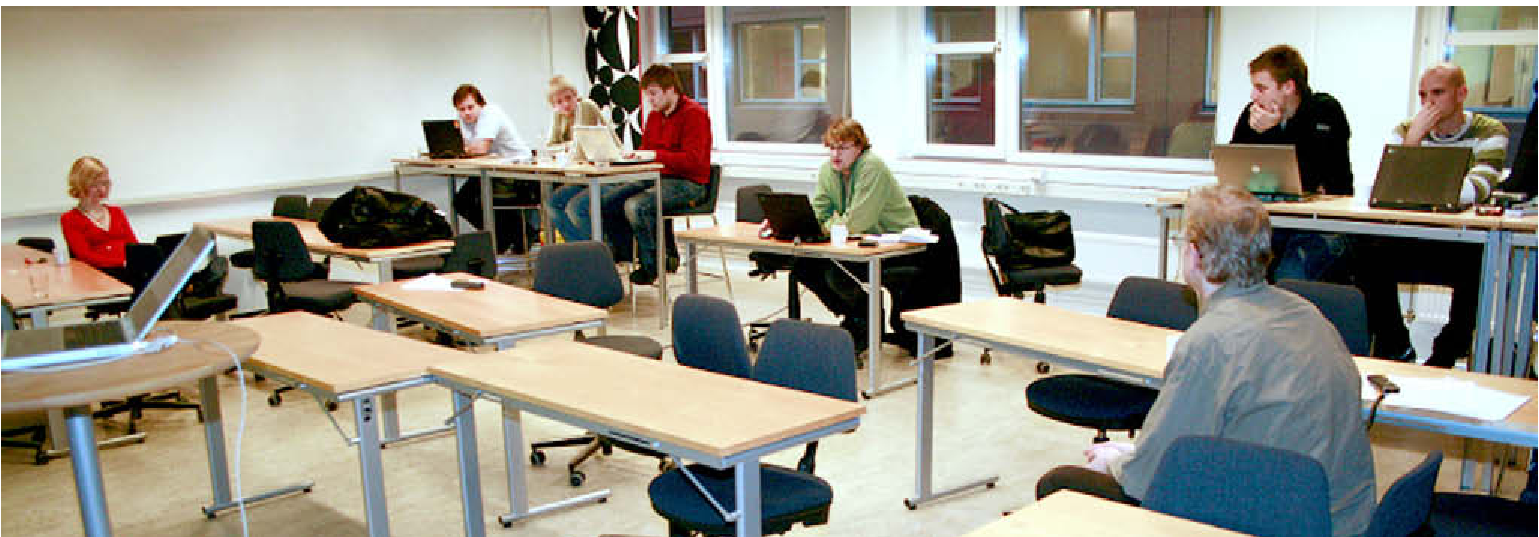 Figure 2: The diversity of laptop roles during a traditional lecture setting.
Redefining "Competent Laptoping"
The paper concludes that we should stop treating the laptop as a binary "good/bad" tool. Instead, we must characterize the Laptoper through five traits:
- Increased Student Responsibility: The student, not the teacher, manages the focus.
- Digital Skills as "Etiquette": Knowing when to mute IM clients is as important as knowing how to use them.
- Extended Temporal Dimensions: The lecture doesn't end when the bell rings; the digital trail lives on.
- Mainstreamed Competition: Lecturers should integrate web-resources rather than fight them.
- Physical Awareness: Managing the distraction of fan noise and screen light.
Critical Insight: The Personal Learning Situation
The most profound takeaway is the distinction between the Educational Practice (the lecture as an institution) and the Personal Learning Situation (the individual's cognitive journey). A student may be "mentally absent" from the lecture but "deeply involved" in a self-directed learning search triggered by the lecture.
By negotiating the role of the laptop, we don't just "allow" technology; we create a foundation for digital literacy that mirrors the professional world. The "sage" must step down and become a partner in a technology-augmented habitat.
Future Outlook
This work challenges future researchers to move beyond surveys and into the specific "Micro-interactions" of the classroom. As the boundary between "online" and "in-person" continues to blur, the ability to maintain Aligned Subordinate Involvement will become the hallmark of the successful modern student.