
EventNet: Scaling Video Event Recognition through Structured Ontologies
Large Video Event Ontology Browsing, Search and Tagging (EventNet Demo)
This paper presents EventNet, a demonstration of the largest video event ontology to date, featuring 500 visual events and 4,490 event-specific concepts. The system leverages hierarchical structures mined from WikiHow and deep learning models (CNN + SVM) to enable interactive browsing, semantic path searching, and real-time video tagging.
TL;DR
The EventNet project, spearheaded by researchers at Columbia University, introduces the largest structured video event ontology to date. By bridging the gap between instructional text (WikiHow) and visual content (YouTube), the system provides an interactive framework for browsing 500 events and 4,490 concepts, alongside a high-efficiency engine for real-time video tagging and semantic search.
Background & Motivation: Moving Beyond "Flat" Recognition
In the mid-2010s, deep learning began shattering benchmarks in image and video recognition. However, a fundamental bottleneck remained: Structure. Most datasets (like UCF101) treated events as a flat list of labels. If a model saw a "Wedding," it didn't necessarily understand the relationship between "Cutting the cake" and the ceremony itself.
The authors of EventNet observed that human activities are naturally hierarchical and procedural. To capture this, they turned to WikiHow, a massive repository of human collective knowledge, to build a map of how events relate to one another.
Methodology: From Crowd Knowledge to Deep Learning
The construction of EventNet followed a systematic pipeline:
- Ontology Discovery: Mining WikiHow's category tree to identify 500 visually manifestable events.
- Concept Harvesting: Using event names as queries on YouTube to find related tags (e.g., for "Bike Riding," concepts might include "helmet," "pedal," "road").
- Model Training:
- An AlexNet-based CNN was trained on 95k videos to categorize events.
- Features from the CNN's penultimate layer were used to train Binary SVMs for the 4,490 concepts, allowing for fine-grained "tagging" of specific elements within a video.
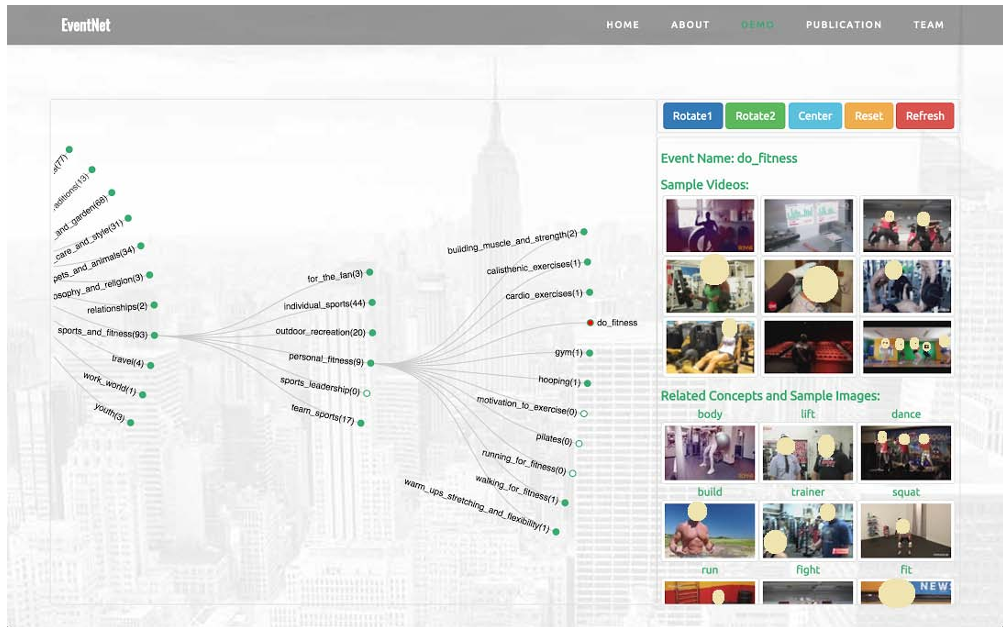 Figure 1: The interactive tree browser allows users to navigate the hierarchy from broad categories down to specific visual concepts.
Key Innovations in the Demo
1. Path-Based Semantic Search
Unlike traditional search engines that return a single label, EventNet returns hierarchical paths. If you search for "Repair," you don't just get a video; you see the path: Home & Garden -> Car Repair -> Changing a Flat Tire. This provides crucial context for understanding the scope of the detected activity.
2. Live Video Tagging
The system supports real-time uploads. It samples frames Every 10 seconds, runs them through the CNN/SVM stack, and generates an "Explanation" of the video. It doesn't just say "This is a Cooking video"; it tags the specific concepts (e.g., "knife," "frying pan," "salt") that led to that conclusion.
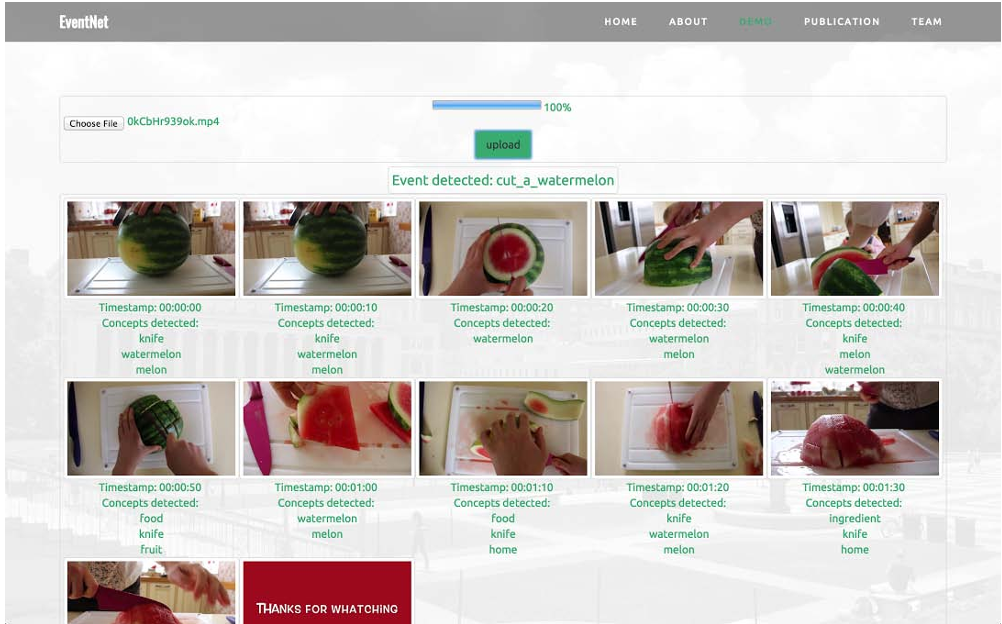 Figure 2: The search functionality focuses on tree navigation, helping users discover sibling events and related semantic categories.
Experiments and Performance
While this paper focuses on the demonstration, the underlying metrics are impressive:
- Scale: 500 events, 4,490 concepts, 95K training videos.
- Efficiency: A 10MB video processed in 5 seconds. This was particularly significant in 2015, proving that large-scale ontologies could be served with real-time latency on standard hardware.
- Utility: By using an "expandable, rotatable tree," the UI solves the visualization challenge of navigating thousands of nodes without overwhelming the user.
Critical Analysis & Future Outlook
The Takeaway: EventNet represents a shift from "Recognition as Pattern Matching" to "Recognition as Knowledge Mapping." By grounding computer vision in an existing human knowledge base (WikiHow), the authors created a system that is inherently more interpretable than a standard black-box classifier.
Limitations: As a 2015 work, the model relies on AlexNet and SVMs, which have since been superseded by Transformers and Vision-Language Models (VLMs) like CLIP. Furthermore, the 10-second sampling rate might miss fast-paced actions.
Future Impact: Today's Large Video Models (like Sora or Gemini 1.5 Pro) essentially do what EventNet dreamed of—connecting vast amounts of textual knowledge with visual sequences—on an even grander scale. EventNet was the spiritual ancestor to the current trend of "instructional video understanding."
Conclusion
EventNet remains a landmark demonstration of how structured metadata can transform video analysis from a simple classification task into a rich, exploratory journey through human activity.