
Live Streaming or Law Breaking? A Deep Dive into SLSS Legal Risks
Law Infringements in Social Live Streaming Services
This study presents an empirical content analysis of 7,621 live streams across Periscope, Ustream, and YouNow to identify legal risks. It develops a comprehensive codebook to categorize law infringements, finding that nearly 18% of streams involve potential violations, primarily in copyright and personality rights.
TL;DR
Social Live Streaming Services (SLSSs) like Periscope, YouNow, and Ustream offer unprecedented connectivity, but they also host significant legal liabilities. An empirical study of over 7,600 streams reveals that nearly 1 in 5 broadcasts potentially violate laws ranging from copyright theft to dangerous road traffic acts.
The "Real-Time" Risk: Why SLSS is a Legal Minefield
Unlike static social media (Instagram or Facebook posts) where content can be reviewed before publishing, live streaming is raw and instantaneous. This lack of a "buffer" creates unique legal frictions:
- Context Collapse: Streamers often forget that "public" broadcasting is legally different from "private" chatting.
- Incidental Exposure: Third parties in the background of a stream rarely give consent, leading to personality rights violations.
- The Gamification of Infringement: Platforms like YouNow reward engagement, which can inadvertently encourage "trolling" or risky behavior to gain viewers.
Methodology: Coding the Chaos
To map this landscape, the researchers developed a rigorous research model that connects the Streamer (Age, Gender, Motivation) to the Platform and the resulting Content.
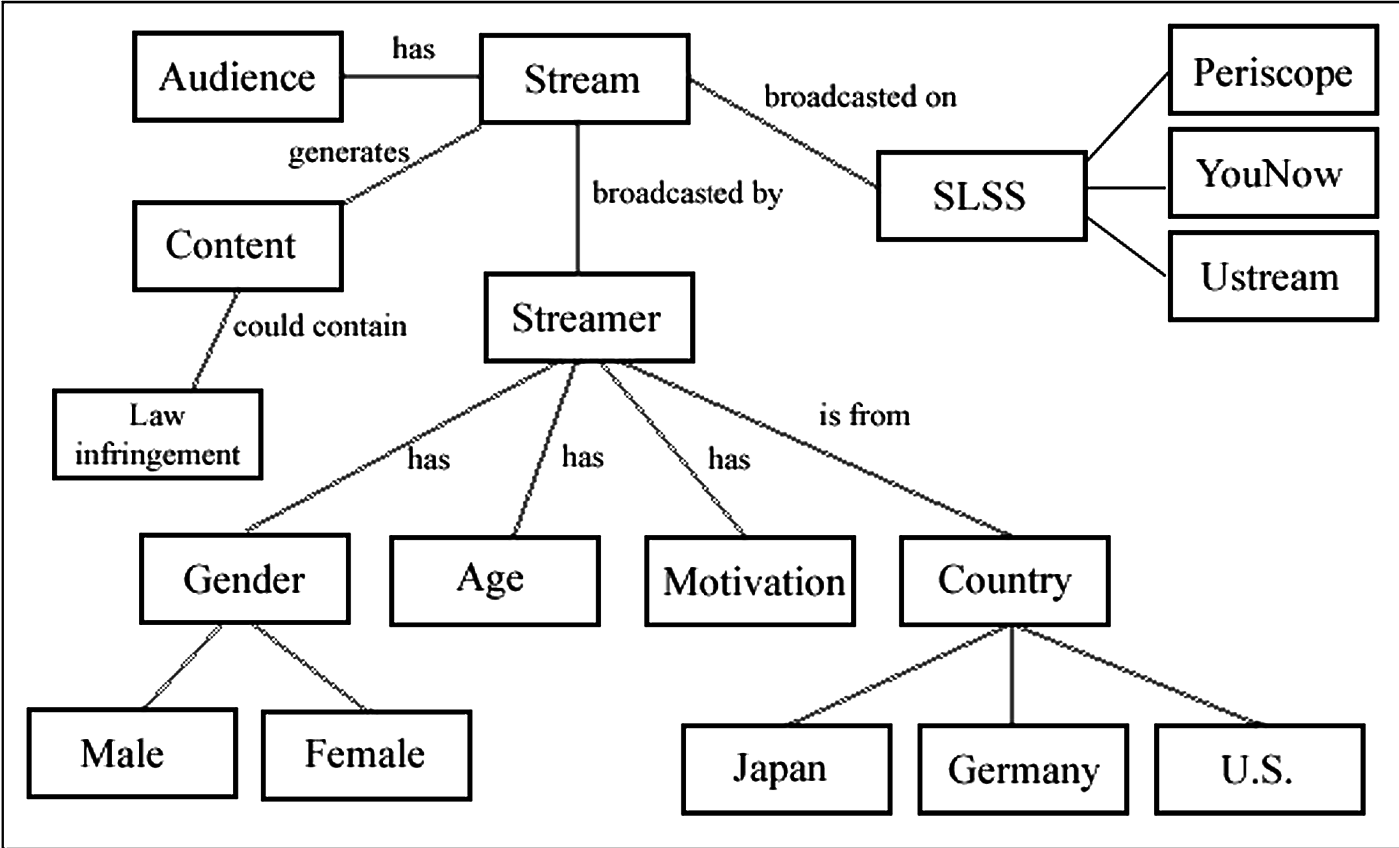
The team observed streams across Germany, Japan, and the U.S., using the German law as the baseline—widely considered the strictest regarding personality and copyright protections.
Key Findings: The Anatomy of an Infringement
The data suggests that the type of law broken depends heavily on who is streaming and why.
1. The Generation Gap
While older generations (Baby Boomers) are less tech-savvy, they are significantly more law-abiding on camera. Generation Z (born after 1996), however, showed a worrying trend: while they "lived" on these platforms, they were three times more likely than other groups to violate data protection laws (e.g., exposing addresses or private messages) and insults.
2. Profit vs. Privacy
The study found a binary in motivations:
- For Profit: Streams motivated by money (common on Ustream) were heavily linked to Video Copyright and Sports Broadcasting violations.
- For Socializing: Streams motivated by boredom or fun (common on YouNow) were the primary source of Music Copyright and Personality Rights infringements.
3. Platform Comparison
The platforms themselves dictate the "flavor" of the violations.
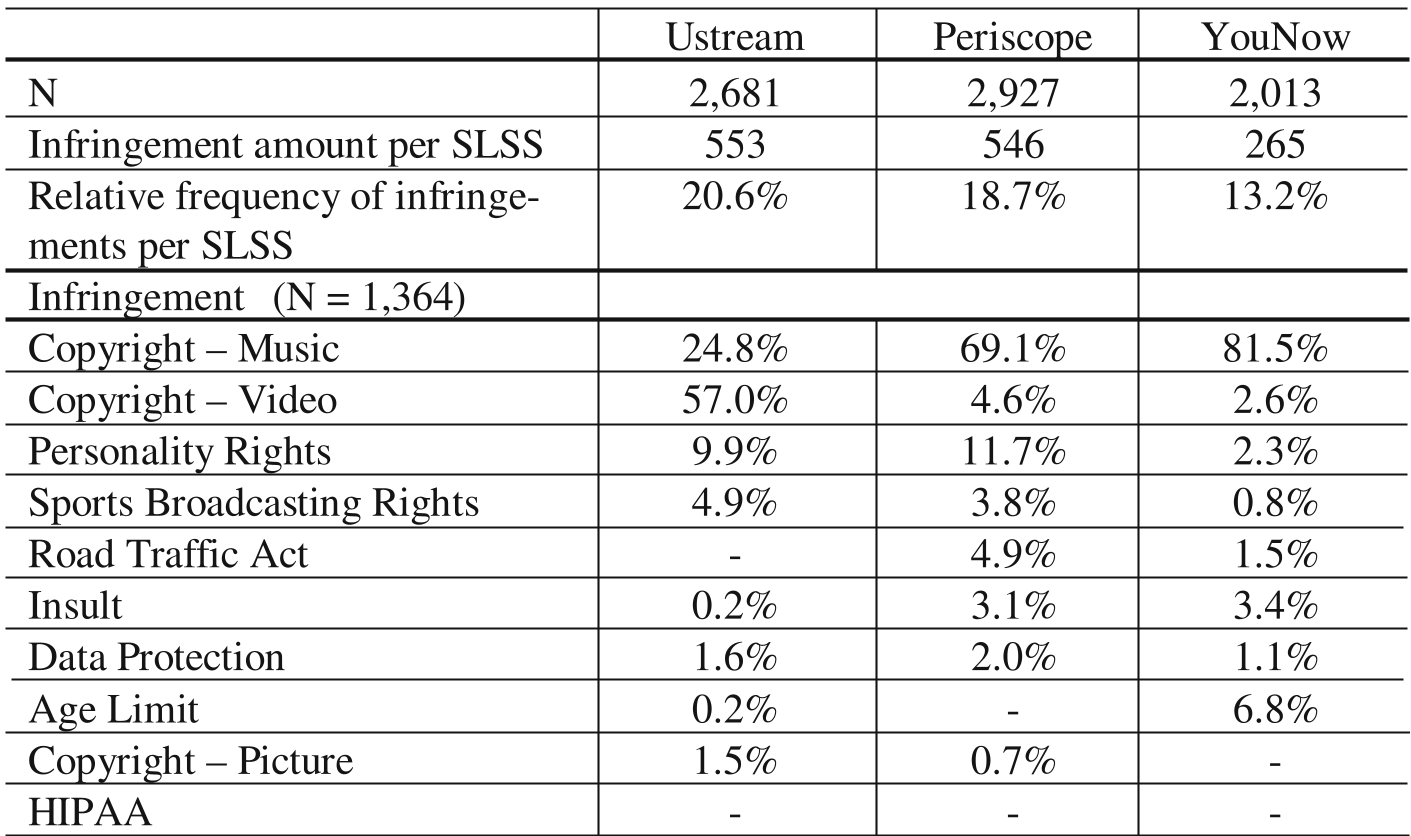
- Periscope: The leader in Road Traffic Act violations (streaming while driving) and personality rights issues because of its mobile-first, "on-the-go" nature.
- Ustream: A hub for streaming pirated movies and sports events.
- YouNow: High rates of Age Limit violations and music copyright issues among teenagers.
Critical Insight: The "Troll" Factor
One of the most dangerous findings involves the "Motivation" analysis. When the streamer's intent was to "Troll," the rate of Data Protection violations spiked to 21.0%, and Insults reached 36.8%. This indicates that legal infringements on SLSS are not always accidental; for a subset of users, the violation is the content.
Conclusion & Future Outlook
The study concludes that the concerns of parents and critics are justified, but nuanced. The real danger isn't just "copyrighted music in the background"—it is the cavalier attitude toward the privacy and safety of others, particularly among younger users.
Takeaway for the Industry: SLSS providers shouldn't just rely on automated copyright strikes. They need to implement better UI prompts that warn users when they are entering "public" spaces or driving, and more robust "digital citizenship" education for minors who may not realize that a 2-minute stream can have lifetime legal consequences.