
Intelligent Privacy: Automating Social Network Access Control via Supervised Learning
Learning based access control in online social networks
This paper introduces a supervised learning-based framework to automate access control policy composition in Online Social Networks (OSNs). By leveraging a "focus user's" manual labeling of a small subset of friends and fusing decisions from similar users, the system automatically generates fine-grained privacy settings for the remaining community.
TL;DR
Managing who sees your photos or profile details among hundreds of "friends" is a usability nightmare. This paper presents a supervised learning approach that learns your privacy preferences from a few examples and "asks" your trusted friends for advice to reach an impressive 83% accuracy in predicting access rights.
The Scalability Wall of Privacy
In the early 2010s, social networks like Facebook and Last.FM exploded in complexity. The average user had 130 friends, making the manual task of setting permissions for every new photo or status update nearly impossible. Most users either left their profiles wide open (risking privacy) or locked them down completely (stifling social utility).
The core problem is the Policy Composition Burden. Users are not security experts; they need a system that understands their "Social Intuition" without requiring a manual rulebook.
Methodology: From Clusters to Classifiers
The authors suggest that we don't need to label every friend. Instead, we can treat access control as a classification problem: Trusted vs. Not-Trusted.
1. Representative Sampling
To minimize user effort, the system clusters friends using:
- Profile Attributes: Age, Gender, Location.
- Network Metrics: Degree, Betweenness, and Closeness Centrality. By selecting representative friends from these clusters, the user only labels the samples that "matter" most to define boundaries.
2. The Learning Pipeline
The system doesn't just pick one algorithm. It trains and compares nine different models, including Naive Bayes, Random Forest, and Support Vector Machines (SVM).
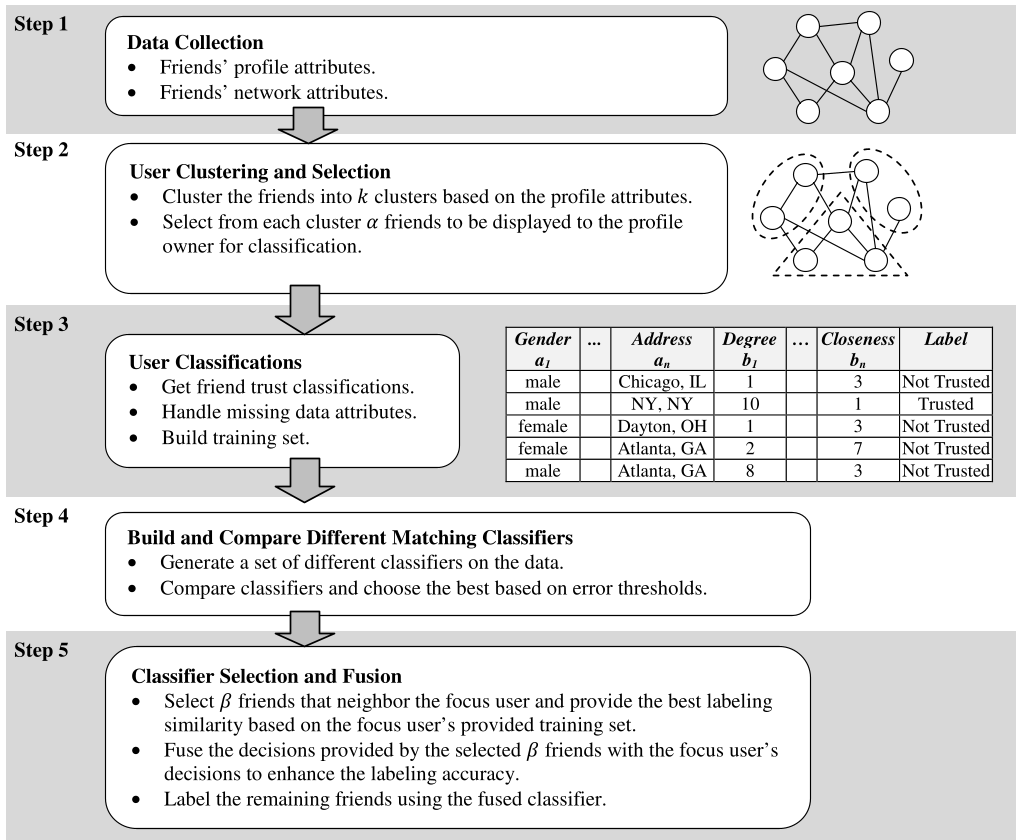 Figure 1: The architecture transition from raw social data to an automated policy.
3. Wisdom of the Social Crowd (Classifier Fusion)
The "secret sauce" of this paper is Fusion. If your friend shares similar privacy values, their "classifier" can help predict your preferences. The system selects friends whose previous labeling behavior aligns with yours and combines their predictions using techniques like "Group Voting" or "Most Confident" selection.
Experimental Battleground: Last.FM & Facebook
The researchers tested their theory on real-world data from Last.FM. The results revealed a clear trend: individual models were "fine," but collaborative models were "great."
- Baseline Performance: Best individual classifiers hovered around 70%.
- Fusion Boost: Adding social advice pushed accuracy to 83%.
- Top Performer: The AD Tree (Alternating Decision Tree) emerged as the most robust architecture for this specific task.
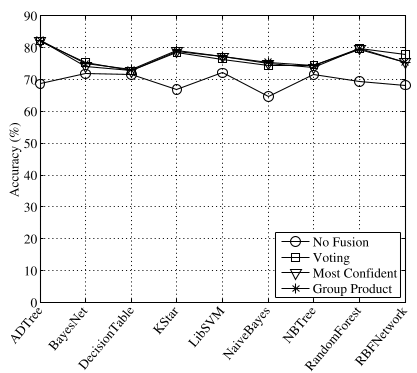 Figure 2: Accuracy comparison across different classifier types showing the superiority of tree-based methods.
Critical Insight & Future Outlook
The brilliance of this work lies in treating Privacy as a Social Attribute, not just a technical setting. By utilizing network topology (who is "central" to your circle), the model captures the nuance of human relationships that simple keywords cannot.
Limitations: The study assumes "Trust" is binary. In reality, trust is a spectrum (e.g., "Close Friends" vs. "Acquaintances"). Furthermore, "Context" (is it a party photo or a work update?) is not deeply explored here, which remains a vital frontier for modern AI-driven privacy.
Conclusion: This research paved the way for the "Smart Suggestions" we see in modern apps today. It proved that machine learning could solve the "tedium problem" of security, making safety accessible to the average user.