
Echoing Human Emotion: Incremental Learning of Affective Robot Gestures
Learning Bodily Expression of Emotion for Social Robots Through Human Interaction
The paper introduces an incremental behavior selection and transformation framework for social robots to learn and express emotions through human interaction. By employing a Dynamic Cell Structure (DCS) for unsupervised learning and a geometric-algebra-based transformation model, the Pepper robot successfully learned and mirrored affective bodily expressions from human partners.
TL;DR
Researchers have developed a framework that allows social robots to learn emotional bodily expressions directly from their human partners. By combining incremental unsupervised learning with a kinematic transformation model, a Pepper robot was able to identify a user's "habitual" gestures over several days and adapt its own emotional repertoire to reflect the user's personality and culture.
Motivation: The "One-Size-Fits-All" Problem in HRI
In Social Human-Robot Interaction (HRI), the "uncanny valley" or a lack of engagement often stems from the robot’s rigid, pre-programmed behavior. Human emotions are not universal constants; they are influenced by personality, environment, and culture.
The authors argue that social robots should develop similarly to infants. Infants do not come pre-equipped with a full library of social cues; instead, they seek "social referencing" from their parents, imitating gestures to conform to social norms. This paper seeks to bridge the gap by moving away from static datasets toward a system where the robot's "personality" is a reflection of the human it interacts with—a phenomenon known in psychology as the Chameleon Effect.
Methodology: From Skeleton to Robot Motion
The proposed pipeline handles the entire journey from perceiving a human gesture to executing a robot motion through three distinct phases:
1. Encoding and Incremental Learning
When the robot's camera tracks a human, it captures a 3D skeleton. However, different actions have different durations. To normalize this, the authors use Covariance Descriptors. This method ignores the absolute time length and instead focuses on the relationship (covariance) between joint positions over time, capturing both spatial and temporal essence into a fixed-length feature vector.
For the learning phase, the authors utilize a Dynamic Cell Structure (DCS). Unlike standard Self-Organizing Maps (SOM) which requires a fixed number of "neurons" (clusters) from the start, DCS can grow. It adds new neurons when it encounters unfamiliar behaviors, allowing the robot to learn new gestures on Day 2 without forgetting what it learned on Day 1.
2. Behavior Selection
The robot doesn't just copy every move. It identifies "habitual" behaviors—patterns that appear most frequently in the clusters. The framework picks the "representative" pattern (the one closest to the cluster center) to ensure the robot’s gesture is stable and recognizable.
3. Kinematic Transformation
As seen in the architecture below, humans have more Degrees of Freedom (DOF) than most robots.
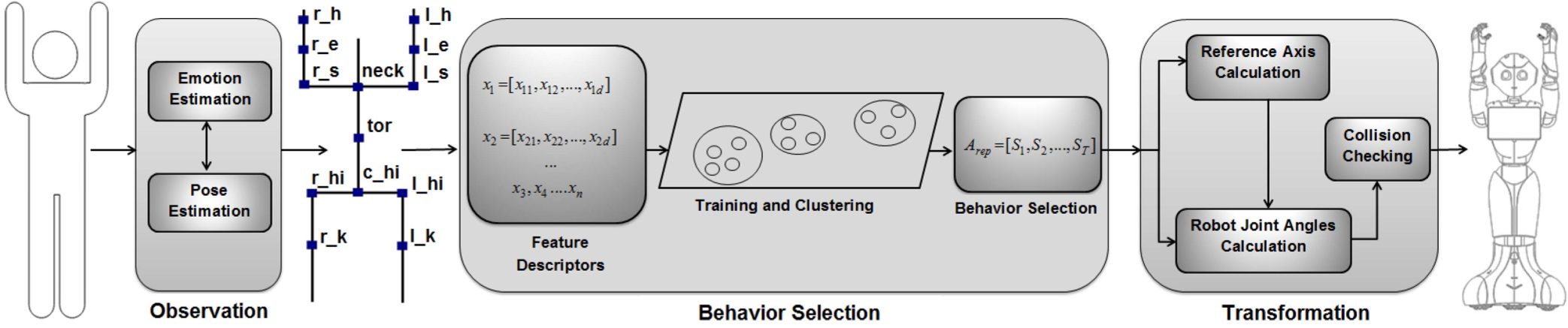 Fig 1: The full flow from human 3D pose estimation to robot motion execution.
The researchers used Geometric Algebra to solve the Inverse Kinematics (IK) problem, mapping human joint movements to Pepper’s constraints while performing real-time self-collision checking.
Experimental Insights: Does it Work Across Cultures?
The study involved a rigorous multi-cultural evaluation with participants from China, Japan, Korea, Turkey, and Vietnam.
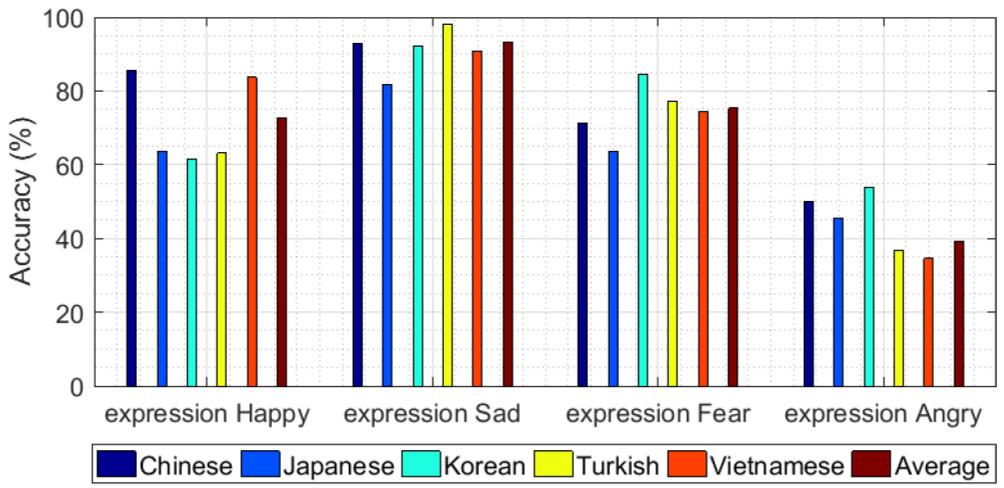 Fig 2: Comparison of Human Postures (from the UCLIC dataset) and the transformed motions on the Pepper robot for Happy, Sad, Fear, and Angry.
Key Findings:
- The Recognition Gap: In many cases, the robot's "Happy" expression was recognized better than the human skeleton version. This is likely because the physical form of the robot provides a more grounded context (e.g., the proximity of hands to the face) compared to a floating skeleton.
- Physical Limitations: The robot struggled with "Angry." In human gestures, anger often involves bringing hands very close to the hips or subtle torso shifts. Pepper’s physical design and its "inherently friendly" face (based on Japanese anime aesthetics with large eyes) made it difficult for users to perceive it as truly angry.
- Cultural Nuance: The study used the Arousal-Valence model to measure emotional impact. It found that Japanese observers tended to perceive the robot’s "Sad" gesture as more negative (lower Valence) than Vietnamese or Turkish observers did, highlighting the importance of the robot's ability to adapt to its specific domestic culture.
Critical Analysis & Conclusion
This work represents a move toward "Personalized AI" in robotics. By using incremental learning, the robot doesn't just "act"; it "evolves."
Limitations: The current model focuses primarily on the upper body. As noted in the "Fear" experiments, the robot’s inability to step backward (a lower-body action) reduced the recognition rate of that emotion. Furthermore, the robot’s fixed facial expression can sometimes conflict with its bodily gestures (the "friendly face" vs. "angry body" conflict).
Future Outlook: The next frontier is multimodal integration. Imagining a robot that combines these personalized gestures with emotional speech synthesis would pave the way for true companion robots that feel like a natural part of a user's social environment.
Takeaway
The most effective social robots of the future will not be those with the most "perfect" pre-shot animations, but those that can mirror and adapt to the unique non-verbal language of their owners.