
Deciphering the Visual Genome: A Deep Dive into Racial Face Analysis
Learning Race from Face: A Survey
2014-05-02
Summary
Problem
Method
Results
Takeaways
Abstract
This paper presents a comprehensive survey of "Learning Race from Face," a multidisciplinary field integrating computer vision, psychology, and neuroscience. It systematically categorizes state-of-the-art methods in racial feature representation and classification, highlighting achieving near-SOTA performance (~99% accuracy) on specific 3D datasets.
## TL;DR
While AI has mastered "Who" (Identity) and "What" (Expression), the "How" of social categorization—specifically race—remains a complex frontier. This survey by Fu et al. explores the transition from simple skin-tone heuristics to sophisticated 3D anthropometric modeling and brain-inspired hierarchical networks, achieving over 99% accuracy in controlled settings while exposing the biases inherent in current datasets.
## The Motivation: Moving Beyond "Skin Deep"
For years, the computer vision community treated race as a byproduct of skin color. However, as this survey points out, chromatic features are the most volatile and lease reliable cues. The real challenge lies in the **Other-Race Effect (ORE)**: the phenomenon where both humans and algorithms fail to distinguish individuals of a race that is not well-represented in their "training" environment.
The authors argue that race is not just a label but a complex geometric and configurational manifold. To truly "learn race," a model must understand the subtle craniofacial measurements and the "First-order" (holistic) vs. "Second-order" (relational) features of the human face.
## Methodology: The Architecture of Perception
The paper breaks down racial feature extraction into a multi-tiered hierarchy:
1. **Global/Holistic**: Using PCA (Eigenfaces) to capture the primary variance in facial structure.
2. **Local Descriptors**: Employing Gabor wavelets and Local Binary Patterns (LBP) to detect textures in the periocular (eye) and nasal regions.
3. **3D Structural Analysis**: Using 3D meshes to identify anthropometric landmarks that are invariant to lighting and makeup.
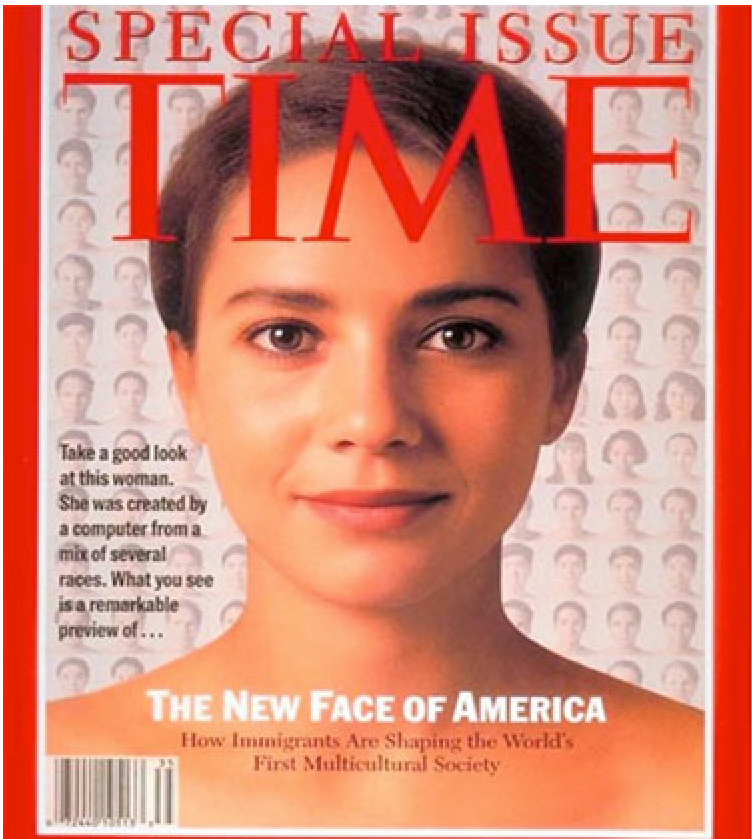
*Fig 1: The intersection of facial cues (Age, Gender, Race) and their impact on social decision-making.*
The most effective modern approaches now utilize **3D scan technologies**, which allow for precise measurements of the "eye-nose triangle" and jaw profiles—features that remain constant even when 2D textures are degraded.
## Experimental Insights: 3D vs. 2D
The survey reveals a significant performance gap. In constrained 3D environments (like the FRGC v2.0 database), methods such as **MDS (Multi-Dimensional Scaling)** and **Hog-based 3D descriptors** achieve near-perfect results.

*Table 1: Comparison of SOTA race classification methods. Note the high accuracy of 3D-based methods (98-99%) vs. diverse 2D methods.*
However, when moving to "Wild" datasets (like Flickr or Web-crawled images), accuracy drops. This is where **Manifold Learning** and **Convolutional Neural Networks (CNNs)** come into play, attempting to map the high-dimensional face space into low-dimensional racial clusters.
## Future Frontiers: Mixed Race and Brain-Like AI
The survey concludes with three provocative future directions:
- **From Single to Mixed Race**: As global populations merge, "biracial" classification becomes the new challenge, requiring fuzzy-based membership functions rather than hard labels.
- **Selective Attention**: Emulating how the human brain focuses on the "eye-centric" regions for certain races vs. "nose-centric" for others (as shown in eye-tracking data).
- **Cross-Cutting AI**: Integrating race detection into surveillance and HCI to provide "culturally congruent" services, while strictly managing the ethical implications of ethnic profiling.
## Critical Analysis & Conclusion
Fu et al. provide a seminal map of a field that is both high-potential and high-risk. The technical takeaway is clear: **2D is no longer enough.** To achieve robust social categorization, we must adopt 3D-aware features and hierarchical models that can handle the massive "intra-race" variability.
However, the "Research Bias" warning is the most critical: if our databases (like FERET or FRGC) aren't balanced, our AI will effectively inherit the same "Other-Race Effect" that plagues human cognition. The future of AI race recognition isn't just about better math—it's about better data.