
Deciphering the Black Box: How Machine Learning Meets the Rigors of Law
Legal requirements on explainability in machine learning
This paper examines the legal landscape of Explainable AI (XAI) within the EU, categorizing legal requirements into weak (Business-to-Consumer/Business) and strong (Government-to-Citizen) obligations. It maps these legal mandates to specific Machine Learning (ML) implementations, such as feature importance, LIME, and multi-task learning for judicial decision support.
TL;DR
As AI moves from recommendation engines to high-stakes judicial and administrative decisions, "Explainability" is no longer a luxury—it is a legal mandate. This paper bridges the gap between the vague language of law (e.g., GDPR's "meaningful information") and the concrete world of Machine Learning (ML), providing a roadmap for technical compliance through a tiered hierarchy of interpretability.
Background: The Collision of Two Worlds
We are currently witnessing a collision between the high-performance "Black Box" models of AI and the "Sunlight is the best disinfectant" philosophy of the legal system. In the European Union, regulations like the GDPR (General Data Protection Regulation) and various sectoral rules (finance, insurance) are forcing developers to peek inside the box.
The core challenge? Lawyers and Data Scientists speak different languages. When a judge asks for the "rationale," an engineer might offer a saliency map. This paper serves as the Rosetta Stone for these two disciplines.
The Hierarchy of Legal Explainability
The authors categorize legal requirements into a four-level technical hierarchy, allowing developers to choose the right tool for the specific legal context.
1. The Low Bar: Feature Importance
- Legal Context: Consumer protection (e.g., search ranking transparency).
- Technical Implementation: Providing a list of the "main parameters." For linear models, this means looking at weights; for black-boxes like Random Forests, it involves "permutation importance" (measuring how much accuracy drops when a feature is shuffled).
2. The Mid-Range: Local Explanations (LIME)
- Legal Context: GDPR Art. 15, where a user wants to know why their specific credit application was denied.
- Visual Evidence:
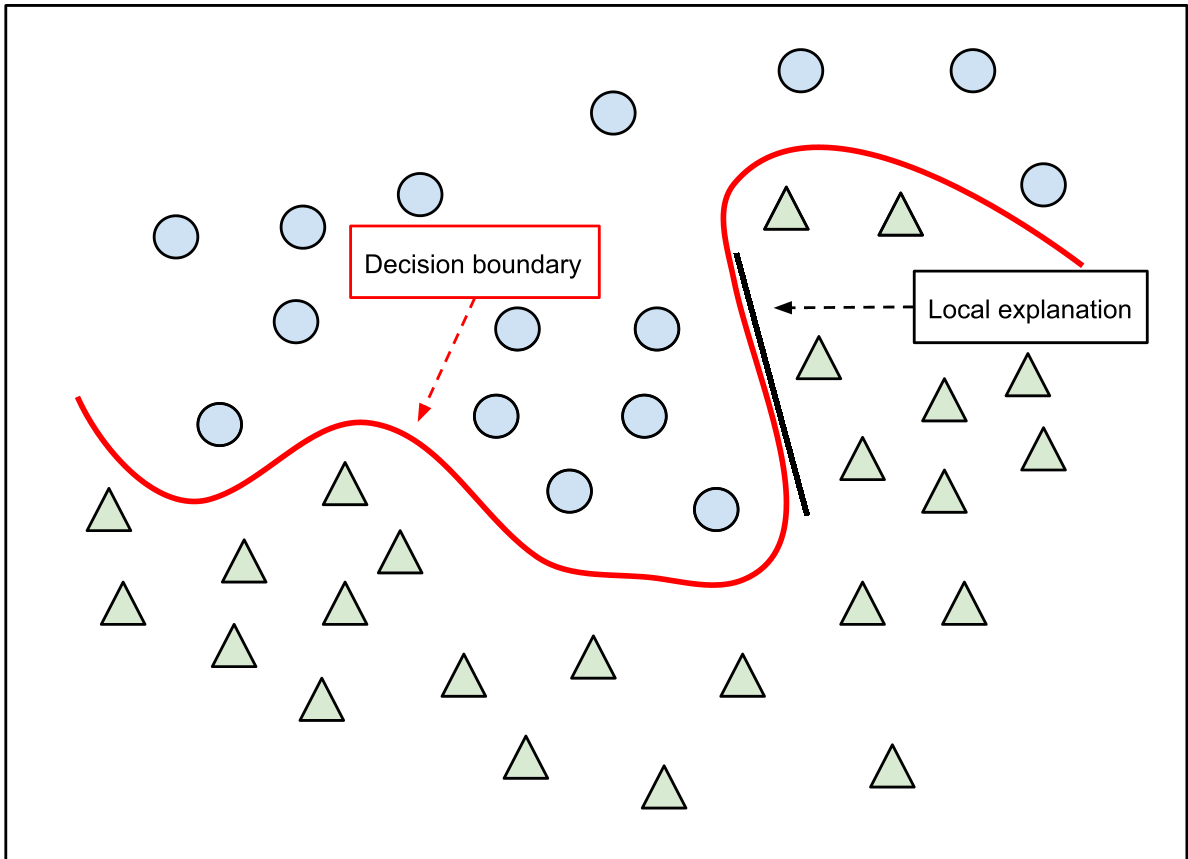
- Insight: Tools like LIME (Local Interpretable Model-agnostic Explanations) don't explain the whole model; they create a simple, interpretable "proxy" model around a specific data point to show why that specific decision was made.
3. The High Bar: Global Interpretability
- Legal Context: High-frequency trading and high-stakes medical or legal decisions.
- Technical Implementation: Ditching black-boxes entirely for SLIM (Supersparse Linear Integer Models) or small decision trees. The argument here is that the "accuracy-interpretability trade-off" is often a myth; simple models can often perform just as well while being inherently transparent.
Methodology: From Decision Trees to Judicial Logic
The paper takes a deep dive into Government-to-Citizen (G2C) decisions, which require "Motivation"—the strongest form of explanation.
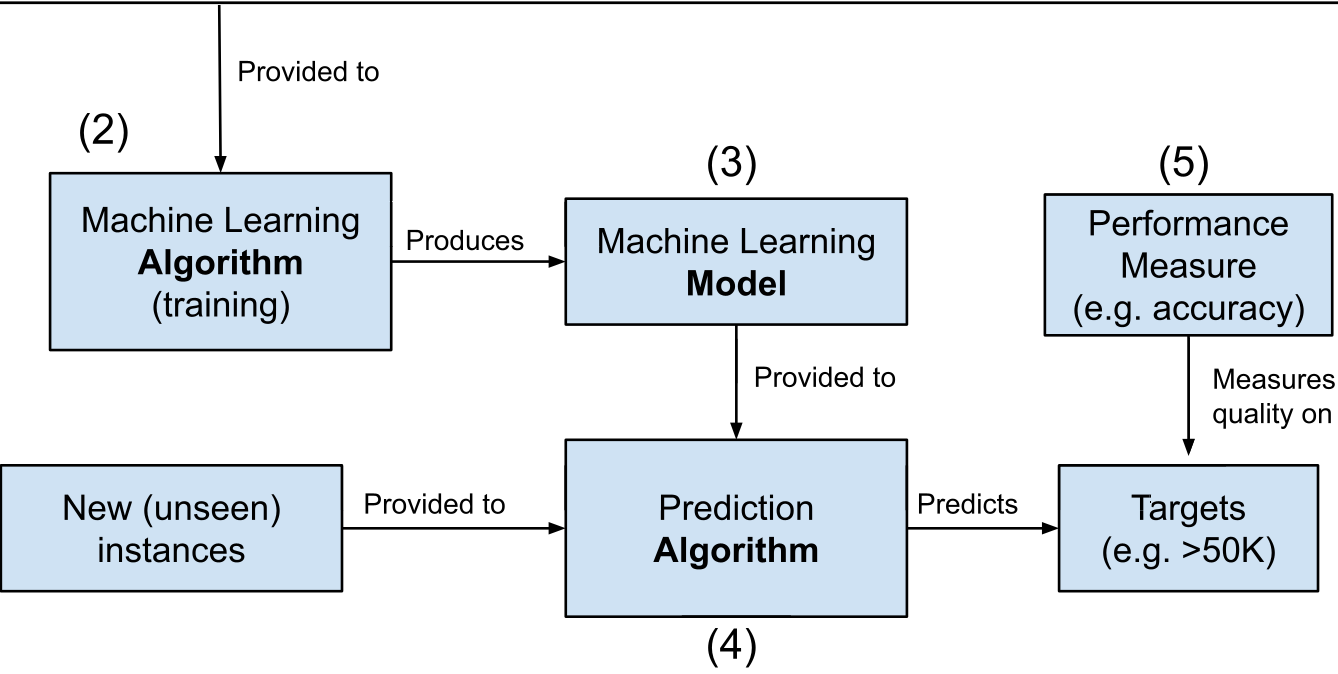
To satisfy a judge, a model cannot just output "Guilty" or "Denied." It must output a triplet:
- The Decision (The class label).
- The Legal Basis (Specific articles or statutes).
- The Answer to Arguments (How it reconciled conflicting claims from opposing parties).
The methodology shifts from simple classification to Multi-task Learning. By using attention mechanisms, a model can "attend" to specific facts in a case description to link them directly to legal articles, creating a traceable path of logic.
Experiments & Results: The "Court View" Simulation
The authors highlight experiments in the domain of the European Court of Human Rights and criminal law (e.g., charge prediction):
- Text Integration: Models that use NLP (Natural Language Processing) to generate "Court Views" can act as translators, turning high-dimensional vectors back into human-readable legal prose.
- Ablation of Input: Studies show that including "Party Arguments" significantly complicates the model but is essential for legal validity.
Critical Insight: The Two Definitions of "Explanability"
The paper concludes with a profound observation: there are two competing views of what an "explanation" actually is:
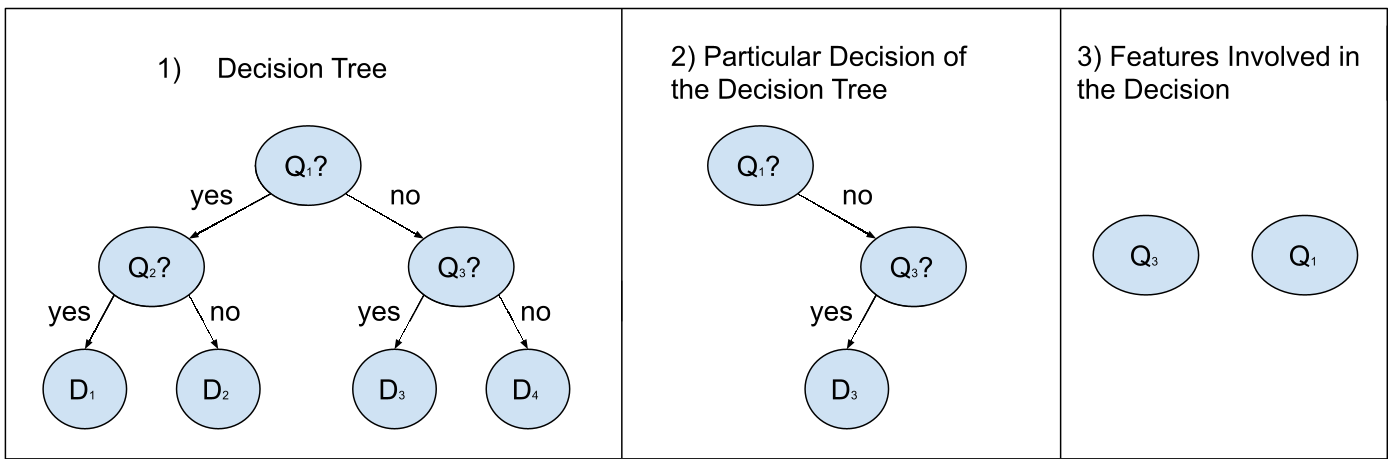
- The Mathematical View: An explanation must faithfully represent the model's internal math (e.g., a path in a decision tree).
- The Human-Centric (Legal) View: An explanation must "make sense" to the person receiving it, even if child-processes (like Seq2Seq generators) are used to craft it.
The Paradox: A Seq2Seq model might generate a perfectly logical sounding legal explanation that has very little to do with how the underlying "black box" actually calculated the risk. This "truthfulness" gap remains one of the most critical areas for future research.
Summary Takeaway
For AI to be "Legal by Design," engineers must stop viewing explainability as a post-hoc visualization task and start viewing it as a Structural Multi-task Problem. We need models that don't just predict the future, but can argue for it using the language of facts and laws.