
Beyond the Classroom Walls: Leveraging Social Networks for South African Higher Education
Leveraging Social Networks to Enhance Learning at Higher Institutions
This study investigates the adoption of Social Networking Sites (SNS) to enhance educational outcomes in South African higher education. By extending the Technology Acceptance Model (TAM), the authors identify that institutional factors and technical capabilities are key drivers for integrating social networks as collaborative learning tools beyond traditional Learning Management Systems (LMS).
TL;DR
This research tackles the gap between the ubiquity of social media and its under-utilization in formal education. By surveying 300 lecturers in South Africa, the study reveals that Institutional Support and Ease of Use are the primary drivers of technology adoption, surprisingly outweighing the perceived usefulness of the tools themselves.
Positioning: This work serves as an empirical validation of the Technology Acceptance Model (TAM) specifically tailored for the socio-technical landscape of developing nations.
The "LMS vs. SNS" Motivation
Traditional Learning Management Systems (LMS) are often criticized for being rigid and "broadcast-heavy," lacking the instant messaging and interactive "wall" features that drive engagement. The authors argue that while students are already active on Facebook and WhatsApp, academia has been hesitant to move into these spaces. The fundamental question addressed is: What actually makes a lecturer decide to shift from a closed LMS to an open Social Network?
Methodology: The Extended TAM Framework
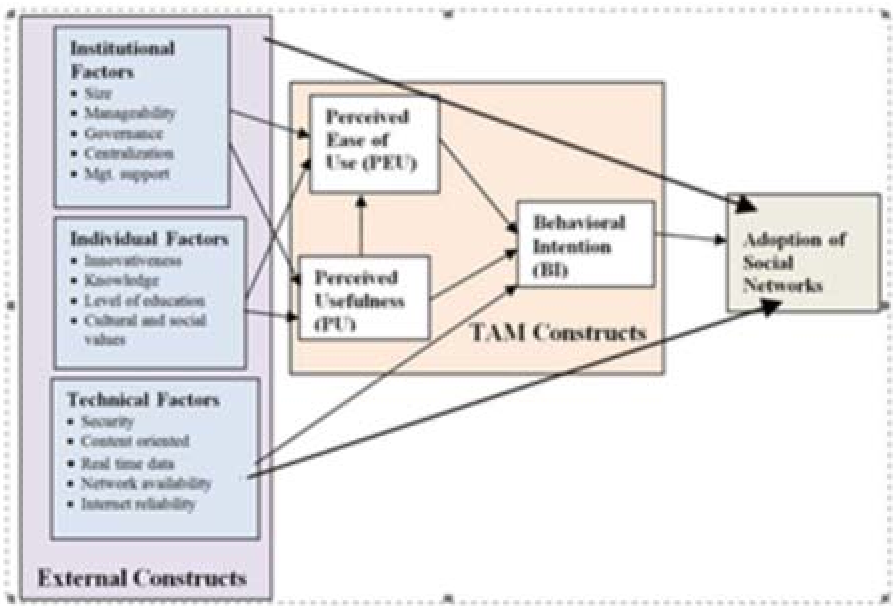
The researchers didn't just look at the tool; they looked at the ecosystem. They expanded the classical TAM by adding three dimensions:
- Institutional Factors: Governance, management support, and culture.
- Individual Factors: Personal innovativeness and digital literacy.
- Technical Factors: Network reliability, connectivity, and digitalization.
Critical Findings & SOTA Comparison
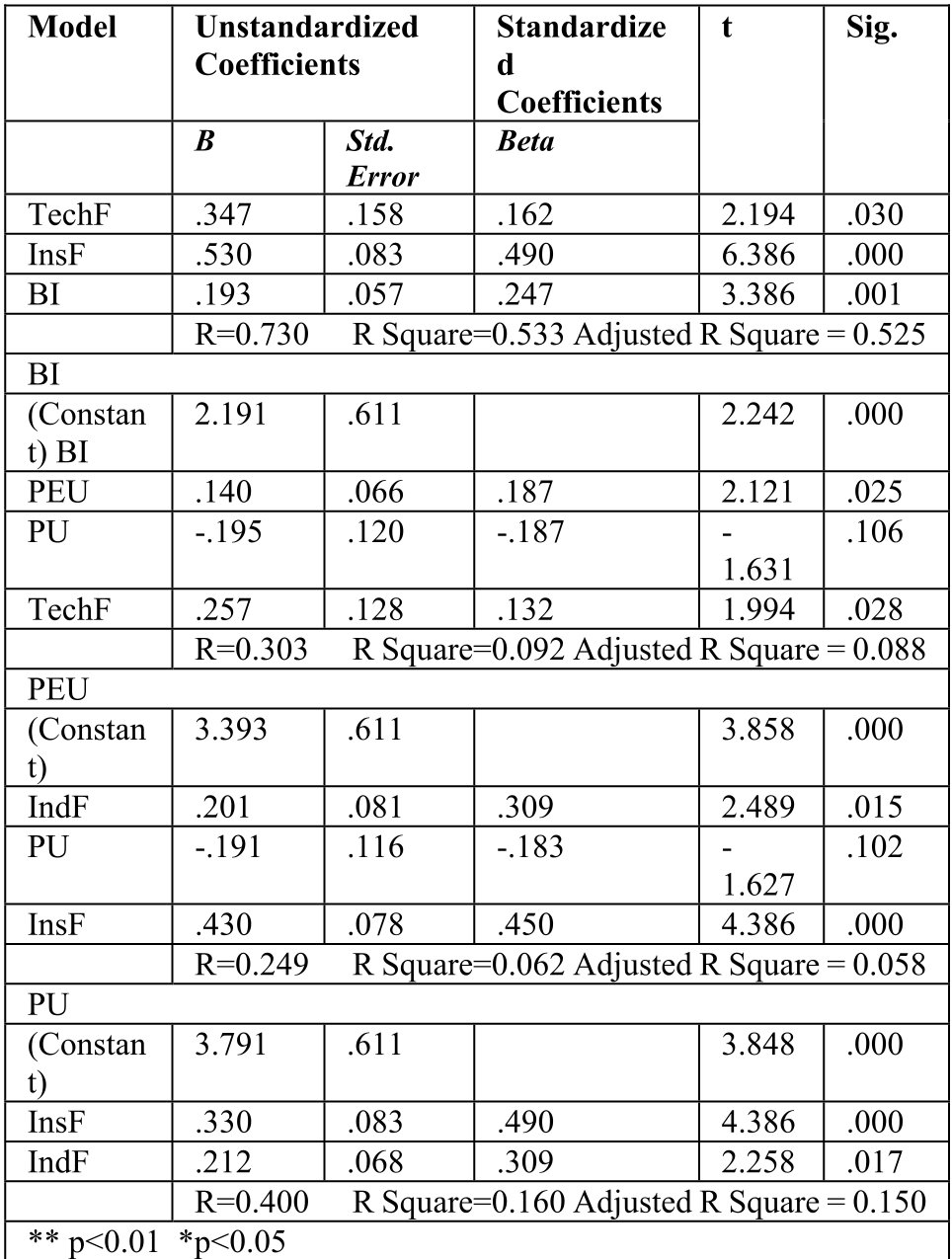
Using SPSS for regression analysis, the study provided some counter-intuitive results compared to typical technology adoption literature:
- The Power of Policy: Institutional factors were the heavy hitters ( contribution was significant). If the university doesn't provide the "green light" or the infrastructure, personal motivation among lecturers essentially stalls.
- The "Ease" Paradox: Unlike many SOTA models where "Usefulness" (PU) drives "Intention" (BI), this study found that Perceived Ease of Use (PEU) was the dominant gatekeeper. If the platform feels like a chore, lecturers won't use it, regardless of how "useful" it might be for the students.
Key Statistical Breakdown:
| Construct | Beta | Sig (p) | Conclusion |
|---|---|---|---|
| Institutional Factors -> Adoption | 0.490 | 0.000 | Strong Support |
| Behavioral Intention -> Adoption | 0.247 | 0.001 | Significant |
| Perceived Usefulness -> Intention | -0.187 | 0.106 | Rejected |
Deep Insight: Why Did Usefulness Fail?
The rejection of Hypothesis H6 (PU -> BI) is arguably the most interesting part of this paper. In high-pressure academic environments, lecturers are often overwhelmed by administrative tasks. A tool that is "useful" for student engagement but adds a layer of technical complexity or lacks institutional backing is seen as a liability rather than an asset. This suggests a "Survival of the Easiest" mindset in ed-tech adoption.
Conclusion and Future Outlook
Takeaway for Institutions: Don't just buy software; foster a culture of "stewardship" and digitalization. Takeaway for Researchers: The study's focus on lecturers provides only half the story. Future research must integrate student outcomes and longitudinal data to see if these social-learning habits survive beyond the initial "hype" phase of adoption.
The paper concludes that SNS can effectively take "learning beyond the walls," but only if the transition is made frictionless by institutional policy and technical reliability.