
Pathable: Bridging the Digital-Physical Divide to Build Professional Communities
Leveraging Social Software for Community Development at Events
This paper introduces Pathable, an online social networking and community tool designed to enhance professional networking at physical events. By integrating attendee profiles, interest-based communication groups, and a recommendation system, Pathable bridges the gap between digital social software and face-to-face interactions to foster "event attachment."
TL;DR
Attending a conference is rarely just about the presentations; it is about the "hallway track"—the spontaneous, high-value connections made between sessions. This paper presents Pathable, a social software suite that uses interest-based tagging and match-making algorithms to facilitate strategic face-to-face networking. The study proves that fostering a Sense of Community through technology directly increases attendee loyalty and event ROI.
Context: The Networking Paradox
In an era of Web 2.0 and ubiquitous distance learning, why do people still spend billions on physical conferences? The authors argue that while knowledge can be acquired online, Social Capital—the resources leveraged through interpersonal relationships—requires the trust and affinity only gained through face-to-face interaction.
However, conferences present a "sea of strangers" problem. Attendees have limited time and no efficient way to filter for relevant peers. Pathable was developed to transform these "third places" into organized communities where meaningful connections are engineered rather than left to chance.
Methodology: Engineering Serendipity
Pathable’s core innovation lies in its multi-layered approach to connecting people:
- Social Tagging as Pivots: Instead of rigid categories, users "tag" themselves with interests. These tags serve as communication channels; a message sent to a "#SemanticWeb" tag reaches everyone interested in that niche, creating an organic "backchannel."
- The Badge as an Interface: Perhaps most crucially, Pathable brings digital data into the physical world. Personalized badges display an attendee's tags and specialized "match-making" suggestions.
- The Host as Connector: The system empowers event organizers to act as community moderators, seeding tags and initiating "All-hands" conversations to set the social tone.
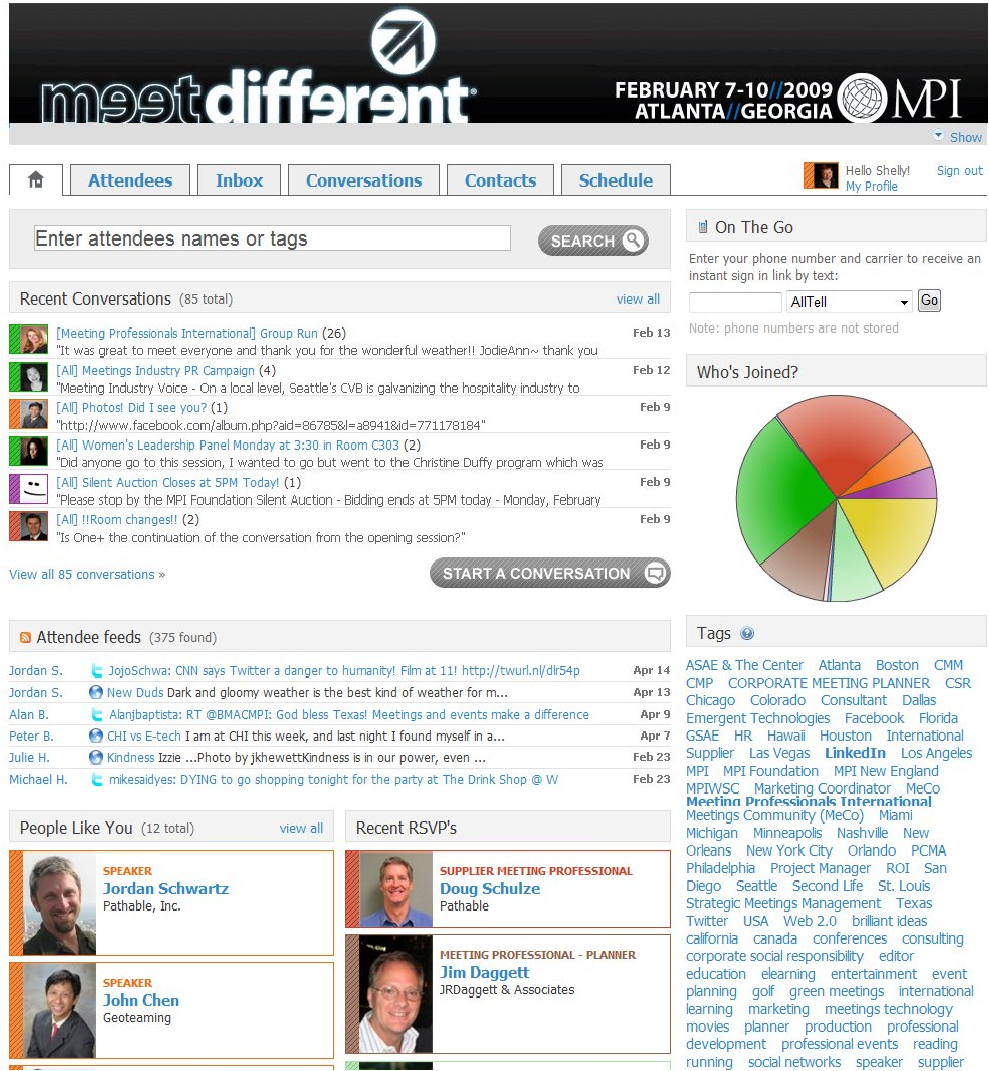 Figure 1: The community dashboard provides high-level awareness of common interests and trending conversations.
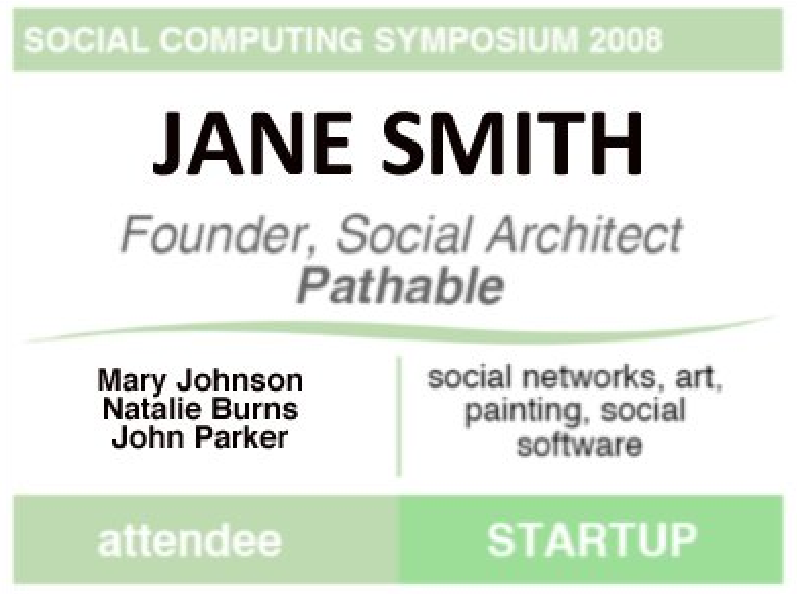 Figure 2: The physical badge acts as a conversation starter by displaying personalized matches and tags.
Experiments and Results: Quality Over Quantity
The authors conducted a questionnaire study at BarCamp Seattle. The findings challenged the traditional view of conference metrics:
- The Return Rate Driver: The raw number of new people met had no impact on whether an attendee intended to return the following year. Instead, the Quality of Conversations and the Sense of Community were the primary predictors of loyalty.
- Attachment Theory: High Pathable usage correlated with "Event Attachment"—a psychological state where the attendee identifies with the success of the event itself.
- Engagement Metrics: In a deployment across 17 events, conferences saw profile completion rates as high as 90%, proving that professional attendees are hungry for tools that help them "find their tribe."
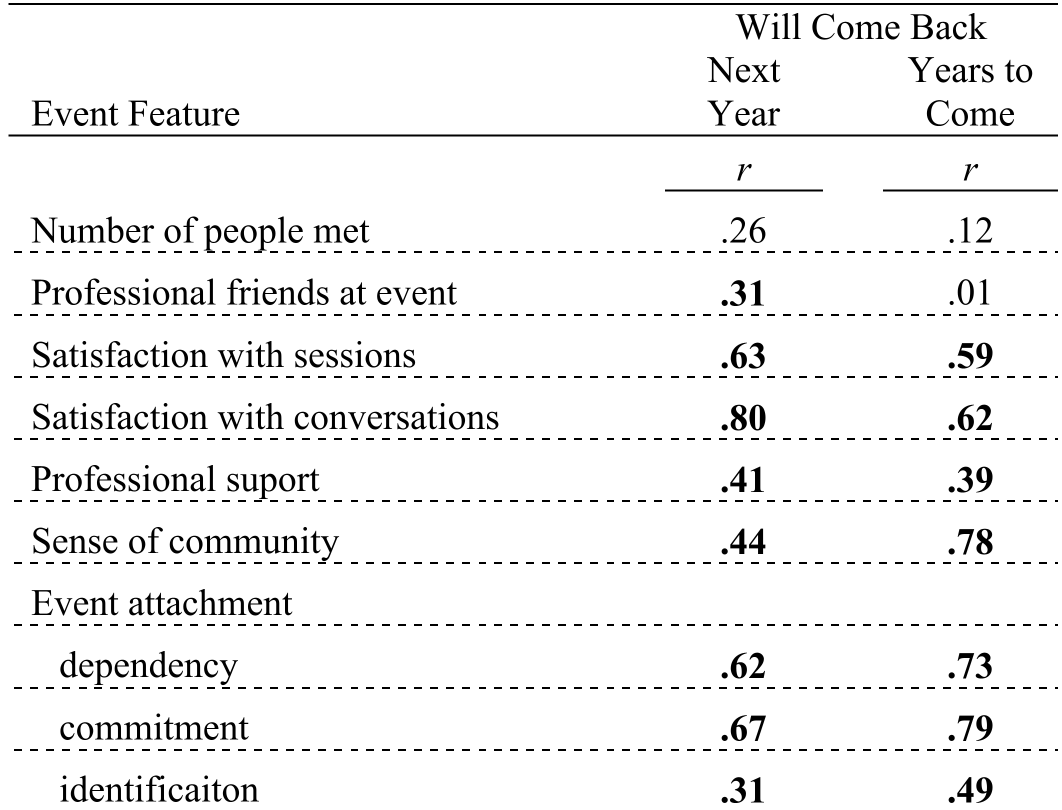 Figure 3: Statistical correlations showing that Sense of Community (r=0.78) is far more vital for long-term retention than the number of people met (r=0.12).
Critical Insight: The Value of the "Weak Tie"
The paper draws on the "Strength of Weak Ties" theory, suggesting that social software’s greatest value is not in managing our close friends, but in expanding our access to diverse, distant acquaintances who offer new information and opportunities. Pathable’s recommendation engine specifically targets these "near-peers"—people with similar status and interests but outside the user's immediate circle.
Conclusion and Future Outlook
Pathable demonstrates that social software is most effective when it is not a destination itself, but a catalyst for real-world interaction. While the study was conducted in a tech-heavy "unconference" setting, its guidelines for Social Tagging and Color-Coded Communities are now staples in modern event-tech platforms.
Takeaway for Organizers: To keep your audience coming back, don't just book better speakers; build a better community infrastructure. Focus on the systematic engineering of high-quality conversations.
Limitations: The study notes that "high-status" individuals (like keynote speakers) are often less motivated to fill out profiles, creating a data gap that organizers must fill manually to maintain directory value.