
LEXA: Outperforming Machine Learning in the Complex World of Legal Citations
LEXA: Building knowledge bases for automatic legal citation classification
This paper introduces LEXA, a legal citation classification system focusing on identifying "Distinguished" citations using Ripple-down Rules (RDR). By extending the traditional RDR framework with automatic data-driven support, LEXA achieves superior performance over standard Machine Learning methods in prioritizing critical negative treatments in case law.
TL;DR
Researchers have developed LEXA (Legal tEXt Analyzer), a system that uses an incremental knowledge acquisition method called Ripple-down Rules (RDR) to classify how judges treat cited cases. Unlike standard AI, LEXA allows human experts to build and refine rules on the fly, outperforming popular machine learning models like SVM and Naive Bayes—especially when the data is "noisy" or inconsistent.
Background: Why Legal Citations Matter
In common law systems, the principle of stare decisis means past decisions bind current ones. However, not all citations are equal. A judge might "apply" a previous ruling, or they might "distinguished" it—essentially saying, "That old case doesn't apply here because the facts are different." For legal researchers, finding these negative treatments is a needle-in-a-haystack problem that is critical for winning cases.
The Problem: The Failure of "Black-Box" AI
Traditional Natural Language Processing (NLP) usually relies on Supervised Machine Learning. However, legal text is notoriously difficult for standard AI because:
- Linguistic Variety: There are endless ways a judge can say a case is different.
- Data Skewness: Negative citations (like "Distinguished") are rare compared to neutral ones.
- Human Disagreement: In this study, experts only agreed on labels about 47% of the time. Standard ML models struggle to learn from such "noisy" labels.
Methodology: The Ripple-down Rules (RDR) Revolution
LEXA moves away from static training and introduces an incremental approach. Instead of a single complex algorithm, it builds a tree of rules. When the system makes a mistake, the human expert adds a "patch"—an exception rule—to fix that specific instance.
The LEXA Extension
While RDR has been used before, LEXA adds several modern technical "superpowers":
- Real-time Performance Feedback: As the expert writes a rule, LEXA immediately checks the entire database to show how many cases that rule would correctly or incorrectly classify.
- Semantic Enrichment: The system integrates WordNet and the LOIS legal ontology to suggest synonyms, helping rules generalize better (e.g., automatically suggesting "distinguishable" when the user types "different").
- Exception Re-use: It identifies common negative patterns (like the presence of "However") and suggests them as ready-made exceptions.
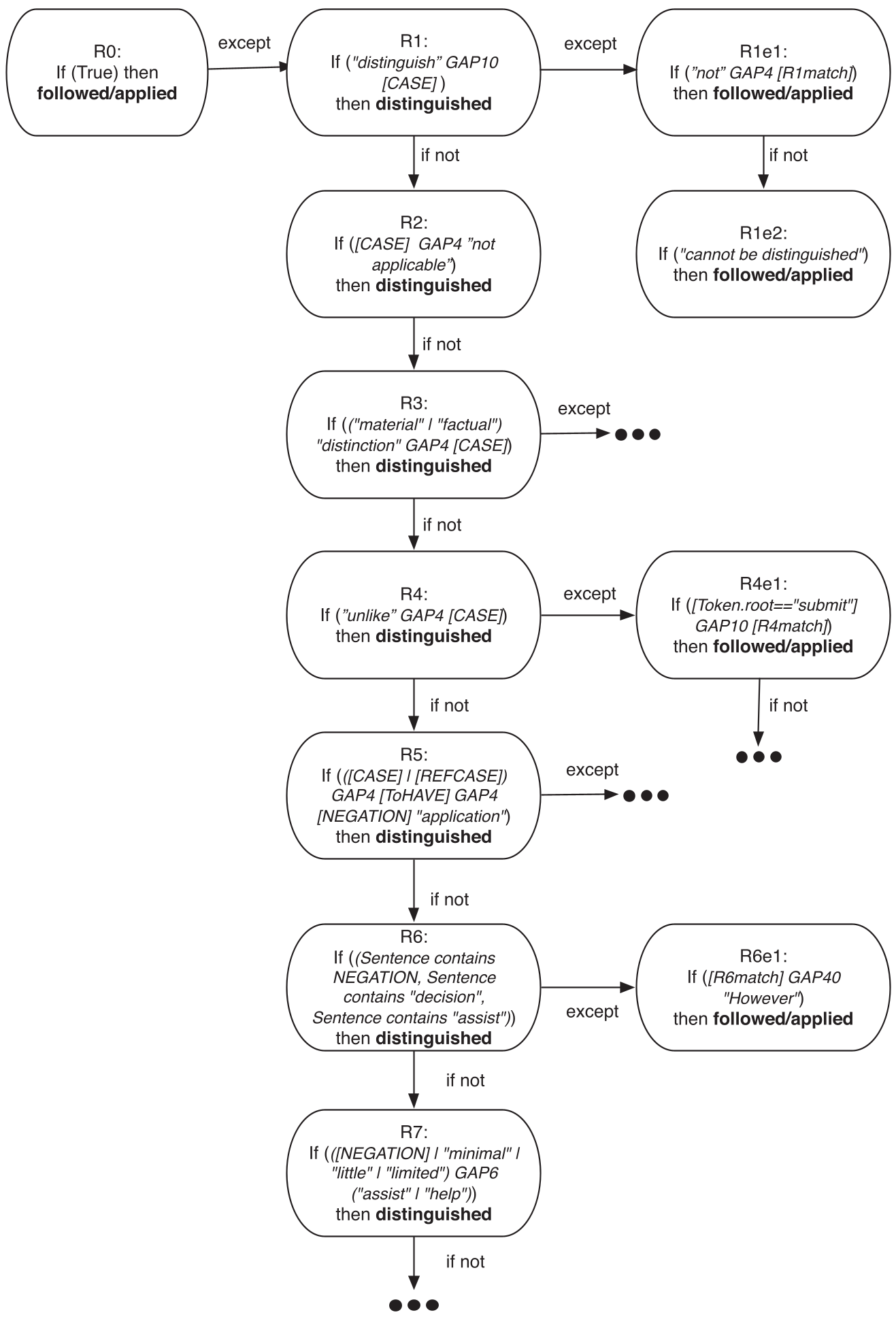 Figure 1: The incremental RDR tree structure used by LEXA to handle exceptions efficiently.
Experiments: LEXA vs. Machine Learning
The researchers compared LEXA against Support Vector Machines (SVM) and Naive Bayes (NB) across three test sets of varying difficulty.
Performance Highlights:
- Superior Accuracy: On a clean data set (Test set 1), LEXA achieved a 0.57 F-Score, beating SVM (0.50) and Naive Bayes (0.45).
- Graceful Degradation: In the most difficult test (Test set 3), where the system had to find a few "Distinguished" cases among thousands of others, LEXA's precision was significantly higher than the machine learners.
- Explainability: Unlike the vector-math of SVM, LEXA’s rules are human-readable (e.g.,
[CASE] [toBE] [GAP4] different -> Distinguished).
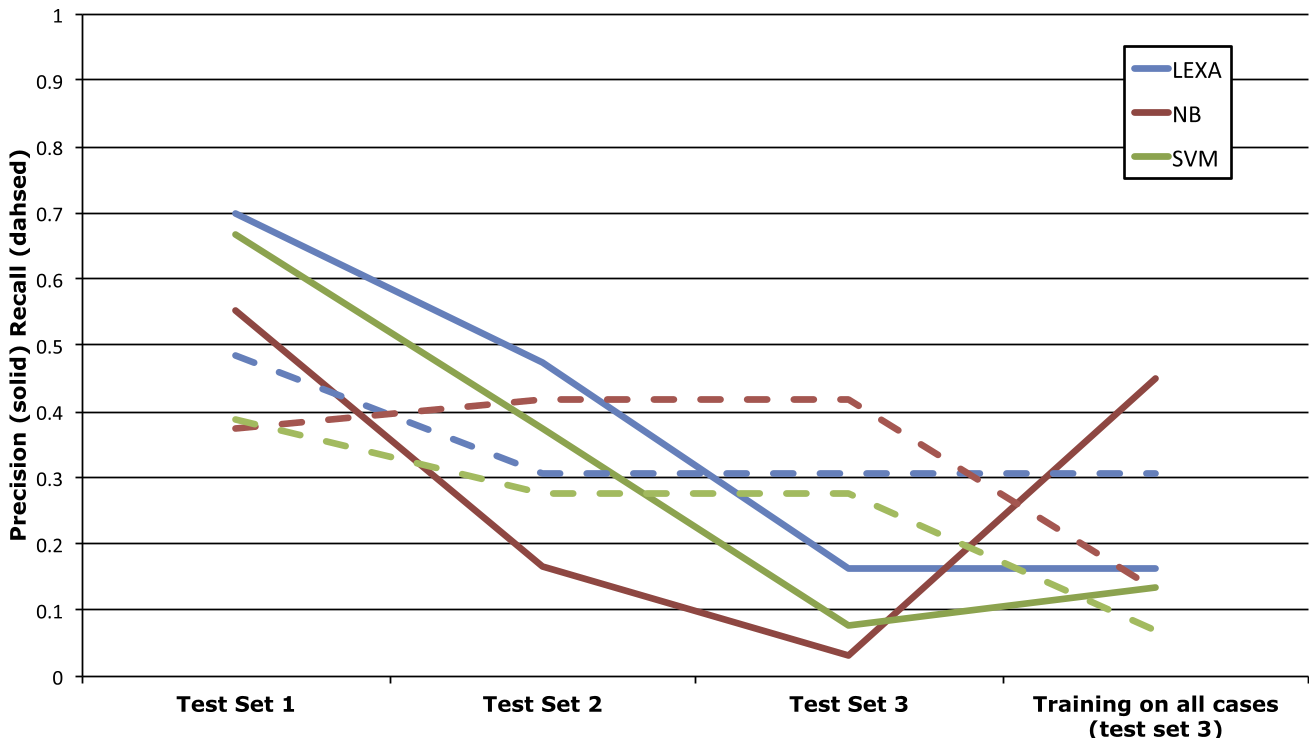 Figure 2: Scaling performance of LEXA compared to best-performing Machine Learning baselines.
Critical Insight: The Human-in-the-Loop Advantage
A striking finding was that human-expert consensus is a major ceiling for AI in law. Because LEXA involves the expert during the rule-building process, it allows the human to validate and clarify labels as they go. This leads to a more consistent knowledge base than a machine learner simply trying to map "bag-of-words" features to ambiguous labels.
Conclusion & Future Work
The study proves that for high-stakes, nuanced domains like law, an incremental expert-system approach is often more effective than standard supervised learning. By combining RDR with automatic synonym suggestion and dataset feedback, LEXA provides a maintainable, high-precision tool for legal professionals.
The authors hope to eventually put this tool directly into the hands of legal experts, allowing those with substantive domain knowledge—rather than just computer engineering skills—to build the next generation of legal AI.