The Doggo Effect: How a Single Twitter Account Influences Global Internet Slang
This Paper is About Lexical Propagation on Twitter. H*ckin Smart. 12/10. Would Accept!
2018-08-01
Summary
Problem
Method
Results
Takeaways
Abstract
This paper presents an observational case study on lexical propagation, specifically tracking the spread of unique vernacular from the popular @dog_rates Twitter account to broader online social networks. By analyzing the adoption of terms like "h*ck" and the "/10 would" rating format, the study establishes a direct link between an influencer's growth and the cross-platform mainstreaming of specialized community language.
## TL;DR
Does a single social media account have the power to change how the world speaks? This study answers with a resounding "Yes." By tracking the meteoric rise of the @dog_rates Twitter account, researchers Jennifer Golbeck and Cody Buntain demonstrate how niche "DoggoLingo"—like the censored "h*ck"—escaped its original community to become a staple of across-platform internet culture.
## Background: The Mystery of Slang Origins
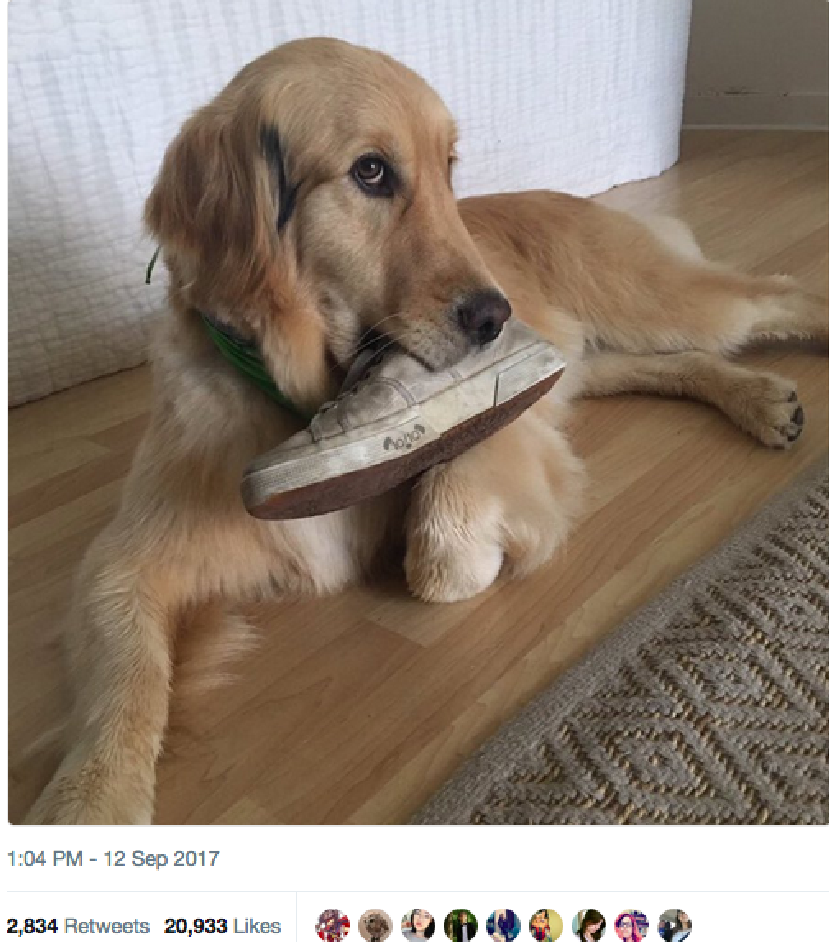
In traditional linguistics, tracing the "first use" of a slang term is like looking for a needle in a haystack. Most terms evolve slowly in private communities. However, the age of the "Mega-Influencer" has changed the game. When @dog_rates—an account dedicated to rating dogs with surrealist humor—was created in 2015, it provided a rare, sterile laboratory to observe lexical propagation in real-time.
The authors set out to answer two key questions:
1. How much influence does one account have on language across multiple platforms?
2. Can we track a linguistic pattern moving from a closed community to the general public?
## Methodology: Tracking the "h*ckin" Smart Language
The researchers analyzed three massive datasets covering early 2015 to March 2017:
- **3.1 Billion Tweets** (The baseline Twitter stream).
- **188 Million Reddit Submissions** (To track cross-platform spread).
- **The complete archive of @dog_rates tweets.**
They focused on two specific linguistic markers:
1. **"h*ck"**: A censored version of "heck" or "hell."
2. **"/10 Would"**: A rating syntax (e.g., "13/10 would pet again").
### Architecture of the Study
The team used a modified version of the Lucene search library and regular expressions to identify these forms. Crucially, they filtered out direct interactions with @dog_rates to ensure they were measuring *adoption* rather than just *engagement*.
## Results: From Niche Humor to Corporate Branding
The results revealed a startlingly high correlation between the account's popularity and the wider use of its language.
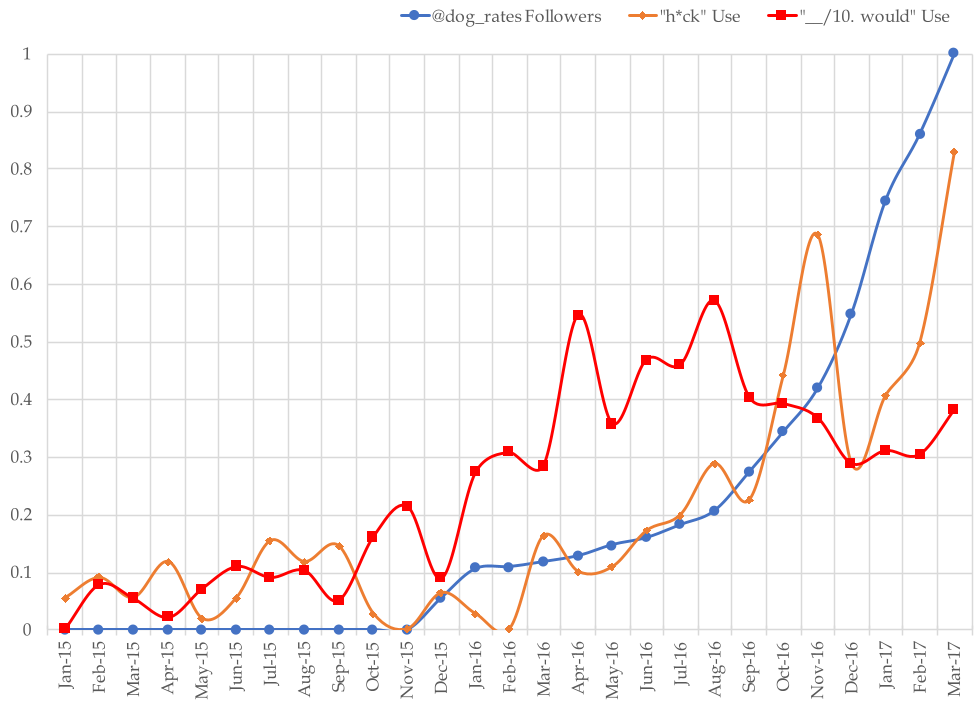
- **The Twitter Explosion**: As @dog_rates gained millions of followers, the use of "h*ck" spiked. Even more telling was the rise in "general use" tweets—posts that didn't mention the account at all—suggesting that users assumed their audience would understand the slang without context.
- **Crossing the Platform Barrier**: Perhaps most surprising was the correlation on Reddit. Despite being a different platform with a different user base, the use of "h*ck" on Reddit tracked @dog_rates' Twitter follower count with a near-perfect correlation of **ρ = 0.94**.
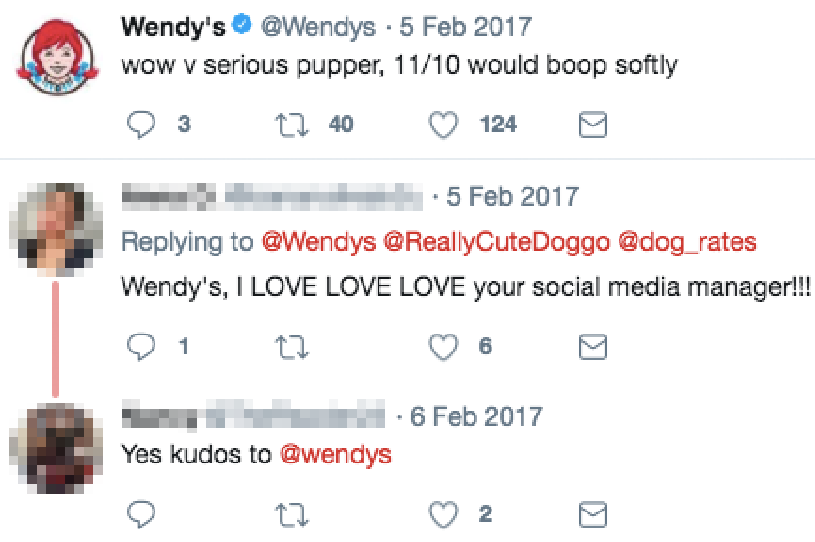
- **Institutional Adoption**: The success of the "doggo" vernacular was cemented when corporate giants like Wendy’s and Charmin began adopting the style to garner social capital.
## Critical Analysis & Takeaways
The study proves that in the modern digital age, communities are highly permeable. Language created for a specific joke can quickly become a general-purpose linguistic tool.
**Key Insight**: The researchers noted that "standard" usage increased more than "mention" usage over time. This indicates that the language transitioned from a *signal of community membership* to a *standardized internet dialect*.
### Limitations and Future Work
The authors concede that correlation is not causation. While "h*ck" usage and follower counts grew in lockstep, it's theoretically possible that the language became popular elsewhere first (though the timing suggests otherwise). Future research needs to investigate "causal links" and see if this same pattern holds for influencers in other domains, such as politics or technical subcultures.
**Conclusion**: The @dog_rates account didn't just share cute pictures; it fundamentally shifted the linguistic landscape of the internet. It turns out that when we talk like doggos, we’re all participating in a massive, cross-platform experiment in lexical propagation. 14/10. Great paper.