
Linguistic Fingerprints: Beyond Fact-Checking in the Vaccination Debate
Linguistic Fingerprints of Pro-vaccination and Anti-vaccination Writings
The paper presents a comparative linguistic analysis of pro-vaccination and anti-vaccination web-based writings using a specialized balanced corpus. By employing Linguistic Inquiry and Word Count (LIWC) and machine learning classifiers (Naive Bayes), the study achieves 77% accuracy in distinguishing sentiment and identifies unique "linguistic fingerprints" associated with each group.
TL;DR
This study moves beyond simple fact-checking to analyze the how and why of pro- and anti-vaccination language. By analyzing a custom-built corpus using psychometric tools, the research discovers that anti-vaccination rhetoric isn't just about misinformation—it’s a linguistic tapestry of trauma, informality, and victimhood. Using 16 key linguistic features, the author achieved a 77% accuracy rate in automatically classifying vaccine sentiment.
Backgound: When Facts Aren't Enough
Public health officials are facing a "global health threat" in the form of vaccine hesitancy. While scientific evidence overwhelmingly disproves links between vaccines and autism, the "echo chamber" effect of the internet ensures that misinformation persists. Research has shown that throwing more facts at the problem often backfires due to confirmation bias.
The author of this study argues that if we want to bridge the divide, we must first understand the psychological state of those writing the content. This means looking past what they are saying and focusing on how they are saying it.
Methodology: Coding the Human Psyche
The study utilized LIWC (Linguistic Inquiry and Word Count), a gold-standard tool in psychological linguistics that categorizes words into functional and emotional buckets.
The Pipeline:
- Corpus Creation: A balanced set of 124 documents (blogs, news, testimonials) categorized as pro- or anti-vaccination.
- Feature Selection: 95 initial features were narrowed down to 16 "heavy hitters," including 1st person pronouns, cognitive process words (e.g., "insight"), and punctuation markers.
- Classification: Using a Naive Bayes model to see if these linguistic signals alone could identify the author's stance.
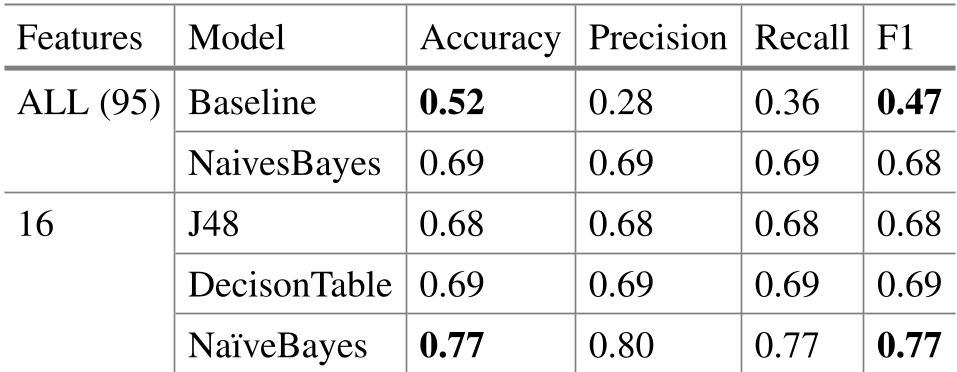 Table 1: The jump from 52% to 77% accuracy demonstrates that sentiment isn't just in the keywords—it's in the grammar and punctuation.
Deep Insight: Trauma and the "Villain" Narrative
The research uncovered several striking "linguistic fingerprints" that differentiate the two camps:
1. The Language of Trauma
Anti-vaccination writings showed a higher frequency of "insight" words (e.g., "realize," "see," "understand"). In psychological literature, the heavy use of insight words while recounting the past is a hallmark of processing trauma. The study suggests many anti-vaccination parents are effectively in a state of mourning or grief, viewing autism through a lens of loss.
2. Formality vs. Emotion
- Punctuation as Passion: Anti-vaccination texts used ten times more exclamation marks than the baseline. This points to a high-arousal emotional state and a lack of formal "editorial" gatekeeping.
- Pronoun Clues: Anti-vaccination writers used significantly more 1st person singular pronouns ("I", "me"). This is often associated with "victim-focused" language, consistent with a narrative where the individual is being "harmed" by a "villainous" vaccine industry.
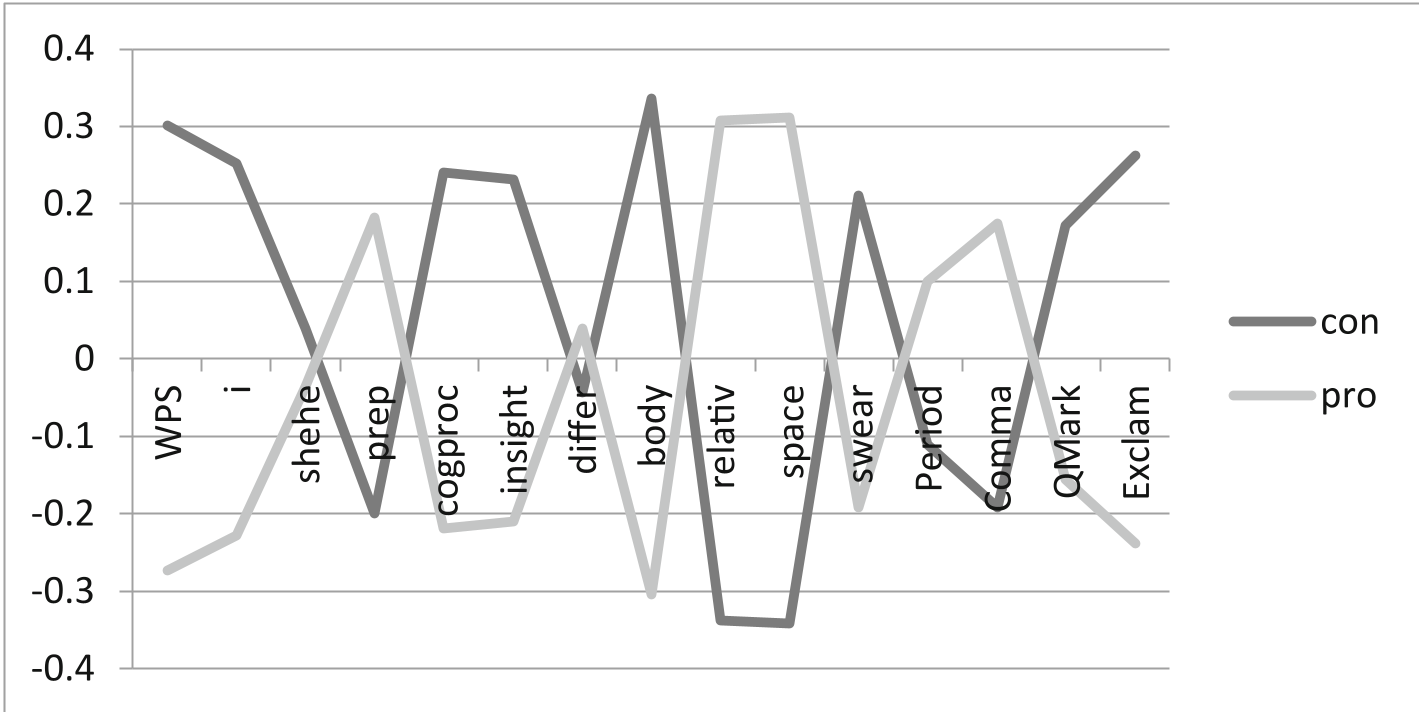 Figure 1: Notice the sharp divide in punctuation and relativity markers (space/time) between the two groups.
3. The Shift in Focus
Pro-vaccination texts focused on Relativity and Space (e.g., "area," "spread," "outbreak"). Their language is strategic and geographical—focused on herd immunity and logistics. In contrast, anti-vaccination texts focused on the Body, likely reflecting a heightened "disgust sensitivity" regarding needles and biological purity.
Critical Analysis & Conclusion
This paper offers a refreshing departure from "combat-style" science communication. By identifying that anti-vaccination proponents are often linguistically signaling trauma and a "victim" identity, the research suggests that clinical, top-down "fact-sheets" are likely the worst way to communicate.
Limitations: The sample size (124 documents) is relatively small for a machine learning task, and the "anti" corpus is heavily influenced by a few specific influential figures (like Jenny McCarthy).
Future Outlook: The real value here is for Public Health Promotion. Instead of "talking down" to hesitant parents, health organizations might find more success using "trauma-informed" language—acknowledging the grief and fear present in the community rather than just dismissing it as "unscientific."
Key Takeaway
The vaccination debate isn't just a battle of data; it's a clash of narratives. One side speaks the language of logistics and population health, while the other speaks the language of personal trauma and bodily autonomy. Until we speak the same linguistic language, the gap will likely remain.