
Linguistic Modeling: Balancing Accuracy and Interpretability in Function Approximation
Linguistic modeling for function approximation using grid partitions
This paper introduces a linguistic modeling framework for nonlinear function approximation using grid partitions. It proposes a specificity-based fuzzy reasoning method and a Multi-Objective Genetic Algorithm (MOGA) to extract a compact, interpretable set of fuzzy rules from numerical data, effectively scaling fuzzy systems to higher dimensions.
TL;DR
Researchers from Osaka Prefecture University have developed a way to describe complex nonlinear functions using simple, human-readable "linguistic rules." By introducing specificity-based reasoning and using multi-objective genetic algorithms, they prevent the exponential "rule explosion" typical of high-dimensional problems while ensuring that general and specific rules work together without logical contradictions.
Background: The Interpretability Gap
In the realm of function approximation (), we often prioritize black-box accuracy (like deep neural networks) over understanding why a certain output was reached. Fuzzy systems offer a path to interpretability using "If-Then" rules, but they hit a wall:
- Dimensionality: With variables, the rule count grows exponentially.
- Conflict: When a general rule (broad) and a specific rule (detailed) both apply, standard interpolation "averages" them, often leading to nonsensical results.
The "Don't Care" Trick and General Rules
The authors argue that the key to scaling is the "Don't Care" condition. By allowing certain input variables to be ignored in a rule, they create "General Rules."
- Calculation: If each linguistic value covers 2/5 of a domain, an -input rule covers of the space.
- Insight: By using short rules (few conditions), we can cover the entire input space with a fraction of the rules previously required.
Methodology: Specificity-Based Reasoning
The core technical innovation is how the system handles overlapping rules. In standard fuzzy logic, if Rule A says is medium and Rule B (more specific) says is large, the system might output something in between.
The authors' specificity-based method calculates a weight based on the rule's relative detail. If a more specific rule is triggered, the weight of the general rule is automatically discounted.
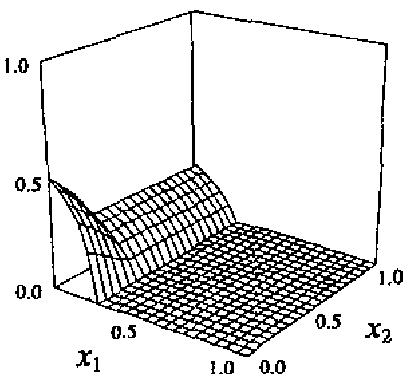 Fig 2: (a) Standard interpolation leads to "smeared" transitions; (b) The proposed specificity-based method maintains sharp, logical distinctions.
The Math of Rule Weighting
The weight is defined as:
eq k} (1 - \mu_q(x))$$ This ensures that the most specific knowledge always takes precedence, mimicking human expert intuition. ## Evolution of a Rule Base To find the perfect rule set, the authors treat it as a **Three-Objective Optimization Problem**: 1. **$f_1(S)$**: Minimize total squared error (Accuracy). 2. **$f_2(S)$**: Minimize the number of rules (Simplicity). 3. **$f_3(S)$**: Minimize the total rule length (Interpretability). They employ a **Genetics-Based Machine Learning (GBML)** algorithm where rules are evolved. They use a unique "one-point crossover" to swap rule sets of different lengths, allowing the system to naturally discover the optimal balance between being concise and being precise. 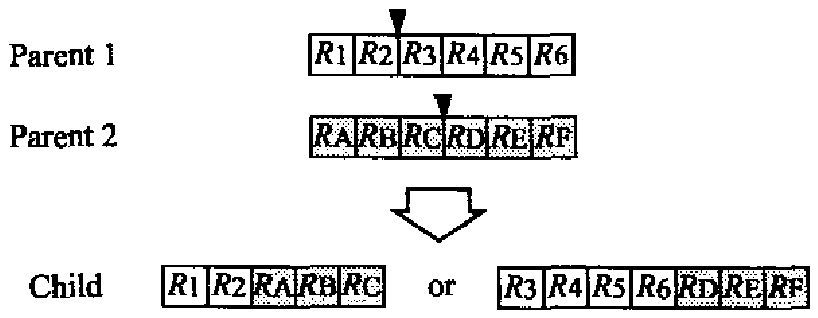 *Fig 3: A specialized crossover mechanism designed to handle variable-length rule sets effectively.* ## Experiments: Confidence & Support Borrowing from data mining, the authors use **Confidence** and **Support** to validate their rules. * **Standard Method**: Rules like "If $x_1$ is small and $x_2$ is small then $y$ is large" ended up with **0.00 confidence** because interpolation ruined the local accuracy. * **Proposed Method**: Maintained high confidence across all rules, proving that the specificity-based logic maps more accurately to the underlying numerical data. ## Critical Analysis & Conclusion ### Takeaway This work highlights that "Less is More" in AI. By using a few specific rules to "override" general ones, we can model complex surfaces with remarkably simple logic. ### Limitations While the grid partition method is intuitive, it still assumes that linguistic terms (small, medium, large) are pre-defined by humans. In extremely high-dimensional or non-intuitive spaces (like latent embeddings), defining these partitions remains a challenge. ### Future Outlook This approach provides a strong foundation for **Neuro-Symbolic AI**, where the "reasoning" part of the model is constrained by human-readable fuzzy rules, ensuring that even as models get larger, they remain under our control and understanding.