
LFD: Elevating HDTV Quality through Linguistic Variable-Based Fuzzy Ensembles
Concept of Linguistic Variable-Based Fuzzy Ensemble Approach: Application to Interlaced HDTV Sequences
This paper introduces a Linguistic Variable-based Fuzzy Deinterlacing (LFD) approach for edge restoration in HDTV sequences. It utilizes a type-1 fuzzy ensemble model to assign weights to multiple candidate deinterlaced pixels (CDPs) based on directional correlations, achieving SOTA visual quality in video reconstruction.
TL;DR
The transition from interlaced to progressive scanning in modern displays often results in visual artifacts like line crawling and edge flickering. This paper presents Linguistic Variable-based Fuzzy Deinterlacing (LFD), an ensemble approach that uses fuzzy logic to intelligently weigh candidate pixels from different edge directions. It provides a significant boost in PSNR (+0.43 dB) and superior edge sharpness while maintaining low enough computational complexity for real-time HDTV applications.
Problem & Motivation: The Ambiguity of Edges
In the world of video processing, "deinterlacing" is the critical task of filling in missing lines from an interlaced signal. Conventional spatial methods like ELA (Edge-based Line Average) are fast but error-prone; if a diagonal edge is misidentified as a vertical one, the resulting image suffers from "jaggy" artifacts.
The authors argue that the fundamental problem is ambiguity. Standard algorithms make "hard" decisions about edge direction. However, in low-contrast or high-motion scenes, an edge might partially belong to multiple directions. By leveraging Fuzzy Logic, specifically Zadeh’s concept of Linguistic Variables, we can represent "partial truths" about edge orientations, allowing for a smoother, more accurate reconstruction.
Methodology: The Fuzzy Ensemble Core
The LFD method operates through a sophisticated four-stage pipeline: Fuzzification, Operation on membership values, Defuzzification, and Weight Multiplication.
1. Linguistic Hedging
Instead of a single filter, the system uses five "hedges" (Lowly, Minus, Ordinary, Plus, Highly). These act as intensifiers or dilators for the fuzzy sets, allowing the model to characterize pixel variations with extreme granularity.
2. Gaussian & S-Type Membership Functions
The system identifies 18 directions (Spatial and Temporal) and calculates a Fuzzy Index (FID).
- Gaussian MFs are used to calculate the degree of compatibility of the pixel data with the linguistic labels.
- S-type SMALL MFs are used to assign higher weights to directions with lower luminance differences (indicating a stronger correlation along that edge).
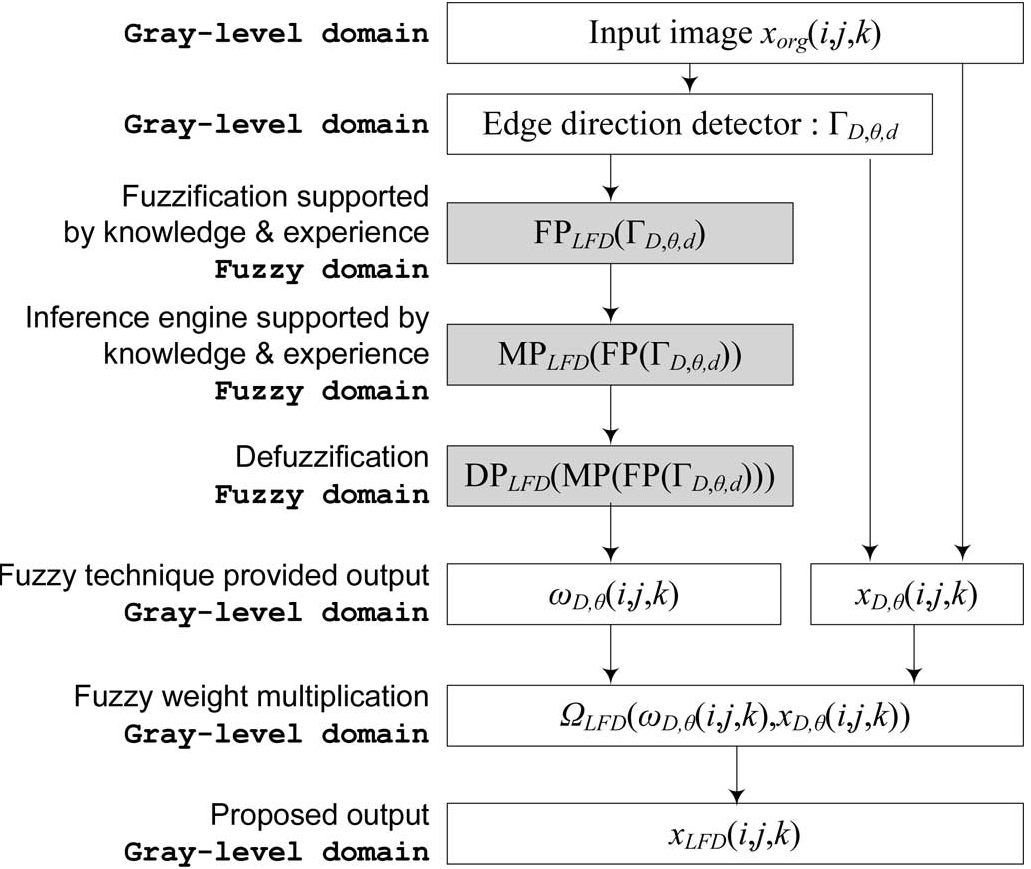 Fig 1: The LFD Algorithmic Flowchart showing the transition from membership planes to the final deinterlaced output.
3. T-Norm Fusion
The final weighting factor for a direction () is calculated using T-norm (min) and T-conorm (max) operators, which effectively "votes" on the most likely edge orientation across neighboring pixels.
Experiments and Results
The researchers tested LFD against 13 industry-standard methods, including Bob, ELA, Weave, and the complex Motion-Adaptive schemes like STELA and DLSCD.
Quantitative SOTA Achievement
On the "Mobcal" (Mobile Calendar) sequence—a notoriously difficult test due to moving text and high detail—LFD achieved a PSNR of 29.358 dB, outperforming the sophisticated FDED (28.927 dB).
Efficiency Gains
Unlike many "heavy" edge-directed interpolations (like DOI), LFD is remarkably efficient.
- LFD Speed: 1.33 seconds per frame.
- FDED Speed: 2.53 seconds per frame. This ~50% reduction in complexity makes it highly suitable for hardware implementation in consumer electronics.
 Fig 2: Visual comparison of spatiotemporal schemes. Note the sharp, artifact-free edges in the LFD output (f) compared to the feathering artifacts in EDT (d) and Weave (a).
Critical Insights & Conclusion
The genius of the LFD approach lies in its Inductive Bias: it assumes that if multiple linguistic operators agree on a direction, the interpolation along that path is significantly more reliable.
Takeaway: This work proves that fuzzy logic is not just a theoretical framework for "vague" data, but a powerful engineering tool for optimizing high-resolution video streams. While modern AI often turns to Deep Learning (CNNs), this fuzzy ensemble approach offers a interpretable, low-latency alternative that requires zero training data once the membership functions are tuned.
Limitations: The model relies on hyper-parameters () that require manual tuning (using MSE on training sequences). Future work could involve adaptive neuro-fuzzy systems to "learn" these parameters on-the-fly for different content types.