
Deciphering the Blueprint of Virtual Societies: A Unified Link Analysis Model for OSNs
A Link Analysis Model Based on Online Social Networks
This paper proposes a unified link analysis framework for Online Social Networks (OSNs) by comparing four different network construction methods (Dense, Sparse, Interest, and Semantic) based on Tianya BBS data. The authors introduce a single-parameter () stochastic model that effectively replicates the structural characteristics of these diverse networks, achieving consistency with real-world small-world and scale-free properties.
TL;DR
Online Social Networks (OSNs) are more than just lists of friends; they are complex ecosystems defined by interactions, interests, and emotions. This paper by Zhan and Xia demonstrates that despite using different criteria to define a "link"—whether it's a simple reply, an emotional connection, or a shared interest—the resulting networks share a fundamental "DNA." By introducing a single-factor model with a tunable parameter , the authors successfully simulate diverse network topologies, proving that a unified mechanism underlies online social structures.
Problem & Motivation: The "Blind Men and the Elephant" of Social Graphs
Historically, researchers analyzed BBS (Bulletin Board Systems) like Tianya by looking at one specific type of connection at a time. Some focused on interaction (who replied to whom), while others focused on content (what was said).
The problem is that this "one-sided" view ignores the global consistency of social systems. Does a network built on "mutual likes" look fundamentally different from one built on "shared thread participation"? Previous studies lacked a unified model to explain the transition between these different layers of social connectivity. The authors' insight was to move beyond "what" the links are and look at the "intensity" of the underlying social factor.
Methodology: One Parameter to Rule Them All
The researchers compared four specific network types derived from the same BBS dataset:
- Undirected Dense/Sparse: Based on raw reply counts.
- Interest Network: Based on users participating in the same discussion threads.
- Semantic Network: A sophisticated filter where links only exist if emotional keywords (supportive or opposing) are detected in the interactions.
To bridge these, they proposed a Single-Factor Model. Instead of complex rules, they used a symmetric binomial probability function:
Here, acts as the "social temperature." By adjusting , the model can simulate everything from a highly selective group of close-knit users (low ) to a massive, sprawling interest group (high ).
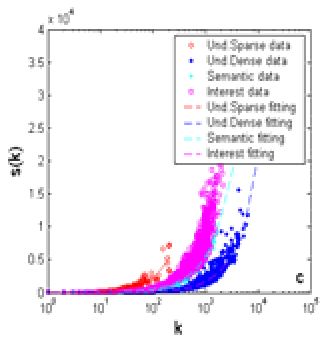 Fig 1: Degree and strength distributions across the four network types show a consistent power-law pattern with exponential cutoffs.
Experiments & Results: Real Data vs. Simulation
The authors validated their model by comparing simulated graphs against real data from Tianya.com. The results were striking:
- Small-World & Scale-Free: All networks showed high clustering coefficients () and low average path lengths (), confirming that information propagates rapidly in these environments.
- The Matthew Effect: The nearest-neighbor degree function showed that "hubs" (popular users) tend to connect with other "hubs," a classic signature of social stratification.
- The Power of : The simulation successfully mapped specific ranges of to real-world network types. For instance, the Interest Network required a much higher than the Semantic Network, reflecting that it is much easier to share an interest than to form a distinct emotional bond.
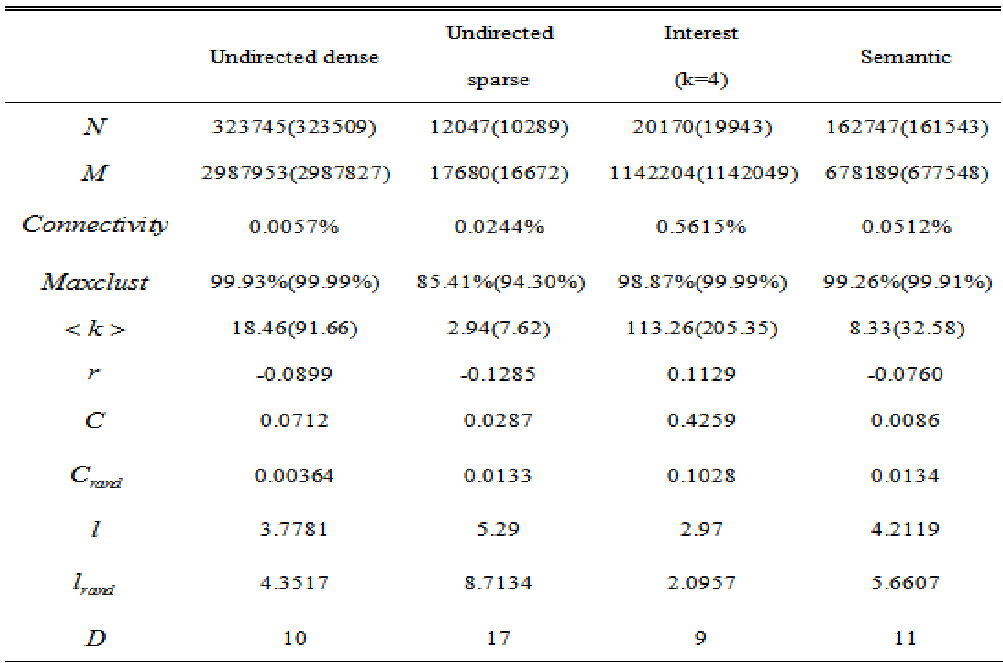 Table 1: Topological characteristics showing the discrepancy between real-world clustering and random graph counterparts ( vs ).
Critical Analysis & Conclusion
The most profound takeaway from this work is the structural invariance of online social networks. Whether you define a relationship by a "Supportive" keyword or a simple "Reply," the top-level math remains remarkably similar.
Limitations: While the model replicates clustering and degree distributions beautifully, it is somewhat "over-idealistic" regarding average shortest paths. Real-world networks contain random, non-degree-correlated noises that this simple model doesn't fully capture.
Future Outlook: This research provides a foundation for "Social DNA" mapping. Future work could apply this -factor model to detect anomalous behaviors (like bot swarms or coordinated misinformation) by identifying clusters that deviate from the expected topological signatures of genuine social interaction.
Takeaway for the Industry: When building recommendation engines or community detection tools, the type of interaction matters less than the intensity () of the user's engagement profile.