
Breaking the Hierarchy: Using Twitter as a Community-Driven Compass for Website Navigation
Link Sharing on Twitter during Popular Events: Implications for Social Navigation on Websites
This paper explores "Social Navigation" by leveraging real-time Twitter link-sharing data to recommend popular web pages to website visitors. By analyzing tweets from four major events (e.g., London 2012 Olympics, Golden Globes), the authors propose a community-driven navigation tool that surfaces deep-linked content often buried within traditional website hierarchies.
TL;DR
Can the "chaos" of social media actually help you find information on a structured website? This research argues yes. By analyzing over 260,000 tweets, the authors demonstrate that social media links act as a dynamic "social navigation" layer that brings deep, relevant content (often 3-4 clicks away) directly to the surface, bypassing rigid menus and stale search results.
The Navigation Paradox: Why We Get Lost
Despite having 14 billion web pages at our fingertips, site navigation remains a primary source of user frustration. We rely on three aging pillars:
- Menus: Great for top-level pages, but they bury specific content deep in the "basement."
- Search: Requires the user to know exactly what to ask—a high cognitive load.
- Social Tagging: Clouds become messy and ambiguous as they grow.
The authors propose a fourth pillar: Social Navigation. Instead of relying on what an admin thinks is important, let the community’s sharing behavior on Twitter dictate what should be featured on the home page.
Methodology: Mining the Social Signal
The study analyzed four high-impact events with different durations and periodicities:
- Major Sports: London 2012 Olympics (2 weeks) and World Junior Hockey (10 days).
- Entertainment: The Big Bang Theory (Weekly) and the Golden Globes (1 day).
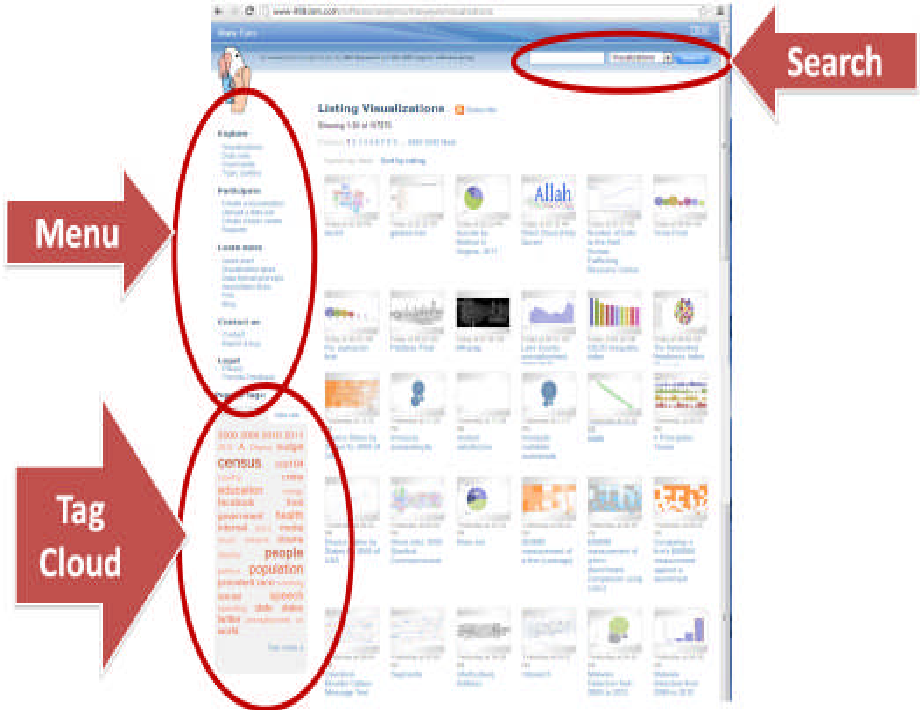 Figure 1: Traditional tools (Search, Menu, Tag Cloud) vs. the need for dynamic community input.
By using Netlytic to capture tweets and PHP scripts to "un-shorten" URLs, the researchers tracked how often users linked back to official event websites versus external sources.
Key Insights: Why "Social" Works Better
The data revealed a fascinating "flattening" effect of social media:
1. The "Deep Link" Phenomenon
In traditional sites, deep content is hard to reach. However, for the London Olympics, 70% of links shared on Twitter were 3-4 clicks away from the home page. By sharing these links, the community creates a "shortcut" that bypasses the friction of site hierarchy.
2. Event Correlation
Sports fans are "hunters" for official data. 48% of links in Olympic tweets pointed back to the official site. In contrast, entertainment fans shared more photos and videos, often from fragmented external sources.
3. Content Freshness
The links weren't just for the home page; they were "live" content—news stories, schedules, and scores. This suggests a navigation tool based on social media would be inherently real-time.
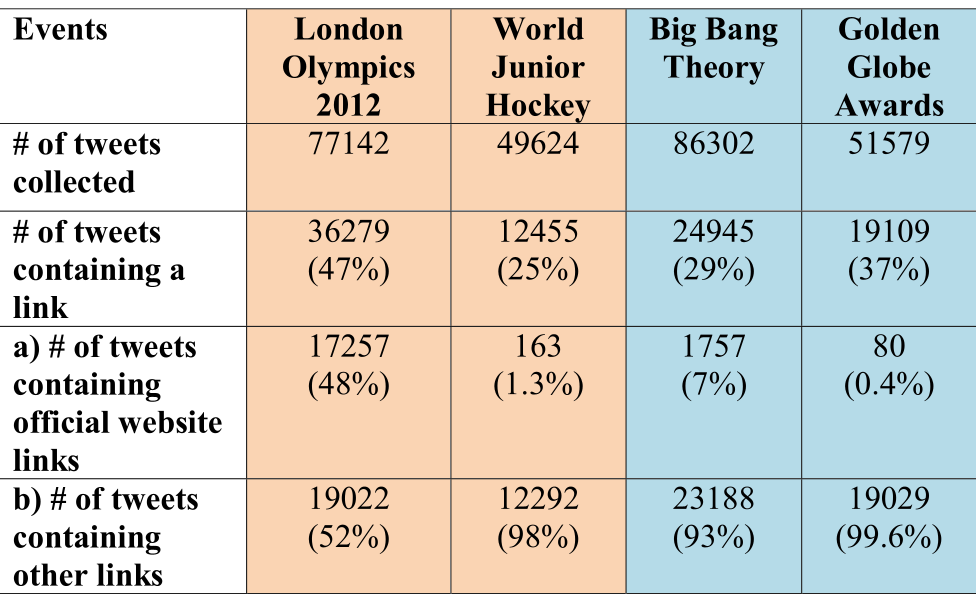 Table 2: Comparison of link-sharing volume across various event types.
The Solution: The "Social Navigation Panel"
The authors propose a prototype: a Social Media Panel that sits on the website's homepage, displaying thumbnails of pages currently trending on social media.
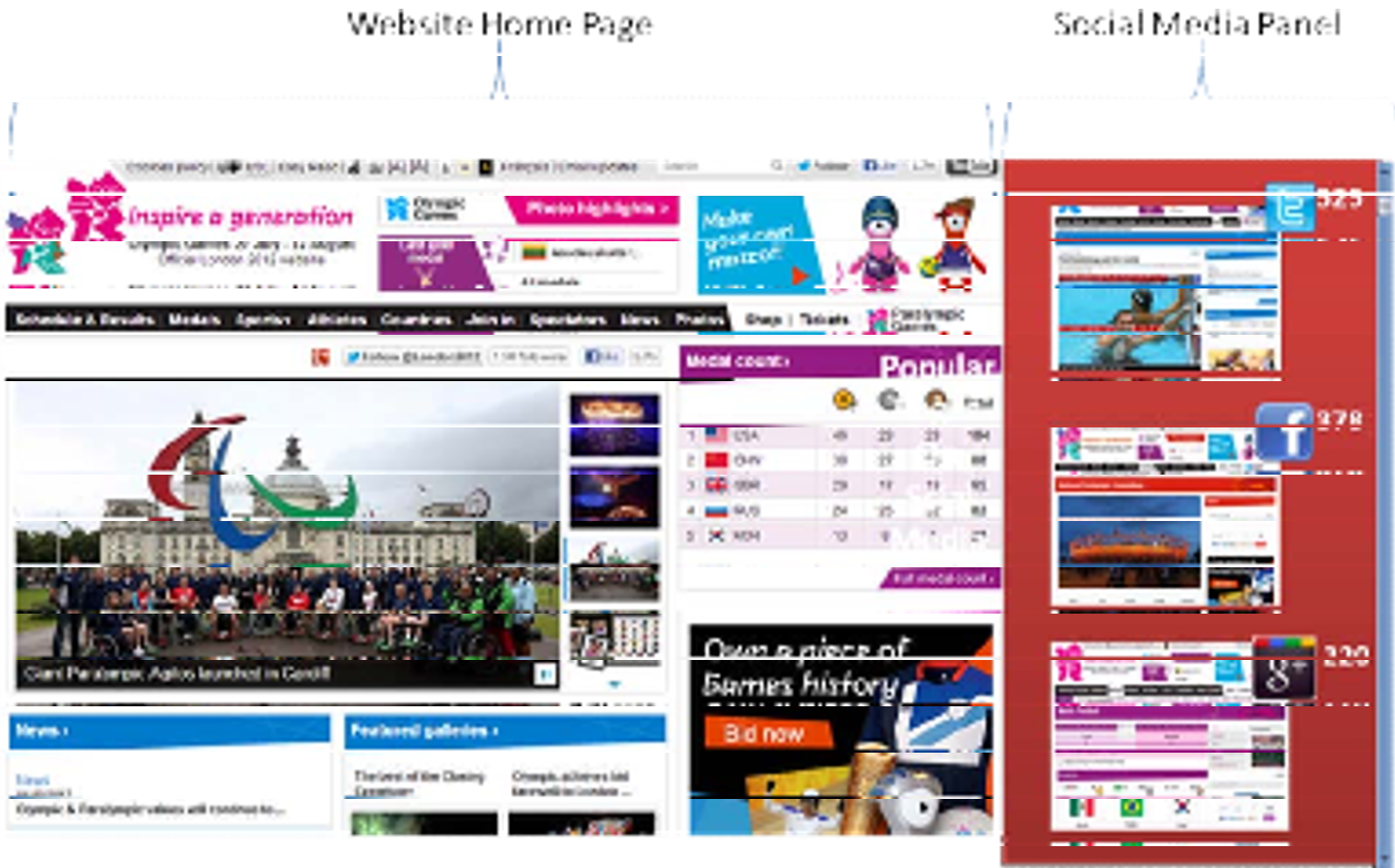 Figure 8: A proposed prototype for the London Olympics website featuring a Social Navigation Panel.
Why this matters for UX:
- Zero-click Discovery: Users see what’s popular without searching.
- Community Trust: If 500 people are sharing a specific news article, a new visitor is more likely to find it relevant.
- Dynamic Ranking: Unlike static menus, this list evolves as the event progresses.
Critical Analysis & Future Outlook
While the study provides a strong foundation, it acknowledges a few hurdles:
- The Popularity Bias: This method only works for high-traffic websites. A small blog won't have enough "social signal" to drive this navigation.
- The Spam Problem: During the World Junior Hockey event, 28% of external links were spam. Any production implementation would need a robust "Spam Filter" to protect the website's integrity.
Conclusion: This paper marks a shift from "Author-defined" navigation to "Community-defined" navigation. In an age of information overload, the best way to help a user might not be a better search algorithm, but a better window into what everyone else is currently reading.