
Who are my Mentors? Redefining Collaborative Filtering through Social Network Structures
Linking Collaborative Filtering and Social Networks: Who Are My Mentors?
This paper introduces a social-network-based approach to mentor selection in memory-based Collaborative Filtering (CF) for scenarios where explicit user ratings are absent. By treating users as nodes and co-visitation as edges, the authors employ a localized community detection algorithm (optimizing the L-metric) to identify authoritative "mentors" for personalized recommendations.
TL;DR
This research bridges the gap between Collaborative Filtering (CF) and Social Network Analysis (SNA). By moving away from the "rating-centric" paradigm, the authors propose using local community detection to find "mentors"—users who guide recommendations—solely based on visitation patterns. The result is a more efficient system that uses 37% fewer neighbors while achieving higher recommendation precision.
The "Rating Scarcity" Problem
Traditional Collaborative Filtering is built on a simple premise: "Users who liked similar things in the past will like similar things in the future." This works perfectly when you have a rich dataset of 1-5 star ratings. However, in the real world, users are "lazy"—they consume content (watch videos, visit pages) but rarely take the time to rate it.
Without explicit ratings, we lose our compass for calculating Similarity. How do we know who a user's true "neighbors" are when all we know is that they both clicked the same link? Standard CF falls short here, often including "outliers" or noisy data points that degrade recommendation quality.
Methodology: From Similarity to Connectivity
The authors propose a shift in perspective: Treat the user base as a Social Network.
- Nodes: Users.
- Edges: A link exists if two users have co-seen more than 20 items.
Instead of relying on a simple K-Nearest Neighbor (KNN) search, which is fixed and rigid, they employ a Local Community Detection algorithm. The core of this method is the optimization of the L-metric, which balances two factors:
- The internal connectivity of the community.
- The external sparsity (how little the community connects to the outside world).
Refined Mentor Selection
The paper introduces a key adaptation: they only test the direct neighbors of the target user during the iteration. This ensures the resulting community is strictly "user-centric."
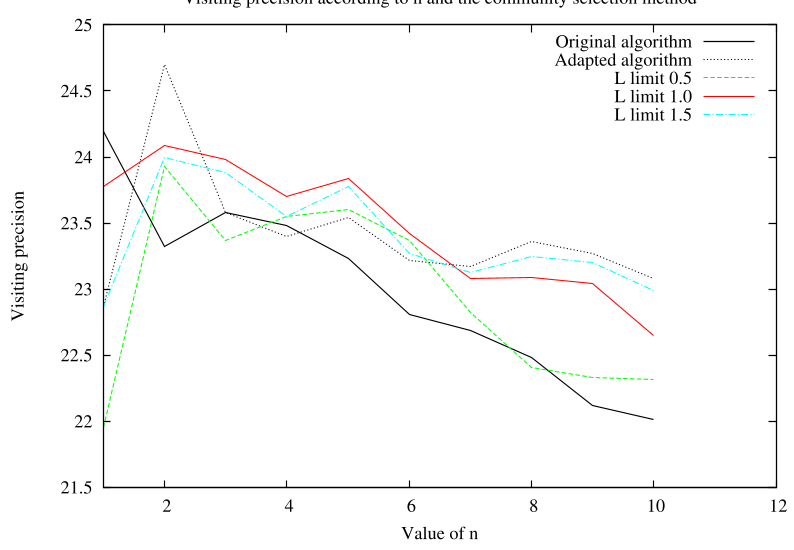 Figure 1: Comparison of different selection strategies across precision metrics.
Experimental Validation
Using the MovieLens dataset (transformed into binary visitation data), the authors compared several strategies:
- Baseline: Using the whole set of connected neighbors.
- Fixed KNN: Choosing a static number of mentors (K=100 performed best).
- Dynamic L-Limit: Stopping the community growth once a quality threshold (L) is met.
Key Findings:
- Efficiency: Setting a limit of L=1.0 resulted in communities with an average of 104 mentors, compared to 234 in the baseline.
- Accuracy: Despite having 37% fewer mentors, the precision was better than the baseline and comparable to the best-tuned KNN models.
- Robustness: The dynamic threshold (L-Limit) adapts to the specific connectivity of the user, whereas a fixed K might select too many irrelevant mentors for some or too few for others.
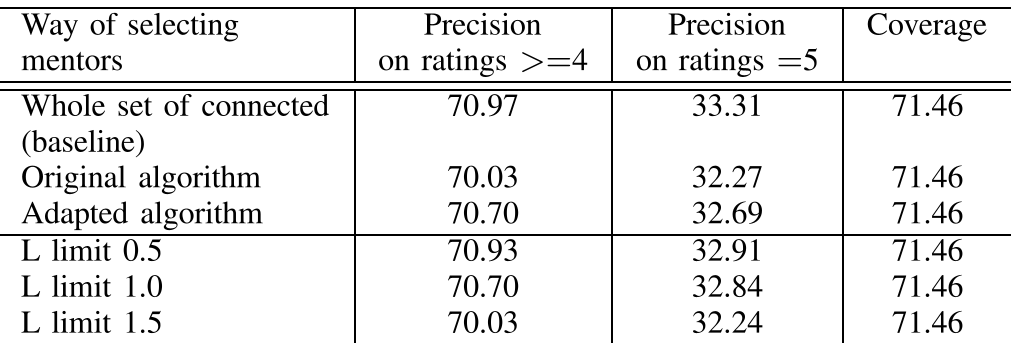 Table II: Impact of mentor selection on rating precision.
Critical Insight: Why it Works
The "magic" here lies in the Inductive Bias of community detection. In a social graph, a community represents a densely packed group of users with highly overlapping behaviors. By optimizing the L-metric, the system automatically filters out "hub" users (those who see everything but don't represent a specific niche) and "outliers" (those with coincidental overlaps).
The mentors chosen this way aren't just similar; they are structurally significant to the user’s position in the taste-space.
Conclusion and Future Outlook
This work demonstrates that when explicit preference data is missing, the topology of interaction is a powerful substitute. It paves the way for "rating-less" recommender systems that are computationally lighter and more accurate.
Future developments in this niche likely involve Dynamic Graph Embeddings, where these structural relationships are learned automatically, but the fundamental insight remains: your best "mentors" are defined by the community you keep.