
AI in Trichology: Objective Scalp Diagnosis via Deep Learning
Live Demonstration: An Intelligent Scalp Diagnosis System using Deep Learning for Scalp Healthcare
This paper presents an Intelligent Scalp Diagnosis System that leverages Deep Learning to automatically identify five common scalp conditions (dandruff, allergies, bacteria, grease, and alopecia). The system integrates a specialized 200x magnification scalp detector, a mobile application, and a cloud-based AI computing server to provide objective healthcare assessments.
TL;DR
Scalp healthcare is often neglected or subjectively assessed. This paper introduces an integrated AI system consisting of a 200x magnification detector, a mobile app, and a cloud server. Using Deep Learning, the system provides objective, quantifiable scores for five major scalp issues—dandruff, allergies, bacteria, grease, and alopecia—effectively replacing subjective human expert diagnosis with data-driven precision.
The Subjectivity Trap in Scalp Healthcare
Data from the World Health Organization (WHO) reveals that roughly 70% of the population suffers from scalp-related issues, often exacerbated by stress or diet. Despite this high prevalence, the industry faces a Consistency Crisis:
- Subjectivity: Diagnosis depends on the individual physiotherapist’s experience, leading to "opinion-based" rather than "fact-based" results.
- Economic Barrier: Training specialized staff is expensive and slow, making it difficult for local salons to scale healthcare services.
- Lack of Tracking: Without quantifiable data, tracking the progress of a treatment over months is nearly impossible for the average consumer.
Methodology: The Four-Tier Infrastructure
The researchers designed a seamless loop that moves the diagnosis from the physical scalp to the digital cloud.
- The Scalp Detector: A high-resolution camera with 200x magnification. This is the critical "sensor layer" that captures microscopic details invisible to the naked eye.
- Mobile Interface: Acts as the gateway, receiving photos via Wi-Fi and relaying them to the inference engine.
- AI Computing Server: The brain of the operation. While the paper focuses on the system architecture, it utilizes Deep Learning models trained to recognize visual patterns associated with microbial activity (bacteria), flaking (dandruff), and follicular density (alopecia).
- Cloud Service Platform: A CRM-integrated backend that records scores for long-term health tracking.
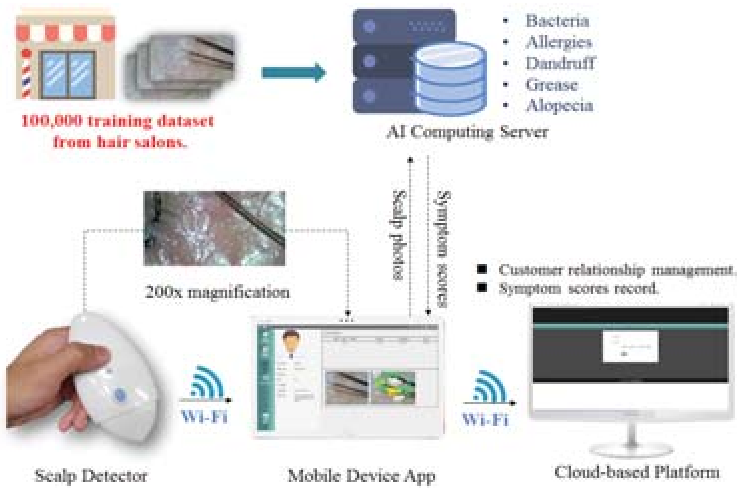 Fig 1: The overall workflow from image capture to cloud-based symptom scoring.
Quantitative Diagnosis
Instead of a simple "healthy/unhealthy" binary, the system outputs Symptom Scores. During the demonstration, visitors could see their status across five dimensions. This quantification is essential because it allows for:
- Ablation of Human Bias: The AI applies the same standard to every image.
- Visual Evidence: Users can see the microscopic high-magnification images alongside their scores, increasing trust in the recommended treatments.
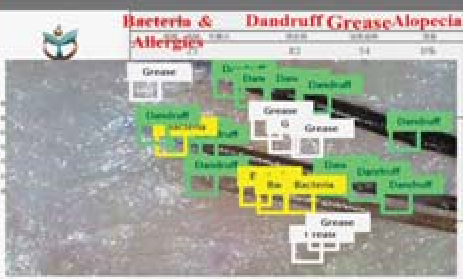 Fig 2: Example of the mobile application interface showing the 200x scalp image and the resulting five-axis health scores.
Critical Analysis & Professional Insight
The core value of this work is not just the AI model itself, but the End-to-End System Design. By offloading the "professionalism" required for diagnosis to a server, the authors have lowered the technical barrier for hair care providers.
Limitations: As a demonstration paper, it lacks a detailed breakdown of the model's sensitivity and specificity (e.g., Confusion Matrices for bacteria vs. allergies). Furthermore, environmental lighting and skin tone variations are common challenges in "in-the-wild" scalp photography that the system must robustly address.
Future Outlook: We are likely moving toward a "Scalp-as-a-Service" model where AI provides the initial screening, leaving only the most complex cases for human dermatologists. Integrating this with generative AI could potentially simulate "future hair loss" based on current scores, providing even stronger motivation for preventative care.
Takeaway
By bridging the gap between high-magnification hardware and cloud-based Deep Learning, this system transforms a subjective clinical task into an objective, accessible commercial service.