
Beyond Human-Centricity: Crowdsourcing Wildlife Ecology Through Live Audio Streams
Live Sound System with Social Media for Remotely Conducting Wildlife Monitoring
The paper introduces a long-term Human-Computer-Biosphere Interaction (HCBI) system that live-streams environmental sounds from remote wildlife habitats to the internet. Operating for over a decade in Japan's Iriomote Island, the system leverages a social media interface to engage the public in ecological monitoring, achieving a successful 10-year continuous field trial.
TL;DR
This research presents a decade-long study on a remote acoustic monitoring system that streams live sounds from uninhabited forests to the internet. By analyzing 11 years of user feedback, the study explores how humans interact with non-human environments and demonstrates a scalable "audio census" method for ecological monitoring using social media and distributed participants.
Background: The Limits of On-Site Observation
Ecological studies, particularly those tracking the effects of disasters like Chernobyl or Fukushima on wildlife, require monitoring across several generations. The traditional bottleneck? Human presence. Manual data collection in high-radiation zones or remote subtropical islands like Iriomote is dangerous, expensive, and limited by the observer's concentration. Prior work in bioacoustics has shifted toward automated recording, but processing thousands of hours of audio remains a massive computational and cognitive challenge.
Methodology: The HCBI Architecture
The author proposes a Human-Computer-Biosphere Interaction (HCBI) framework. Instead of relying solely on automated algorithms or professional researchers, the system invites the "crowd" to listen.
The System Design
- Data Capture: Weatherproof microphones are installed in pairs on trees in remote habitats (e.g., Iriomote Island).
- Transmission: Audio is digitized, encoded into MP3 live streams, and archived as high-quality WAVE files.
- Interaction Layer: A web interface allows users to listen 24/7 and post comments about what they hear.
- Analysis Engine: Natural language processing (specifically KH Coder) is used to extract nouns and phrases from user comments to identify biological activity.
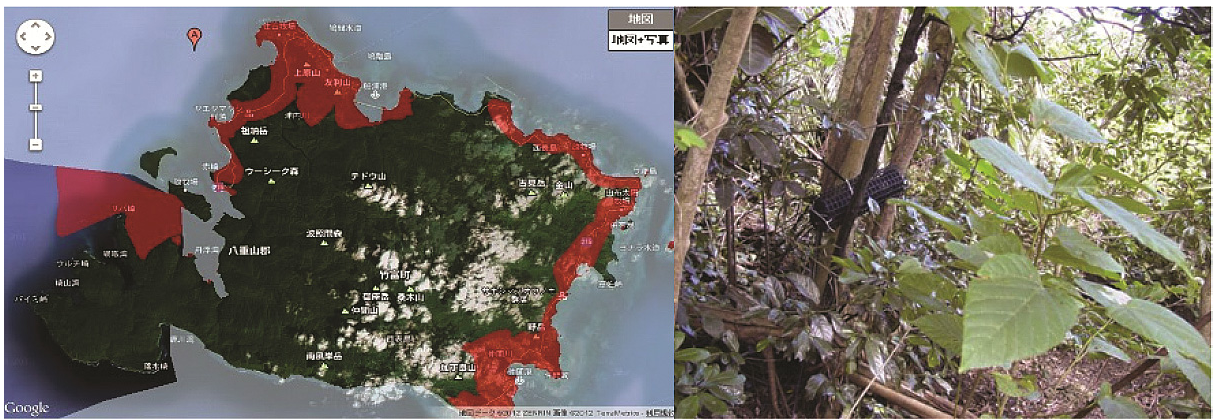 Fig 1: The Sound Bum interface used to bring remote nature to global listeners.
Experimental Insights: What Do We Hear?
During the 11-year observation period on Iriomote Island, the system proved remarkably resilient despite high humidity and a lack of infrastructure.
Key Findings from User Feedback:
- Selective Attention: Users consistently ignored the most dominant sounds (wind, water) and focused on "Singing Voices" (animal calls), which occupied the smallest fraction of the soundscape.
- The Recognition Gap: While users identified general categories like "Frog" or "Cicada," ecological records show at least six species of frogs were active. Most users performed "sweeping recognition" rather than detailed species identification—highlighting a need for expert-led "audio censuses."
- The Umwelt Effect: The study references Jakob von Uexküll’s theory of Umwelt, suggesting that the system allows humans to enter the "surrounding world" of an animal, bridging the gap between real and virtual environments.
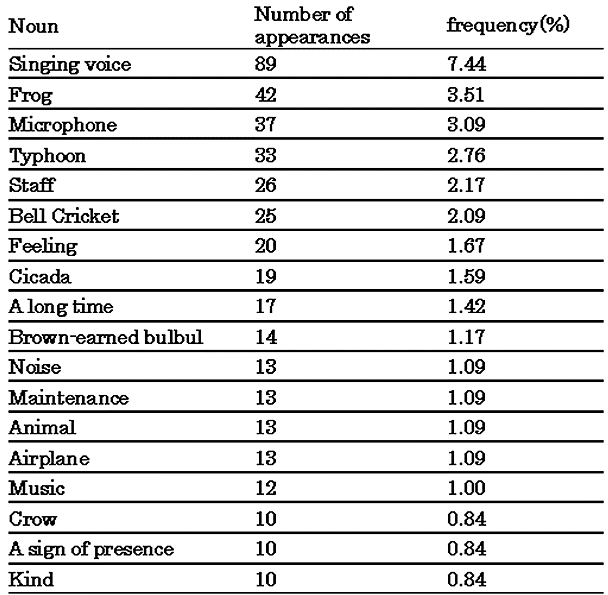 Table 1: Frequency of noun phrases appearing in user comments.
Future Outlook: From Islands to Disaster Zones
The success of the Iriomote project has paved the way for "Audio Censuses" where ornithologists use Twitter and IRC to identify species in real-time. This methodology is now being adapted for the "difficult-to-return" zones near the Fukushima Daiichi Nuclear Power Plant, where physical human monitoring is restricted.
Critical Analysis & Conclusion
Takeaway
The paper shifts the focus of HCI from human-to-human interaction to human-to-biosphere interaction. By treating the public as a distributed sensor network, researchers can achieve long-span monitoring that was previously impossible.
Limitations
The current analysis relies on qualitative user comments, which are geographically and linguistically biased. Furthermore, the "recognition gap" suggests that while the public is great for detecting presence, professional or AI-assisted verification is still necessary for high-precision species classification.
Future Work
Integrating AI-driven bioacoustic recognition with this live social interface could create a hybrid "Human-AI-Biosphere" loop, significantly increasing the accuracy of remote ecological surveys.