
Beyond Degrees: Leveraging Weights and Directions for Efficient Social Network Search
Local search in weighted and directed social networks: A case study in Enron Email networks
This paper explores local search strategies in weighted and directed social networks using the Enron Email dataset. It proposes five novel strategies—SS, O1, O2, SPD, and LPD—that leverage edge weights, neighborhood overlap, and link directionality to outperform traditional degree-seeking (DS) algorithms.
TL;DR
Navigating a social network with only local information is a classic challenge. While previous methods focused on chasing "hubs" (high-degree nodes), this paper proves that utilizing edge weights (communication frequency) and link directions significantly slashes the time needed to find a target. In the Enron Email network, these new strategies reduced average search steps by over 35%.
Background: Why Local Search is Hard
In a "Small World," we are all connected by a few degrees of separation. However, finding those paths without a global map—relying only on who your immediate neighbors know—is difficult. Scale-free networks, like the Enron email web, tend to "protect" their local clusters. The high information cost (entropy) of choosing the right exit at a hub node often leads a searcher astray.
The Core Insight: Strength Over Degree
The authors move beyond the simple Degree Seeking (DS) approach. Their primary intuition is that not all connections are equal.
1. Strength Seeking (SS)
In a weighted network, the Strength of a node () is a better proxy for centrality than its degree. If you talk to someone frequently (high weight), you are likely more "connected" in a functional sense.
2. The Power of Overlap (O1 & O2)
What if weights aren't available? The authors use Overlap (O)—the ratio of common neighbors between two nodes.
- Insight: High overlap implies a strong, local tie; low overlap (weak ties) often acts as a bridge to distant parts of the network. The paper derives heuristic functions (O1 and O2) that use this local clustering data to mimic weight-based searching.
3. Directional Intelligence (SPD & LPD)
In email, direction matters (who mails whom).
- SPD (Short Path Detecting): Optimizes for finding targets within a few hops by eyeing nodes with high .
- LPD (Long Path Detecting): Uses the product of in-degrees and out-degrees to find "authorities" that serve as bridges for long-distance navigation.
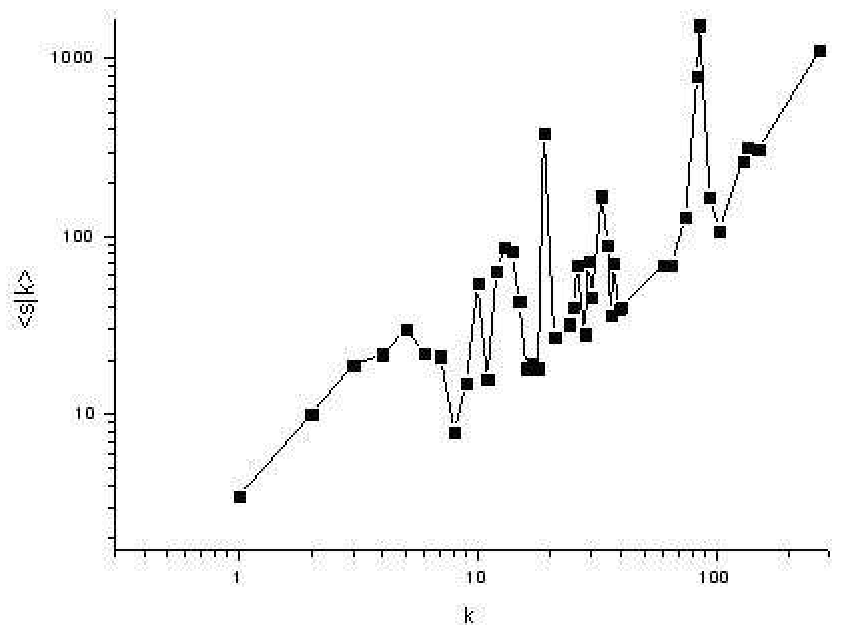 Figure 1: While degree and strength are correlated, strength provides a more granular view of a node's true influence.
Methodology: The Heuristic Functions
The authors mathematically demonstrate that for a power-law distribution with exponent , the number of steps scales differently. By replacing the selection criteria with (for SS) or (for LPD), they optimize the "surprizal" of the walker, ensuring they move toward nodes that maximize the probability of reaching the target.
Experimental Battleground: The Enron Corpus
Using the Enron Email dataset (1,143 nodes, 2,106 edges), the team compared eight different strategies.
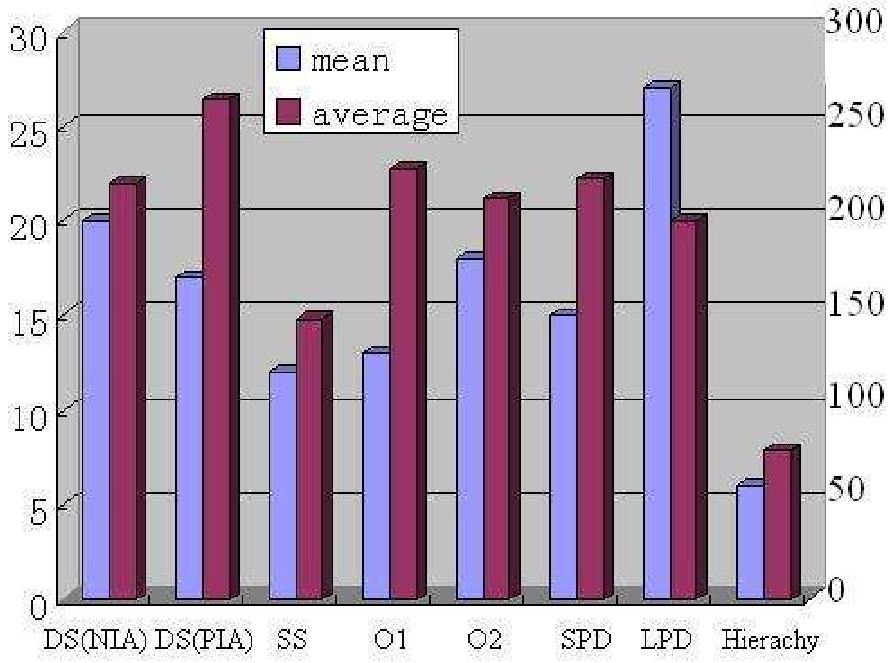 Figure 2: Comparison of average and mean steps. Note how SS and SPD consistently outperform the standard DS algorithm.
Key Results:
- SS (Strength Seeking): Achieved a mean search length of 12 steps, compared to 19 steps for the standard Degree Seeking (DS).
- SPD: Effectively detected short paths, keeping the mean step count low.
- LPD: While the "mean" was higher, its "average" was lower, suggesting it is superior at finding targets that are traditionally very "far" in a topological sense.
Critical Analysis & Conclusion
This paper shifts the paradigm from "how many friends do you have?" to "how well do you know them?".
Takeaway: The inclusion of weight and direction turns a blind search into a guided one. For modern practitioners building recommendation engines or decentralized P2P search protocols, this suggests that tracking interaction frequency (weights) is far more valuable than simply tracking link presence (degrees).
Limitations: The strategies (especially O1 and O2) require nodes to know information about "neighbors' neighbors," which increases the local memory overhead. Future work could investigate how to achieve these gains with even more restricted, "true-local" information.