
Oxygen at Your Fingertips: A New Era of Crowdsourced Emergency Healthcare
A location-based ubiquitous crowdsourcing approach for the emergency supply of oxygen cylinders
This paper introduces a location-based ubiquitous crowdsourcing platform designed to provide emergency oxygen cylinder supplies for COPD and asthma patients. The system, mediated by a trusted platform, connects requesters with nearby suppliers and uses computer vision to validate oxygen levels via analog gauge image processing.
TL;DR
Researchers have developed a location-aware crowdsourcing platform that transforms a community into a distributed emergency supply network for oxygen cylinders. By combining geofencing with a robust Computer Vision algorithm to verify oxygen levels (boasting up to 99% accuracy), the system provides a vital safety net for COPD patients when traditional ambulances are unavailable.
The Life-and-Death Gap in Respiratory Care
For patients with Chronic Obstructive Pulmonary Disease (COPD) or severe asthma, a sudden smog spike or high pollen count isn't just an inconvenience—it's a medical emergency. Oxygen therapy can mean the difference between life and death. However, the "Oxygen Crisis" is a global reality; ambulance shortages and empty hospital cylinders frequently lead to preventable fatalities.
The authors identify a critical gap: while we use crowdsourcing for food (UberEats) and navigation (Waze), we haven't effectively utilized it for life-saving resource allocation.
Methodology: High-Tech Mediation for Human Interaction
The proposed solution is a 4-layer architecture (Presentation, Service, Business, and Data) that acts as a trusted mediator.
1. Geofencing & Push Notifications
Using Google Firebase Cloud Messaging (FCM), once a patient triggers a "Ring Bell" emergency request, the platform broadcasts alerts only to registered suppliers within a 5km radius. This prevents notification fatigue and ensures the "crowd" is physically capable of responding in time.
2. Validating the "Human Sensor" through Computer Vision
A major challenge in crowdsourcing is data reliability. How do we know the volunteer's oxygen tank isn't empty? The system offers two validation paths:
- Bluetooth Path: Direct reading from IoT-enabled "smart" cylinders.
- Visual Path: For traditional analog cylinders, the volunteer snaps a photo. The system uses a specialized image processing pipeline (Canny edge detection and Hough transforms) to "read" the gauge needle.
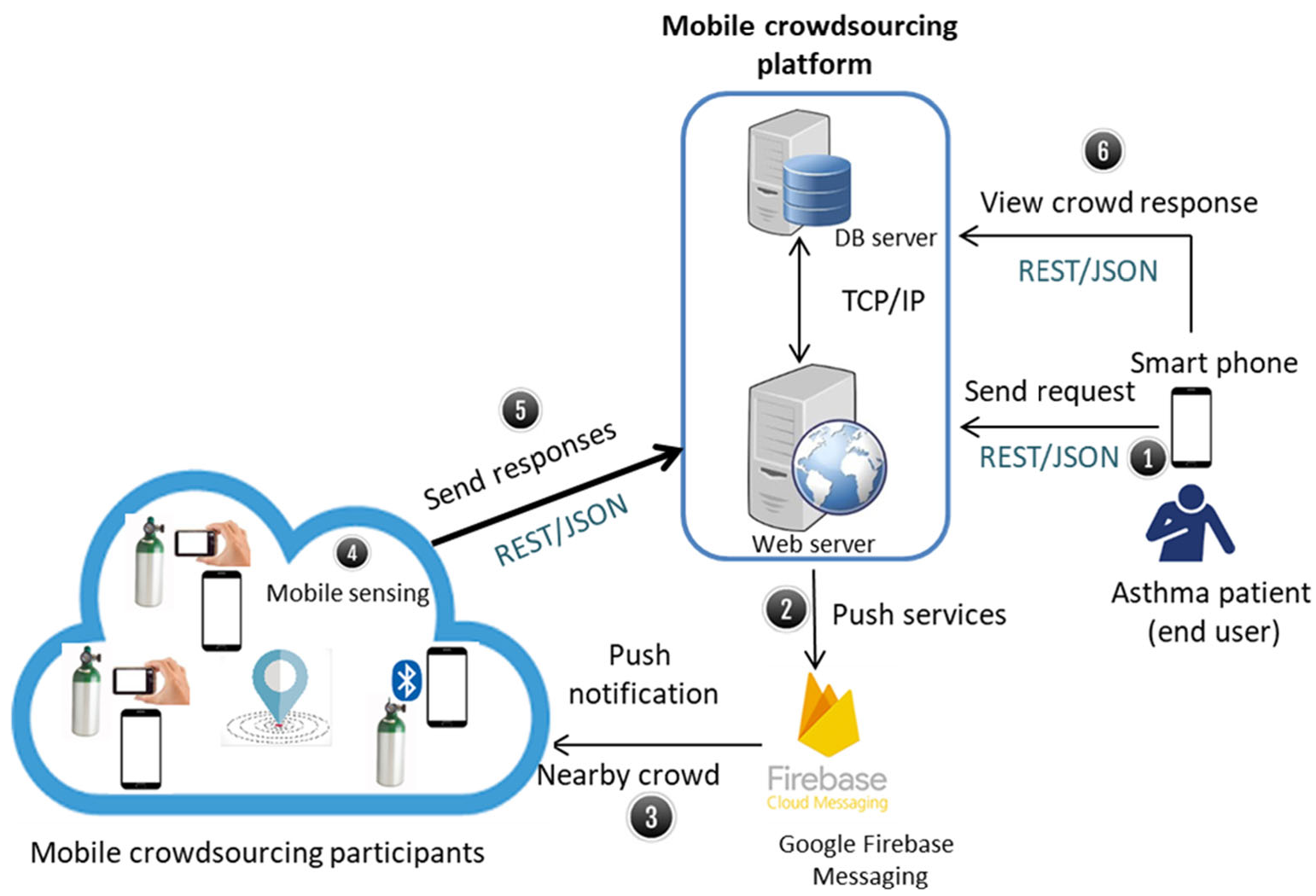 Figure 1: The ubiquitous crowdsourcing platform architecture.
Turning Pixels into Pressure Readings
The technical heart of the paper is the automated gauge classification. Instead of requiring perfect camera alignment, the algorithm identifies the needle contour and center point using color masking and circle-fitting variations.
The system classifies oxygen into three categories:
- Low: < 600 p.s.i.
- Medium: 600 - 1500 p.s.i.
- High: > 1500 p.s.i.
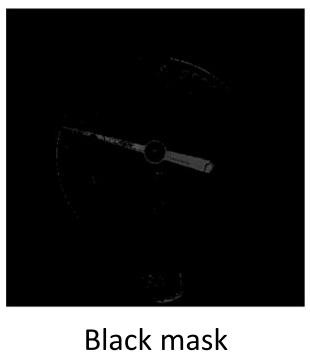 Figure 2: The pipeline for needle detection and angle estimation.
Experimental Results: Reliable and Scalable
In testing across 231 synthetic and real environments, the system demonstrated exceptional robustness:
- Accuracy: Reached 99.1% for identifying "High" pressure tanks.
- Latency: The average processing time was 8 seconds, which, while seemingly high for standard apps, is a negligible fraction of the time required to physically transport a cylinder.
- Usability: Iterative testing led to UI features like the "bounding circle," which helps panicked users frame photos correctly without needing manual cropping.
Strategic Insight: Beyond "Information Sharing"
This paper signals a shift in the academic coordinate system. We are moving from Information Crowdsourcing (where the output is a map or a review) to Actuation Crowdsourcing (where the output is a physical intervention).
Potential Limitations
- Privacy vs. Urgency: Disclosing a user's location and health status in real-time remains a high-risk endeavor. The authors combat this with JWT tokens and TLS encryption, but the reliance on a "central trusted authority" is a bottleneck.
- Supply Authenticity: While the CV algorithm reads the gauge, it cannot prevent a malicious user from photographing an old photo. Future iterations might require "Live" photo metadata validation.
Conclusion
By treating the community as an "Ambient Social Network," this research provides a blueprint for how information systems can alleviate the burdens currently crushing global healthcare infrastructures. It is a compelling example of how Computer Vision isn't just for self-driving cars—it's for saving lives in the living room.