
The Price of Sharing: Decoding Information Disclosure in LBSNS
Location information disclosure in location-based social network services: Privacy calculus, benefit structure, and gender differences
2015-06-18
Summary
Problem
Method
Results
Takeaways
Abstract
This study establishes a research model to investigate the mechanisms of location information disclosure in Location-Based Social Network Services (LBSNS). It utilizes privacy calculus and social role theory to analyze how "Benefit Structure" and "Gender Differences" influence user disclosure intentions, finding that hedonic benefits play a more prominent role than utilitarian ones in this context.
## TL;DR
In the era of SoLoMo (Social, Local, Mobile), sharing our location is the currency of social interaction. This study deconstructs the "Privacy Calculus" behind check-ins on platforms like Dianping or Foursquare. It reveals that in social networks, **pleasure (Hedonic Benefit) beats utility**, and the decision to share is not a simple math problem but a complex interaction moderated heavily by **Gender**.
## Background: Beyond the Convenience of E-Commerce
While early research on privacy focused on e-commerce (e.g., "If I give my address, I get faster shipping"), LBSNS is a different beast. It is a **hedonic technology**. We don't just share our location to find a nearby store; we do it to build social capital, express our identity, and have fun. The authors argue that the old models are insufficient because they ignore the *interaction* between risk and reward and the deep-seated psychological differences between male and female users.
## The Core Logic: A Two-Stage Calculus
The researchers propose that users don't just jump to a "Yes/No" decision. They go through two cognitive stages:
1. **Benefit Formulation**: Balancing the "Useful" (Utilitarian) with the "Fun" (Hedonic).
2. **The Trade-off**: Weighing the total benefit against the potential for privacy misuse.
### 1. The Interaction Effect
One of the most striking insights is the **interaction effect**. It’s not just that high risk is bad; it's that high risk *neutralizes* the benefits. If a user feels the platform is unsafe, no amount of "fun" features will convince them to check in. The benefit-intention link effectively collapses under high privacy risk.
### 2. The Model Architecture
The study uses PLS-SEM to validate a complex web of influences, as shown in the conceptual model below:
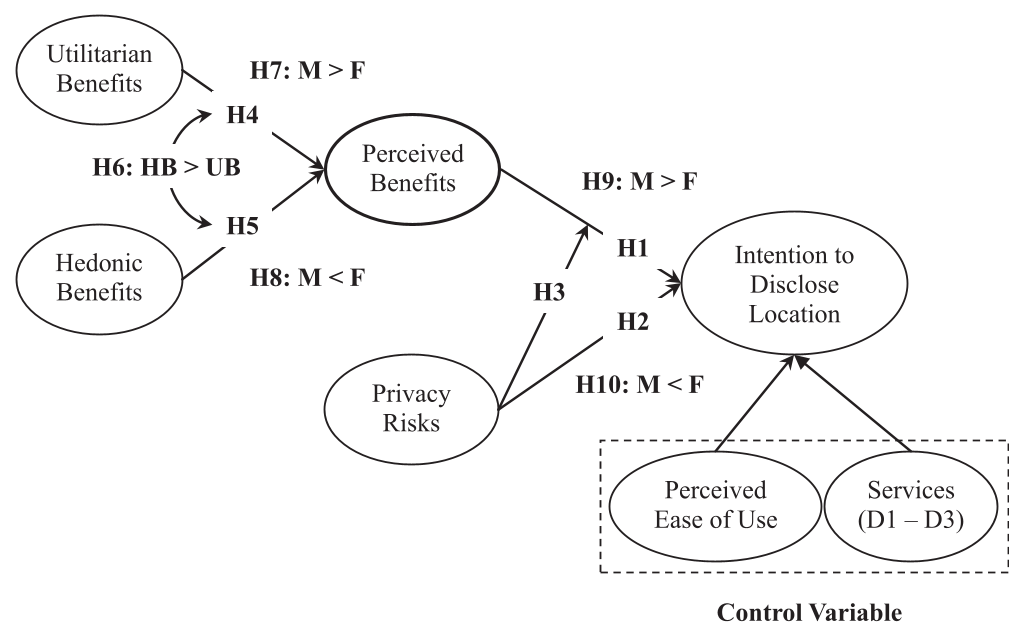
*Figure 1: The proposed research model integrating Benefit Structure and Privacy Calculus.*
## Gender Differences: Men seek Utility, Women avoid Risk
Drawing on **Social Role Theory**, the study uncovers that men and women use different "weighting scales" in their calculus:
* **For Males**: The drive is primarily **Instrumental**. Men are more influenced by utilitarian benefits and are generally more willing to "take the gamble" if the reward (perceived benefit) is high.
* **For Females**: The process is more **Communal and Cautious**. Females focus significantly more on the Hedonic (enjoyment) aspect during benefit formulation but are much more sensitive to **Privacy Risks**. Even a slight increase in perceived risk deters female users more strongly than it does males.
### Comparative Experimental Results
The data analysis confirmed these hypotheses with significant path coefficient differences across gender sub-samples:

*Table 8: Comparison of path coefficients shows males lean on Benefits (PB) while females lean on Risks (PR).*
## Deep Insight: Why This Matters for the Industry
This paper moves beyond the "What" and explains the **"How"** and **"Why"**.
* **The "How" of Gendered UX**: Product managers shouldn't treat "users" as a monolith. A "one-size-fits-all" privacy setting is a failure.
* **The "Why" of Hedonic Dominance**: In social settings, the *intrinsic* joy of the act is what keeps the platform alive. If a social app feels like a "utility tool," it loses its primary disclosure driver.
## Critical Analysis & Conclusion
**Takeaway**: This work proves that the "Privacy Calculus" is dynamic. For LBSNS, the industry must lead with **Enjoyment** but anchor it with **Trust**.
**Limitations**: The study was conducted with a student-heavy sample in China. While valid for that demographic, the "Collectivist" culture of China might emphasize social benefits more than "Individualist" Western cultures. Additionally, as LBSNS evolves into more "Ambient" sharing (like Snapchat's Snap Map), the risks may become even more visceral than those explored in this 2015 study.
**Future Outlook**: As AI and hyper-personalization become standard, the "Utilitarian" side of LBSNS might see a resurgence, potentially re-aligning the benefit structure once more.