
Safeguarding the "Check-in": Solving the Location Privacy Paradox in Social Networks
Checking in without worries: Location privacy in location based social networks
The paper proposes a privacy-preserving framework for Location-Based Social Networks (LBSNs) that protects user check-in and search locations from an honest-but-curious server. It introduces a delegatable Pseudo-Random Function (PRF) and a novel index structure (AVL trees combined with linked lists) to ensure location privacy while maintaining computational efficiency on mobile devices.
TL;DR
In the era of Foursquare and Facebook Check-ins, sharing your location often means sacrificing your privacy. This paper introduces a robust framework that allows users to check in and search for friends' locations without ever revealing their actual coordinates to the server. By utilizing Delegatable Pseudo-Random Functions (PRFs) and a Hash-Chain session management system, the authors achieve high-grade security that runs efficiently even on decade-old mobile hardware.
The Motivation: Why "Cloaking" Isn't Enough
For years, the standard for location privacy was "cloaking"—blurring your location into a larger area shared with other users. However, cloaking has a fundamental weakness: it requires a Trusted Third Party (TTP). If the TTP is compromised, your privacy vanishes. Furthermore, cloaking often results in "fuzzy" search results.
The authors of this paper argue that we need a solution that is:
- Server-Oblivious: The server processes queries but learns nothing.
- Resource-Efficient: Cryptography shouldn't drain a smartphone's battery.
- Socially Dynamic: Adding or revoking friends shouldn't require re-encrypting years of data.
Methodology: The Secret Sauce
The framework's core innovation lies in how it handles search tokens (trapdoors) and session keys.
1. Delegatable PRF: Outsourcing without Trust
Generating search trapdoors for 500+ friends on a mobile phone is computationally expensive. The authors propose a "Delegatable PRF." Instead of the user computing a trapdoor for every friend, they compute a single "check-in trapdoor" () and give the server a "Delegation Key."
- The Intuition: The server can transform into friend-specific search tokens but cannot reverse the operation to find the original location or the secret key.
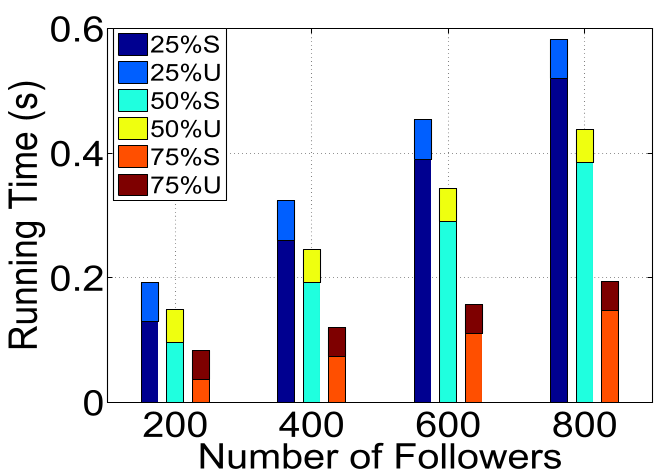 Fig 1: The mechanism of Delegatable PRFs allowing server-side computation.
2. The Hybrid Index Structure
To support fast searching, the server maintains AVL trees for each user. However, to handle frequent check-ins at the same spot, they use a linked-list structure hidden behind a "Header Table." This allows a user to "update" their latest location by only changing one pointer, rather than rebuilding the entire encrypted index.
3. Hash-Chains for "Forward Security"
Social networks are messy—friends are added and removed. When you revoke a friend, they shouldn't see your future check-ins. The authors use a Hash Chain (). New session keys are derived by moving "forward" in the chain. Because hash functions are one-way, a revoked friend with an old key cannot guess the next one in the sequence.
Performance: Cryptography on a Motorola Droid
The efficiency of this framework was tested on a Motorola Droid (550MHz ARM processor). The results are striking:
- Client vs. Server Load: Without delegation, a client spends significant time generating trapdoors as the friend count grows. With Delegatable PRF, the client's workload remains constant and near-zero, regardless of social circle size.
- Revocation Speed: Using the hash-chain window (e.g., ), the system avoids the "re-encrypt everything" penalty. Generating a chain of 5,000 keys takes only 0.21 seconds.
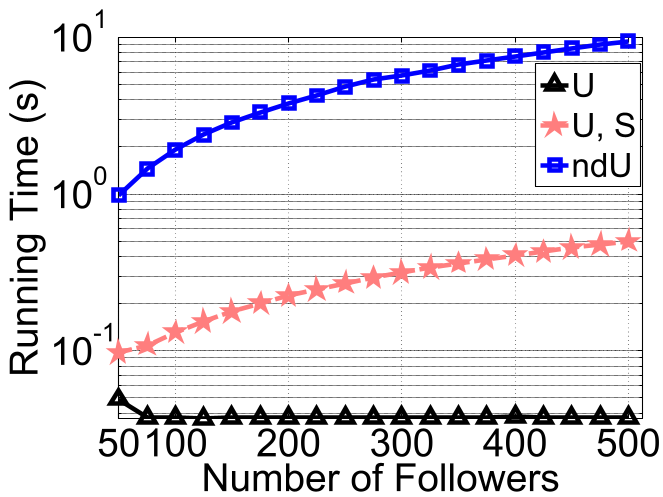 Fig 2: Comparison of Hash-Chain vs. Traditional Re-encryption.
Critical Analysis & Conclusion
The beauty of this work is its real-world pragmatism. While many academic papers rely on heavy Fully Homomorphic Encryption (FHE), this paper sticks to Elliptic Curve groups and PRFs, making it deployable on actual mobile devices.
Limitations:
- The server still learns "access patterns" (e.g., how often you check in, though not where).
- Revoked friends leave "idle items" in the AVL tree, which could slightly bloat server storage over time.
Future Outlook: As LBSNs evolve into the "Metaverse" or AR-based social layers, the need for sub-second private location retrieval will only grow. This framework provides the foundational "plumbing" for a world where we can share our experiences without being geofenced by curious algorithms.
Takeaway: Privacy doesn't have to be slow. By smartly delegating math to the server and using one-way hash chains for identity, we can have both social connectivity and absolute location secrecy.