
Beyond Simple Regressions: A System Dynamics Approach to Regional Macroeconomic Forecasting
Long-Term Forecasting Technology of Macroeconomic Systems Development: Regional Aspect
2013-01-01
Summary
Problem
Method
Results
Takeaways
Abstract
This paper presents a "Simulation Model of Development Processes" (SMDP) for regional macroeconomic systems (RMES), utilizing a System Dynamics approach. It integrates social, economic, and intellectual capital variables to provide long-term forecasting, specifically demonstrated through a SOTA application to the Kharkiv region's 2025 outlook.
## TL;DR
Regional economic planning is often a "black box" where the long-term effects of current reforms are difficult to quantify. This paper proposes a specialized information technology for **Regional Macroeconomic Systems (RMES)**. By evolving the classic System Dynamics approach to include **Intellectual Capital** and **Regional Production Functions**, the authors provide a framework that achieved a remarkable **1.9% error rate** in modeling the Kharkiv region's complex socio-economic landscape.
## The Motivation: Why Econometrics Isn't Enough
For decades, two titans have dominated macro forecasting: **Econometrics** and **Simulation Modeling**.
- **The Econometric Trap**: While effective for short-term trends, these models are often built on rigid regression analysis that ignores the structural "feedback loops" of a living society.
- **The Global Model Gap**: The famous Forrester "World Dynamics" models are powerful but lack **Territorial Peculiarity**. They treat the world as a monolith, ignoring the specific social, ecological, and industrial nuances of a specific region like Kharkiv.
The authors argue that a regional system is a "complex object" where population density, capital assets, and pollution are inextricably linked.
## Methodology: The Architecture of RMES
The core of the proposed technology is the **Simulation Model of Development Processes (SMDP)**. Unlike basic models, it tracks 8 high-level "First-Type" variables through finite-difference equations.
### Key Technical Innovations:
1. **Society’s Intellectual Capital (SIC)**: Recognizing that modern equipment is useless without a qualified workforce.
2. **Intellectual Capital in Agriculture (SICA)**: A specific variable tracking the penetration of technology in the primary sector.
3. **The Three-Interval Workflow**: Setup (Calibration) $\rightarrow$ Validation $\rightarrow$ Long-term Forecasting.
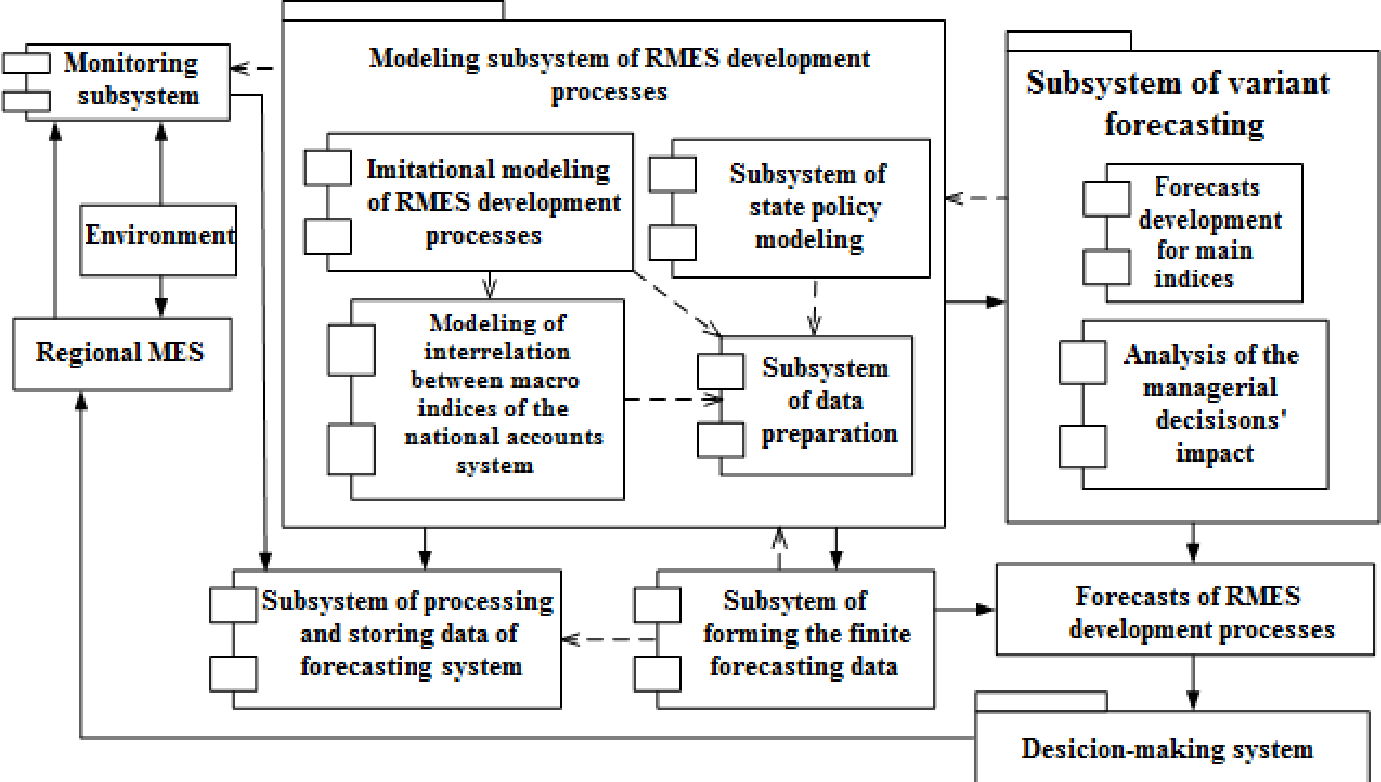
*Figure 1: The structural flow of the RMES forecasting technology, emphasizing the feedback loop between validation and setup.*
The mathematical heart of the system relies on updating states ($Y_l$) based on rates of increase and decrease, where Gross Regional Product (GRP) is modeled via a specialized production function:
$$Y_{8}(t_{k}) = \alpha_{0} K_{w} Y_{1}^{\alpha_{1}}(t_{k}) \cdot Y_{2}^{\alpha_{2}}(t_{k}) \cdot Y_{6}^{\alpha_{3}}(t_{k})$$
## Experimental Results: Tuning the Regional Engine
The researchers applied this to the Kharkiv region using data from 2000–2006 for setup. Initially, the model showed a **15.9% deviation**. However, through an "Ablation-style" sensitivity analysis—altering setup variables by $\pm5\%$ to $\pm50\%$—they identified four critical "levers":
- Nutrition coefficient ($N_{13}, N_{14}$)
- Intellectual capital share in agriculture ($N_{16}$)
- Asset share in agriculture ($N_7$)
By clinical adjustment of these parameters, the model's **Gini coefficient** dropped to a near-perfect **0.011**.
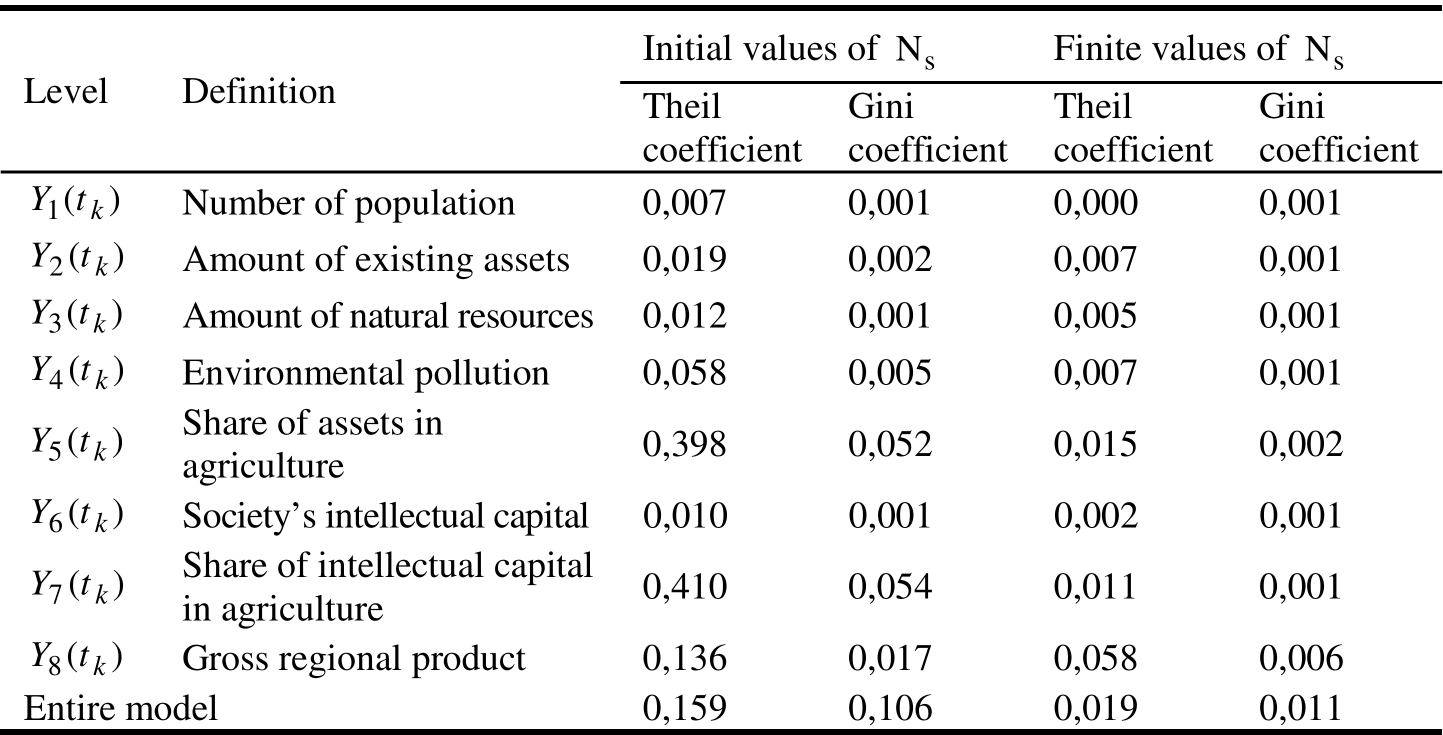
*Table 1: The dramatic shift in model adequacy from initial values to finite adjusted values.*
## Kharkiv 2025: An Auspicious or Alarming Outlook?
The forecast for 2011–2025 suggests a bittersweet reality:
- **Growth**: GRP is expected to grow at 1.5–2% annually.
- **Demographics**: A projected decline to **2.57 million people**.
- **Efficiency Trap**: The GRP growth is largely driven by importing expensive new assets rather than optimizing existing ones, suggesting a need for a radical shift in management efficiency.
## Critical Insight
The value of this work lies in its **Inductive Bias**. By forcing the model to acknowledge intellectual capital as a separate state from physical assets, it provides a much more honest view of a region's "productive power." While the math (finite differences) is classic, the integration into a modern Information Technology environment for local authorities represents a significant step towards "Evidence-Based Policy."
**Future Work**: The authors aim to expand this into a **Scenario-based Forecasting** tool, allowing governors to ask "What if?" regarding specific tax reforms or environmental regulations.