
Beyond the Post Count: Deciphering the Social Fabric of MOOCs via ERGMs
Longitudinal engagement, performance, and social connectivity: a MOOC case study using exponential random graph models
2016-01-01
Summary
Problem
Method
Results
Takeaways
Abstract
This research utilizes Exponential Random Graph Models (ERGMs) to conduct a longitudinal analysis of the relationship between social connectivity, academic performance, and engagement within a MOOC discussion forum. The study examines how weekly forum interactions relate to quiz scores and content engagement across current, previous, and subsequent weeks.
## TL;DR
In the massive scale of MOOCs, does "talking" to others actually correlate with better grades? This study moves beyond simple correlations by using **Exponential Random Graph Models (ERGMs)** to analyze eight weeks of forum data. It finds that while high-performing students are more socially connected in the beginning, the relationship between social activity, lecture engagement, and performance is surprisingly volatile and tends to fade as the weeks go by.
## Background: The Limits of Descriptive SNA
Most Learning Analytics (LA) research treats forum participation as a volume metric: "Student X posted 10 times." While useful, this ignores the **topology** of learning. Social Network Analysis (SNA) can visualize who talks to whom, but standard regression fails because social links are interdependent—if Alice talks to Bob, Bob's connectivity is naturally affected. The authors adopt the ERGM framework to treat the network itself as the dependent variable, allowing them to ask *why* a link forms between two specific learners.
## Methodology: The Generative Approach
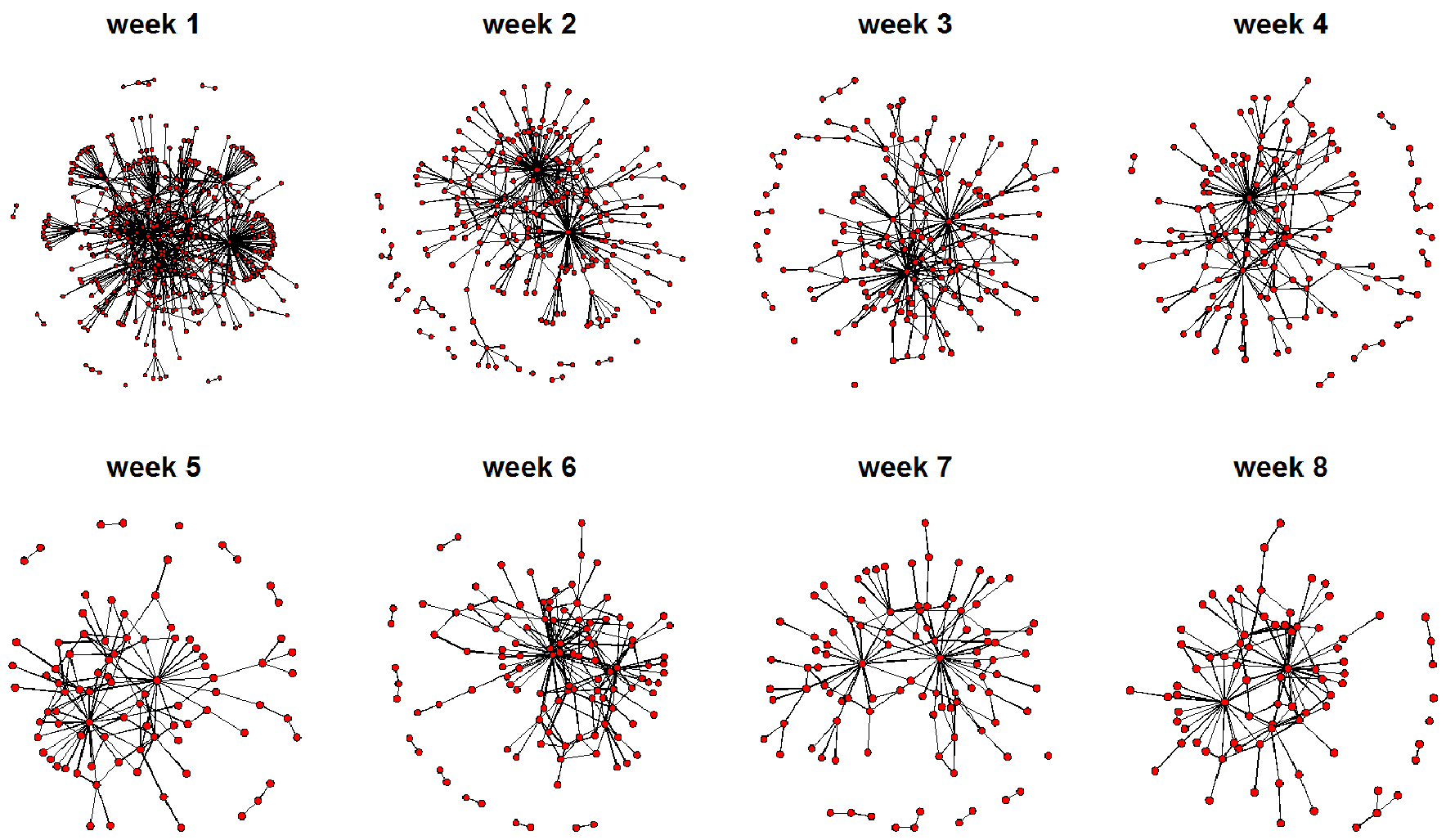
The researchers constructed undirected networks for each of the eight weeks of the "Big Data in Education" MOOC.
* **Nodes**: Individuals (students, TAs, instructors).
* **Edges**: Replies or comments in a forum thread.
* **The Framework**: ERGMs model the probability of a network structure based on:
1. **Structural Features**: e.g., "Density" (how crowded is the network?) and "Alternating k-stars" (is there a 'rich-get-richer' hub effect?).
2. **Nodal Attributes**: Scores (performance), forum views, and lecture downloads (engagement).
## Key Insights: Sparse Networks and The Performance Link
### 1. The Myth of the "Super-Hub"
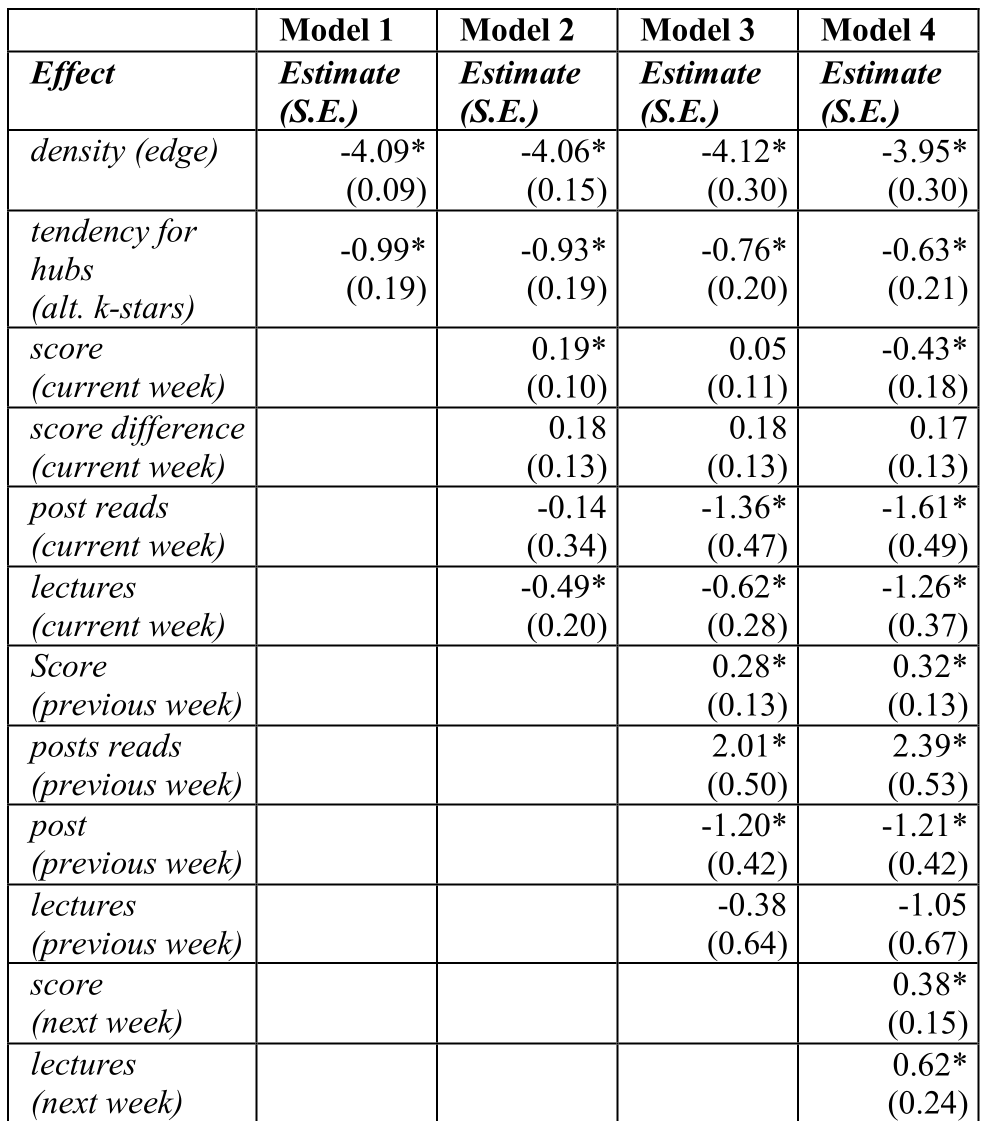
In many social networks, "preferential attachment" occurs—popular nodes get more popular. Interestingly, this study found a **negative value for alternating k-stars**, suggesting that MOOC forum networks are relatively decentralized and sparse. They lack the strong "hub" tendency seen in platforms like Twitter or citation networks.
### 2. The Performance-Connectivity Loop
The researchers investigated time-lagged effects. In Week 2, for instance, they found:
* **Current Performance**: High scorers were more active socially.
* **Past Performance**: Doing well in Week 1 predicted higher connectivity in Week 2.
* **Future Performance**: Being socially active in Week 2 was a positive indicator of assignment success in Week 3.
### 3. The "Expert" Anomaly in Engagement
A puzzling finding was the **negative correlation between current-week lecture views and social connectivity**. The authors suggest an "expert" hypothesis: those who already grasp the material (and thus watch fewer lectures) are the ones spending their time replying to others' questions.
## Results: The "Fading" Effect
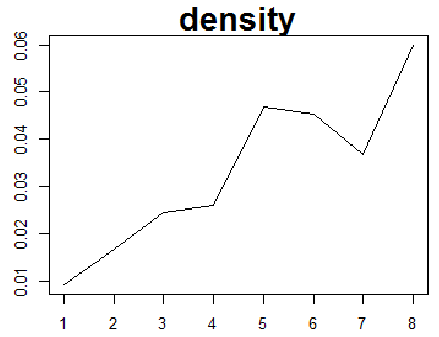
While Week 2 showed robust links between performance and social behavior, the most striking finding was **instability**. As the course progressed, these significant associations often vanished or changed direction. By the end of the course, the social network had shrunk significantly (from 450 nodes in Week 1 to just 80 in Week 8), and the factors driving connectivity in Week 2 no longer governed the behavior in Week 7.
## Critical Analysis & Conclusion
This work highlights that a MOOC is not a static social entity but a **dynamic, evolving system**.
* **Takeaway**: Performance and social connectivity are intertwined, but primarily in the early "forming" stages of the course.
* **Limitations**: The study uses "unweighted" edges (treating one reply the same as ten) and ignores the *content* of the messages. A "Thank you" is treated the same as a deep conceptual explanation.
* **Future Work**: The authors point toward integrating **Natural Language Processing (NLP)** to understand *what* is being said, potentially uncovering why the social-performance link weakens over time.
For educators, this suggests that the "social spark" needs constant reigniting. We cannot assume that the social dynamics established in the first fortnight will sustain learners through to the final exam.