
Low-Cost Telecare: Merging IoT Edge Computing with Social Networking
A low-cost IoT-based health monitoring platform enriched with social networking facilities
The paper introduces a low-cost, IoT-based home health monitoring platform that utilizes a Raspberry Pi 3 as a local "Telecare Gateway." It integrates automated biosignal collection via Bluetooth Low Energy (BLE) with a cloud-based social networking layer for real-time medical consultation and data sharing.
Executive Summary
In the landscape of modern healthcare, the shift toward Telemedicine is no longer a luxury but a necessity for managing chronic diseases and aging populations. This paper presents a holistic, low-cost platform that transforms a Raspberry Pi 3 into a sophisticated Telecare Gateway. By combining local IoT data acquisition with a cloud-based social networking layer, the authors address the critical trifecta of affordability, privacy, and user engagement.
The Core Challenge: Privacy vs. Connectivity
Traditional mHealth solutions often face a "Privacy Paradox." To provide remote monitoring, they usually push sensitive biosignals to a central cloud, exposing patients to potential data breaches. Simultaneously, these systems are often "siloed"—they monitor health but ignore the patient's need for social connection and immediate expert feedback.
The authors identify three primary gaps in current solutions:
- High Cost: Industrial medical gateways are expensive and proprietary.
- Privacy Risks: Centralized storage of sensitive vital signs remains a point of failure.
- Connectivity Silos: Many systems lack integrated real-time communication tools (like video calls).
Methodology: The Hybrid Edge-Cloud Architecture
The proposed system splits the responsibilities between a local Telecare Gateway and a Cloud Communication Platform.
1. The Telecare Gateway (The Edge)
Using a Raspberry Pi 3, this unit acts as the brains at the patient's home.
- IoT Module: Connects to commodity sensors (Blood Pressure, Glucose, etc.) via Bluetooth Low Energy (BLE). It uses an "auto-trigger" mechanism—the moment a patient uses a sensor, the gateway begins acquisition.
- Data Management: Critically, health data is stored locally in a MongoDB instance on the Pi. It follows the HL7 FHIR (Fast Healthcare Interoperability Resources) standard, ensuring that even though data is local, it remains compatible with global healthcare systems.
2. The Cloud-Based Social Platform
The cloud does not store the health data. Instead, it serves as a Signaling Server for:
- WebRTC Communication: Facilitating peer-to-peer (P2P) video calls between patients and doctors.
- Ad-hoc Sharing: When a doctor requests data, the gateway opens a temporary, secure pipe to transmit the specific FHIR records needed for visualization.
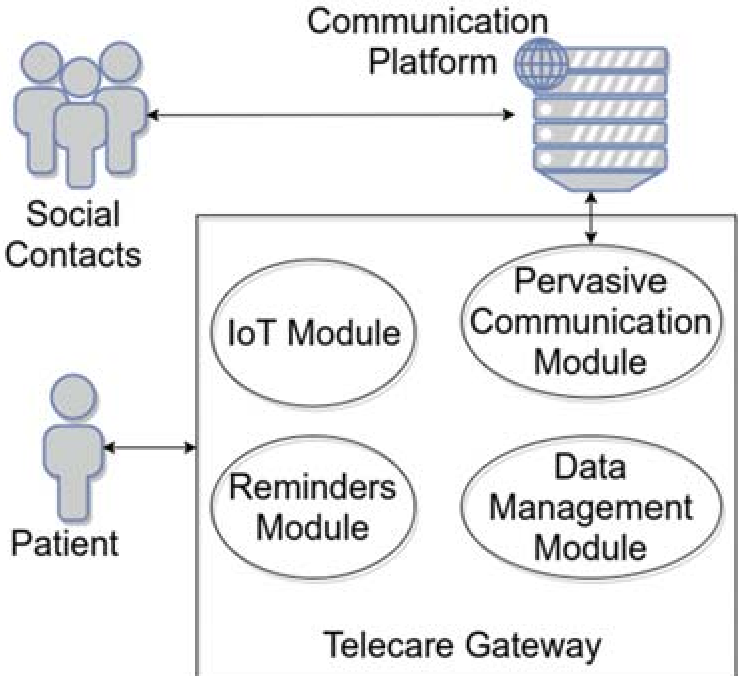 Figure 1: High-level architecture showing the separation between the local gateway and the social cloud.
Detailed Features & Implementation
The software stack is built entirely on modern web technologies—Node.js, Express, and AngularJS—which reduces developmental overhead and ensures portability.
- Interoperability: By using FHIR, the researchers ensured that the platform is "future-proofed" for integration with hospital Electronic Health Records (EHR).
- Security: The platform uses OAuth 2.0 for all API requests and WebSockets for real-time performance updates.
- User Interface: The UI is designed as a Single Page Application (SPA), allowing for smooth transitions between data visualization and video calls.
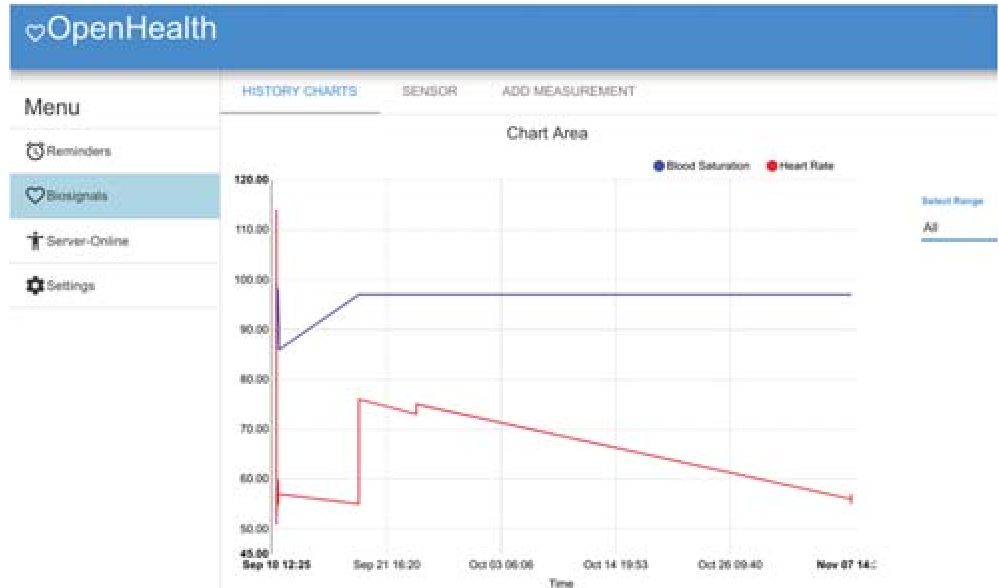 Figure 2: The local UI for real-time biosignal monitoring and historical data analysis.
Critical Analysis & Results
The system demonstrates that low-cost hardware does not mean low-quality care.
- Performance: Shifting data processing to the edge (the Raspberry Pi) drastically increases responsiveness because the system doesn't wait for cloud round-trips for basic visualization.
- Scalability: The event-driven model (using WebSockets and asynchronous interactions) prevents server bottlenecking as more users join the network.
Limitations: While the prototype is robust, its reliance on a Raspberry Pi makes it a "stationary" home solution. In a world of mobile lifestyles, extending this architecture to smartphones while maintaining the local-first storage principle will be the next frontier.
Conclusion and Future Outlook
The paper successfully argues for a socially-enriched telecare model. By moving away from vendor-locked, high-cost equipment and opting for open standards and edge storage, the authors provide a blueprint for affordable, private, and connected healthcare.
Future work is set to include Machine Learning (ML) modules directly on the gateway to provide predictive health alerts, further empowering patients to manage their conditions proactively.
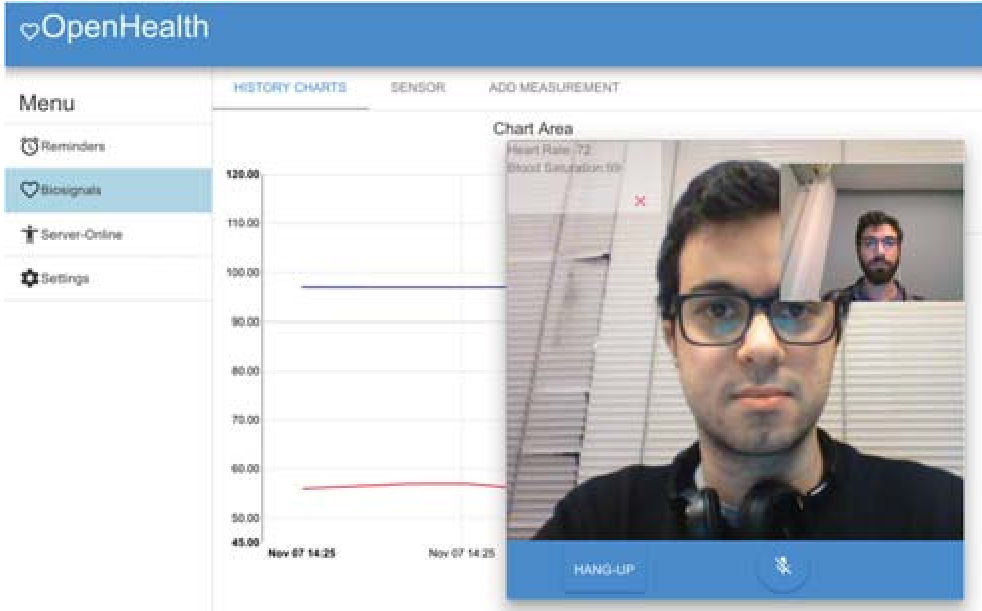 Figure 3: Integrated WebRTC video call interface for remote doctor consultation.