
LSTM-EEG: Decoding Negative Emotions through Temporal Deep Learning
A Long Short Term Memory Deep Learning Network for the Classification of Negative Emotions Using EEG Signals
This paper introduces an LSTM-based deep learning framework for classifying four types of negative emotions (sadness, fear, anger, and surprise) using EEG signals. By leveraging Fast Fourier Transformation (FFT) for feature extraction and a multi-layered LSTM architecture, the model achieves a peak classification accuracy of 92.84% on a custom-generated dataset.
TL;DR
Researchers have developed a sophisticated deep learning framework using Long Short-Term Memory (LSTM) networks to identify negative emotions—Sadness, Fear, Anger, and Surprise—directly from brainwaves. By utilizing a single-channel EEG headset and Fast Fourier Transformation (FFT), the system achieved a stellar 92.84% accuracy, significantly outperforming traditional machine learning methods like SVM and KNN.
Positioning: This work bridges the gap between affordable wearable technology and clinical-grade emotional diagnostics, establishing a robust baseline for real-time mental health monitoring.
The Challenge: Why Brainwaves?
Emotions are the "drivers" of human behavior, but they are notoriously difficult to measure objectively. Traditional methods like questionnaires (Self-Assessment Manikin) are slow and subjective, while physical cues (voice or face) can be easily masked.
The brain, however, does not lie. EEG (Electroencephalogram) signals provide a direct window into the central nervous system. The technical hurdle? EEG signals are non-linear, complex, and represented as long sequences. Standard neural networks often "forget" the beginning of a signal by the time they reach the end—a phenomenon known as the Vanishing Gradient problem.
Methodology: Capturing the Pulse of the Brain
The authors designed a pipeline that transforms raw electrical impulses into actionable emotional insights.
1. Feature Extraction via FFT
Raw signals are messy. The researchers used Fast Fourier Transformation (FFT), specifically Welch’s method, to decompose brainwaves into five critical frequency bands:
- Delta & Theta: Associated with deep relaxation or drowsiness.
- Alpha: Linked to relaxed focus.
- Beta & Gamma: Indicators of high-level cognitive processing and emotional intensity.
2. The LSTM_3 Architecture
To solve the "memory" problem, the team proposed LSTM_3, a deep architecture consisting of:
- Two stacked LSTM layers (64 units each).
- Dropout layers to prevent overfitting.
- Softmax activation for final 4-class classification.
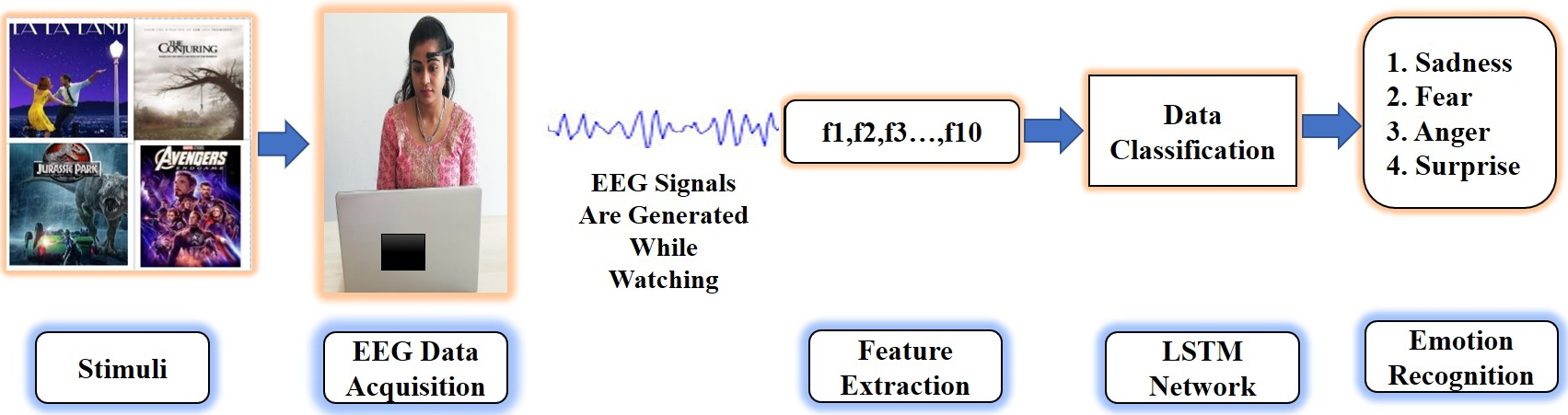 Figure 1: The proposed framework from signal acquisition to emotional classification.
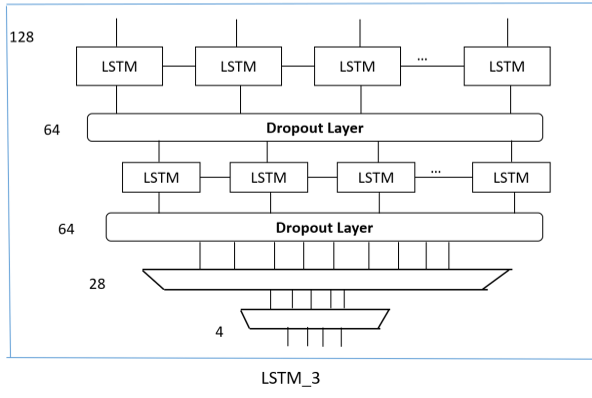 Figure 2: The specific layout of the LSTM_3 model showing the temporal flow.
Experimental Showdown: LSTM vs. The World
The researchers didn't just test their model on their own data; they pitted it against established benchmarks (DEAP and SEED) and traditional algorithms.
Key Findings:
- Supremacy over SOTA: LSTM_3 improved classification performance by 6.3% to 20.4% compared to Deep Belief Networks (DBN) and Support Vector Machines (SVM).
- Generalizability: The model maintained high accuracy (>87%) across different datasets, proving it isn't just "memorizing" one specific group of people.
- Demographic Insights:
- The 26-35 age group showed the most distinct brain signatures for emotional identification.
- Females were found to be more emotionally responsive to "Sad" and "Fear" stimuli, while males showed higher responsiveness to "Anger."
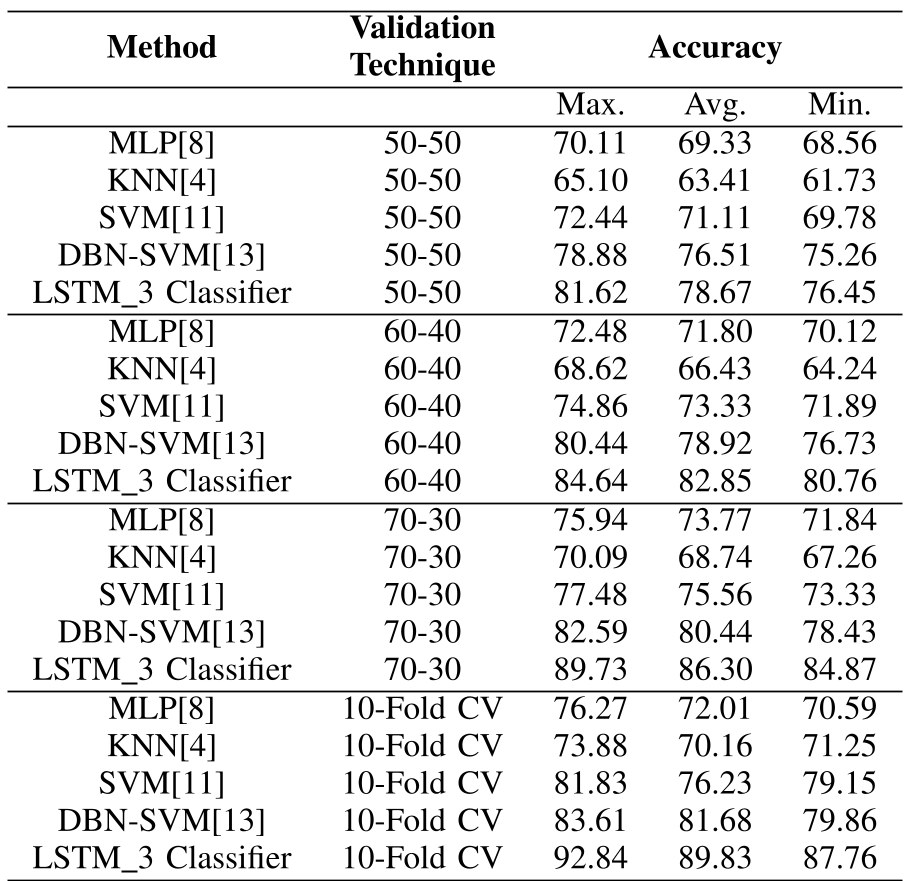 Table 1: Accuracy comparison showing LSTM_3 leading across all validation techniques.
Critical Insight & Future Outlook
The brilliance of this work lies in its simplicity and accessibility. Using a single-channel NeuroSky MindWave 2 headset—a relatively inexpensive consumer device—the authors achieved results comparable to expensive multi-channel medical equipment.
Limitations: While the single-channel approach identifies "what" emotion is felt, it lacks the spatial resolution to identify "where" in the brain the emotion originates. Future work involving multi-channel devices and Feature Engineering could further refine these boundaries.
Final Takeaway: This research moves us closer to a world where your wearable device could detect the onset of stress or depression before you are even consciously aware of it, allowing for immediate therapeutic intervention.