
m-Therapy: Bridging the Clinic-Home Divide with Multi-Sensor IoT and Serious Games
11333_m-Therapy A Multisensor Framework for in-Home Therapy Management A Social Therapy of Things Perspective.
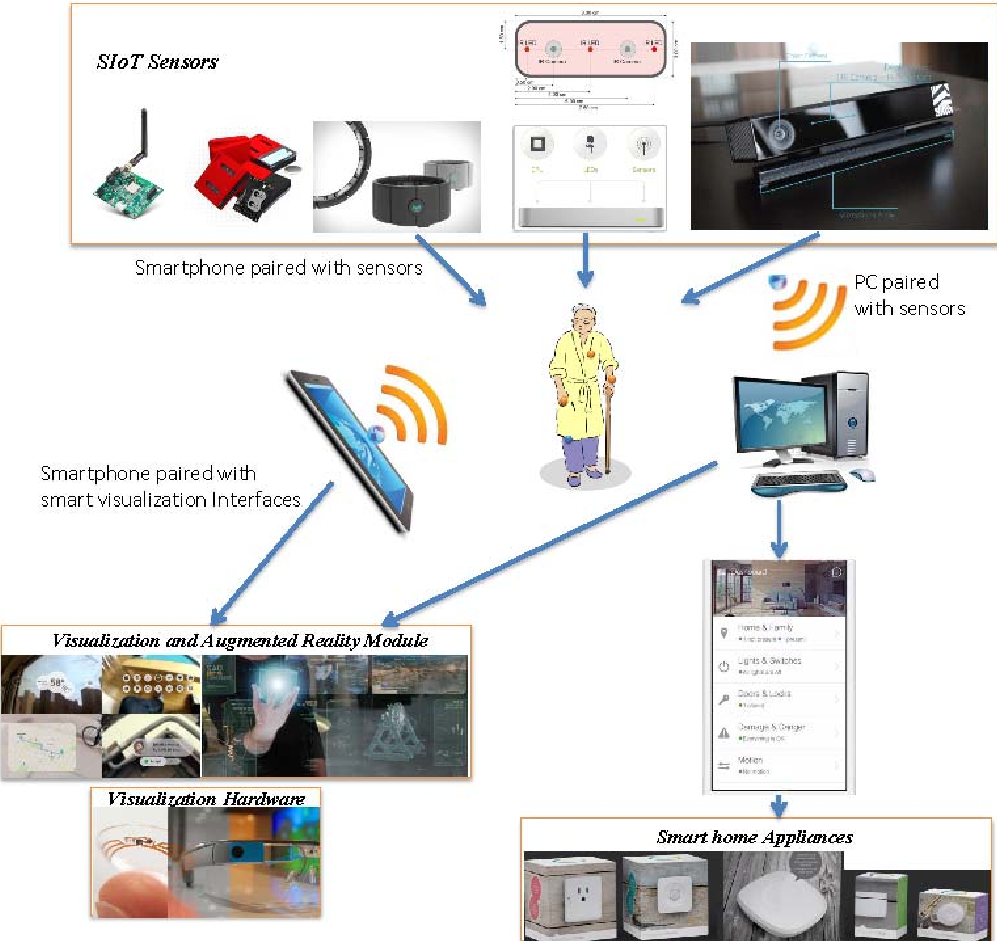
The paper introduces m-Therapy, a multisensor Social Internet of Things (SIoT) framework designed for autonomous in-home physical therapy. It integrates Microsoft Kinect v2, Leap Motion, and Myo armband sensors with ambient environmental sensors to provide full-body 35-joint kinematic tracking and a big data backend for remote clinical analysis.
TL;DR
The m-Therapy framework is a sophisticated Social Internet of Things (SIoT) solution that transforms home environments into professional-grade rehabilitation clinics. By fusing data from Kinect, Leap Motion, and Myo sensors, it tracks 35 body joints and environmental conditions (air quality, light), using gamified "Serious Games" to ensure patient adherence while providing therapists with deep kinematic analytics via a Big Data backbone.
The Motivation: The "Black Box" of In-Home Recovery
Physical therapy is repetitive, long-term, and—crucially—reliant on precision. The current landscape face a dual crisis:
- The Supervision Gap: Once a patient leaves the hospital, therapists have zero visibility into whether exercises are performed correctly.
- The Hardware Paradox: Clinical motion capture systems are too expensive for home use, yet solo consumer sensors (like Leap Motion) only see a fraction of the body.
The authors propose a "Social Therapy of Things" perspective, where the environment itself participates in the therapy, ensuring that the patient isn't just "moving," but moving in an optimal clinical context.
Methodology: Fusing the Skeletal and the Ambient
The heart of m-Therapy lies in its Multiplane Synchronization Architecture. It doesn't just record video; it aligns three distinct layers of data in real-time.
1. Hierarchical Therapy Modeling
The researchers break down complex exercises (like Codman’s Pendulum Exercise) into Primitive Therapies (PT). Each PT is a tuple: Where is the specific joint, is the motion (Flexion/Extension), and is the sensor best suited for that task.
2. Multi-Sensor Fusion
By combining Electromyography (EMG) from the Myo armband, minute finger tracking from Leap Motion, and skeletal tracking from Kinect v2, the system overcomes line-of-sight issues and limited fields of view.
3. Big Data and Cloud Sync
A one-minute session generates up to 300MB of data. The framework uses a Big Data Analytics Engine on Amazon EC2/S3 to handle this throughput, allowing therapists to "play back" the skeletal motion and add multimedia annotations at specific timestamps—essentially a remote, asynchronous house call.
Gamification: Turning Pain into Play
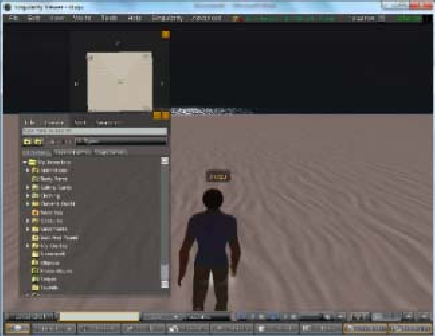
To combat the "boredom" of 100+ repetitions, m-Therapy integrates Serious Games developed in Unity3D. Patients might control a Second Life avatar or perform home appliance control (Occupational Therapy) by reaching specific ROM thresholds.
Clinical Results & Insights
Tested in hospitals across Saudi Arabia and Bangladesh, the system proved it could accurately measure Range of Motion (ROM) for complex joints like the neck, hip, and ankle.
| Therapy Category | Measured Movement | Key Sensor | Target ROM |
|---|---|---|---|
| Neck | Flexion/Extension | Kinect | 0 to +49 / -72 |
| Thumb | Opposition | Leap Motion | 0 to 180 |
| Wrist | Pronation/Supination | Myo | Muscle EMG |
The "Human Error" component is mitigated by the Model-Therapy Design, where the software compares the patient's real-time skeleton against a "virtual therapist" skeleton, providing instant corrective feedback.
Critical Analysis & Future Outlook
The m-Therapy framework is a powerful example of how Inductive Bias—shaping the system around the known physics of human joints—can produce clinical-grade data from consumer-grade hardware.
Limitations:
- Bandwidth: The high data volume (300MB/min) may be a barrier for users with slow upload speeds.
- Hardware Complexity: While "low cost," setting up three different sensors and a PC may still challenge elderly or non-technical patients.
Future Path: The authors suggest moving toward Augmented Reality (AR) and Tele-collaboration, where therapists could virtually "appear" in the patient's living room to adjust their posture in real-time. This marks a shift from IoT as mere "data gathering" to IoT as an "active interventionist."
Note: This article is based on research by Md. Abdur Rahman and M. Shamim Hossain.