
Deciphering the Ransomware Signature: Machine Learning for Bitcoin Family Prediction
13714_The Application of Machine Learning in Bitcoin Ransomware Family Prediction.
This paper presents a machine learning-based approach to predict Bitcoin ransomware families (Montreal, Princeton, and Padua) using the BitcoinHeist dataset. By evaluating multiple classification algorithms, the study achieves a state-of-the-art accuracy of 97.2% on the test set using the Boosting model.
TL;DR
Ransomware attacks like WannaCry have caused billions in damages, often leaving a trail of Bitcoin transactions as the only evidence. This paper tackles the bottleneck of manual forensic analysis by introducing a machine learning framework capable of identifying ransomware families with up to 97.2% accuracy. By analyzing transaction-specific features like "weight" and "looped" counts, the study proves that even in the pseudo-anonymous world of blockchain, criminal groups leave distinct behavioral "fingerprints."
The Bottleneck: Why Human Experts aren't Enough
Historically, identifying which ransomware group was behind an attack required cybersecurity professionals to manually sift through code signatures and ransom notes. However, this approach faces two fatal flaws:
- Subjectivity: Human experts often disagree when faced with rapid variants of the same ransomware.
- Scalability: With hundreds of thousands of victims globally, manual analysis cannot process transaction data at scale.
The author argues that the solution lies not in the code itself, but in the money trail. By analyzing the BitcoinHeist dataset, we can find statistical patterns that distinguish one family from another.
Methodology: From Raw Blockchain Data to Predictions
The author evaluates five distinct models, moving from simple linear classifiers to complex ensemble and neural architectures.
Feature Engineering and Insights
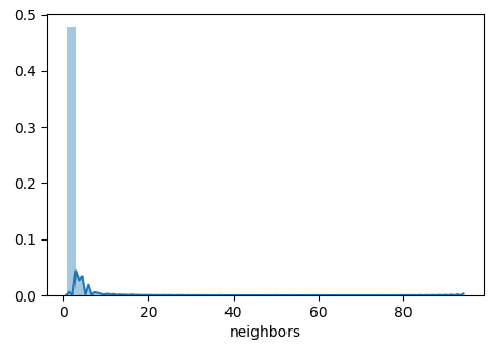
Before modeling, the study conducted a descriptive statistical analysis. A key finding was the Temporal Effect: Ransomware families dominate in specific segments of time. For instance, Montreal was prevalent in 2012-13, while Padua dominated 2014-15.
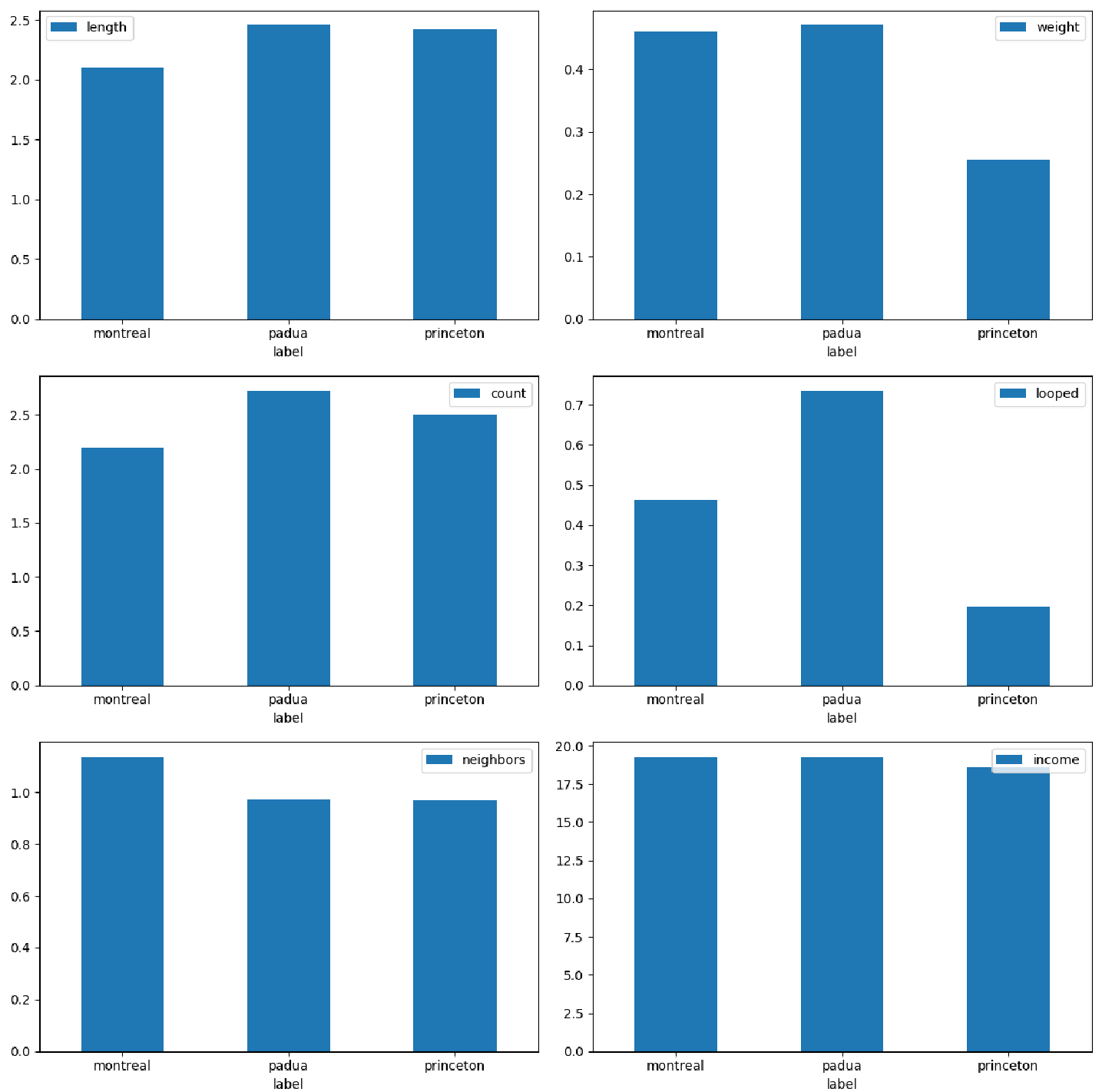
Furthermore, behavioral variables such as weight (transaction influence) and looped (circular transaction paths) showed significant variance across families. For example, the Padua family has an average "looped" value exceeding 0.7, far higher than Princeton (~0.2).
The Model Arsenal
The paper systematically tests:
- Logistic Regression: Serving as the baseline (88.1% accuracy).
- Decision Tree: Capturing non-linear relationships, reaching 96.7% accuracy.
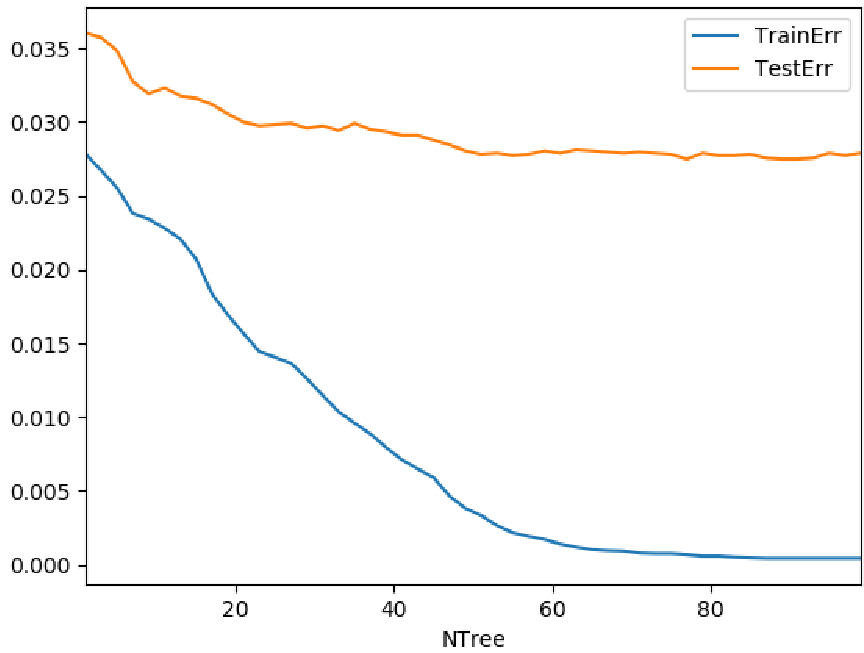
- Random Forest & Boosting: Ensemble methods designed to reduce variance and bias. Bonding multiple "weak learners" (trees) significantly stabilized the predictions.
- Neural Networks: A single-layer perceptron model that yielded high performance (93.9%) but fell slightly short of the Boosting method.
Experimental Results: The Power of Boosting
The experiment concludes that the Boosting model is the superior choice for this task. By iteratively training on errors made by previous iterations, the Boosting model achieved a near-perfect training score and a robust 97.2% test accuracy.
| Model | Training Accuracy | Test Accuracy |
|---|---|---|
| Logistic Regression | 88.2% | 88.1% |
| Decision Tree | 97.4% | 96.7% |
| Boosting | 99.8% | 97.2% |
| Neural Network | 95.2% | 93.9% |
Critical Analysis & Conclusion
Takeaway: This research successfully demonstrates that Bitcoin transaction metadata contains enough inductive bias to identify criminal actors without needing the actual malware source code.
Limitations:
- The "White" Label Problem: The author removed "White" (unlabeled) samples to increase accuracy. In a real-world scenario, the majority of transactions are benign. A more robust model would need to perform "Anomaly Detection" (Finding a needle in a haystack) rather than just "Classification" (Labeling the needle).
- Feature Depth: The study relies on tabular data. Future work could benefit from Graph Neural Networks (GNNs), which treat the entire blockchain as a geometric structure, potentially capturing even deeper relationship patterns than simple 24-hour interval summaries.
Future Outlook: As ransomware-as-a-service (RaaS) becomes more common, automated tools like these will be vital for financial institutions to flag and block extorted funds in real-time.