
Intelligent Taxonomy: Supporting Continuous Ontology Development with ML
Using Machine Learning to Support Continuous Ontology Development
The paper introduces a novel machine learning recommendation algorithm designed for "Continuous Ontology Development." It aims to assist users in social semantic applications (like Wikipedia or Wikis) by automatically suggesting the most appropriate super-concept for newly added terms, using a hybrid similarity measure and Collaborative Filtering.
TL;DR
In the era of "Social Semantics," ontologies are no longer static blueprints—they are living organisms. This paper presents a recommendation engine that helps users place new concepts into an existing hierarchy by analyzing both the name of the concept and the context of its use (associated resources). By leveraging a hybrid similarity measure and Collaborative Filtering, the system suggests potential "parent" concepts with high accuracy.
Context: The Shift to Ontology Maturing
The classic view of ontology development is similar to building a skyscraper: you design it, build it, and then move in. However, in the world of Semantic Wikis and social tagging, ontologies are more like gardens—they grow as they are used. This "Ontology Maturing" model shifts the focus from experts to end-users.
The core challenge? Hierarchical Placement. When a user adds a new tag like "Botnets" to a system, where does it belong? Under "Network Security" or "Malware"? If the system doesn't help, the taxonomy quickly becomes a mess.
Methodology: The SSA Matrix and Hybrid Similarity
The authors' contribution lies in how they quantify the "distance" between concepts to make a recommendation.
1. Super-Sub Affinity (SSA)
The paper defines SSA as a non-symmetric measure of hierarchical distance. If Concept A is the direct parent of B, the SSA is 1. If it's a grandparent, it's 0.5. This creates a matrix that represents the "DNA" of the current hierarchy's structure.
2. Hybrid Similarity
Instead of relying on just the word itself, the algorithm looks at two dimensions:
- String-based (Label similarity): Using Jaccard similarity to see if the names overlap (e.g., "Computer" vs. "Computer Science").
- Context-based (Usage similarity): Using Cosine similarity to see if two concepts are linked to the same resources (e.g., if two categories both frequently tag the same Wikipedia pages).
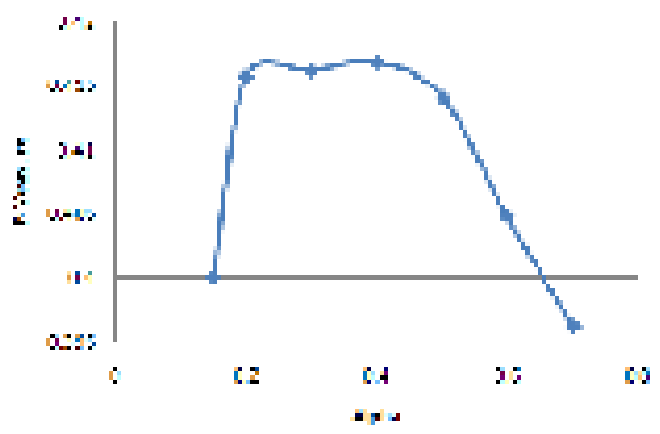
The "Magic Sauce" is the linear combination:
Performance: Validating with Wikipedia
The team tested their approach on three Wikipedia subsets. They simulated "new" concepts by removing existing ones and seeing if the algorithm could put them back in the right spot.
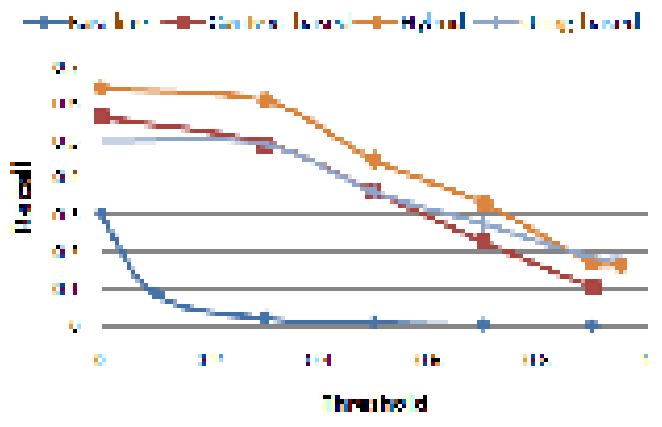
- The Winner: The Hybrid approach consistently beat the baseline (label-only) methods.
- Trade-offs: String similarity provided high precision (very accurate when it found a match) but low recall (missed many relations). Contextual cues were broader, catching relationships that names alone couldn't reveal.
- Key Result: At a threshold of 0.7, the Hybrid method reached the "sweet spot" of precision and coverage, making it viable for real-world UI suggestions.
Deep Insight: Beyond Literal Matching
A fascinating takeaway from the qualitative analysis (Table 1 in the paper) is that the "incorrect" recommendations often weren't actually wrong—they were just different from Wikipedia's current manual structure. For example, for the concept "Botnets," the algorithm suggested "Artificial Intelligence" and "Distributed Computing." While not the primary category in Wikipedia, these showcase a deep contextual understanding of the underlying technology.
Critical Analysis & Conclusion
This work elegantly bridges the gap between Information Retrieval and Knowledge Management. By treating ontology placement as a recommendation problem, it reduces the "knowledge acquisition bottleneck."
Limitations:
- The reliance on "associated resources" means the system struggles with brand-new concepts that haven't been linked to any pages yet (the Cold Start problem).
- It currently focuses on super-concepts; suggesting sibling or disjoint relations remains a future challenge.
Future Outlook: Integrating this with modern Embedding techniques (like Node2Vec or LLM embeddings) could likely push the Precision/Recall even higher, paving the way for self-organizing knowledge bases that require minimal human supervision.