
SVM vs. The World: Mastering Credit Risk Assessment with Smart Dimensionality Reduction
Application of Machine Learning in Credit Risk Assessment: A Prelude to Smart Banking
This paper presents a robust credit risk assessment framework utilizing supervised machine learning to predict loan defaulters. Leveraging a dataset from Lending Club, the authors demonstrate that a tuned Support Vector Machine (SVM) combined with Recursive Feature Elimination with Cross-Validation (RFECV) achieves near-perfect classification performance across multiple metrics.
TL;DR
In the high-stakes world of "Smart Banking," predicting who will default on a loan is the difference between a thriving economy and a financial crisis. This paper proposes a machine learning pipeline that achieves a staggering 99.9% accuracy on the Lending Club dataset. The "secret sauce"? Replacing typical feature extraction with Recursive Feature Elimination (RFECV) and pairing it with a hyper-tuned Support Vector Machine (SVM).
The "Needlestack" Problem in Credit Risk
Modern banking handles massive datasets, but two major technical hurdles often stifle performance:
- Class Imbalance: In any healthy economy, most people pay their loans. This means defaulters (the minority class) are rare, causing standard models to simply "guess" non-defaulter every time to get high accuracy.
- Feature Noise: Financial records contain dozens of variables (income, debt-to-income, history, etc.). Many are redundant. Using too many leads to overfitting; using too few leads to under-performance.
The authors' intuition was to move beyond simple "black box" modeling by focusing on the purity of the feature space and the selection of the right kernel for classification.
Methodology: The Path to 99.9% Precision
The researchers didn't just throw data at an algorithm. They followed a rigorous pipeline designed for stability and generalizability:
- Oversampling (SMOTE): They balanced the dataset by creating synthetic instances of defaulters, ensuring the model "sees" enough failure cases to learn the patterns.
- RFECV vs. PCA: This is the core experiment. While PCA compresses information (feature extraction), RFECV systematically removes the least important features (feature selection).
- GridSearchCV: Instead of using default settings, they used an exhaustive search to find the perfect penalty parameters and kernels for their classifiers.
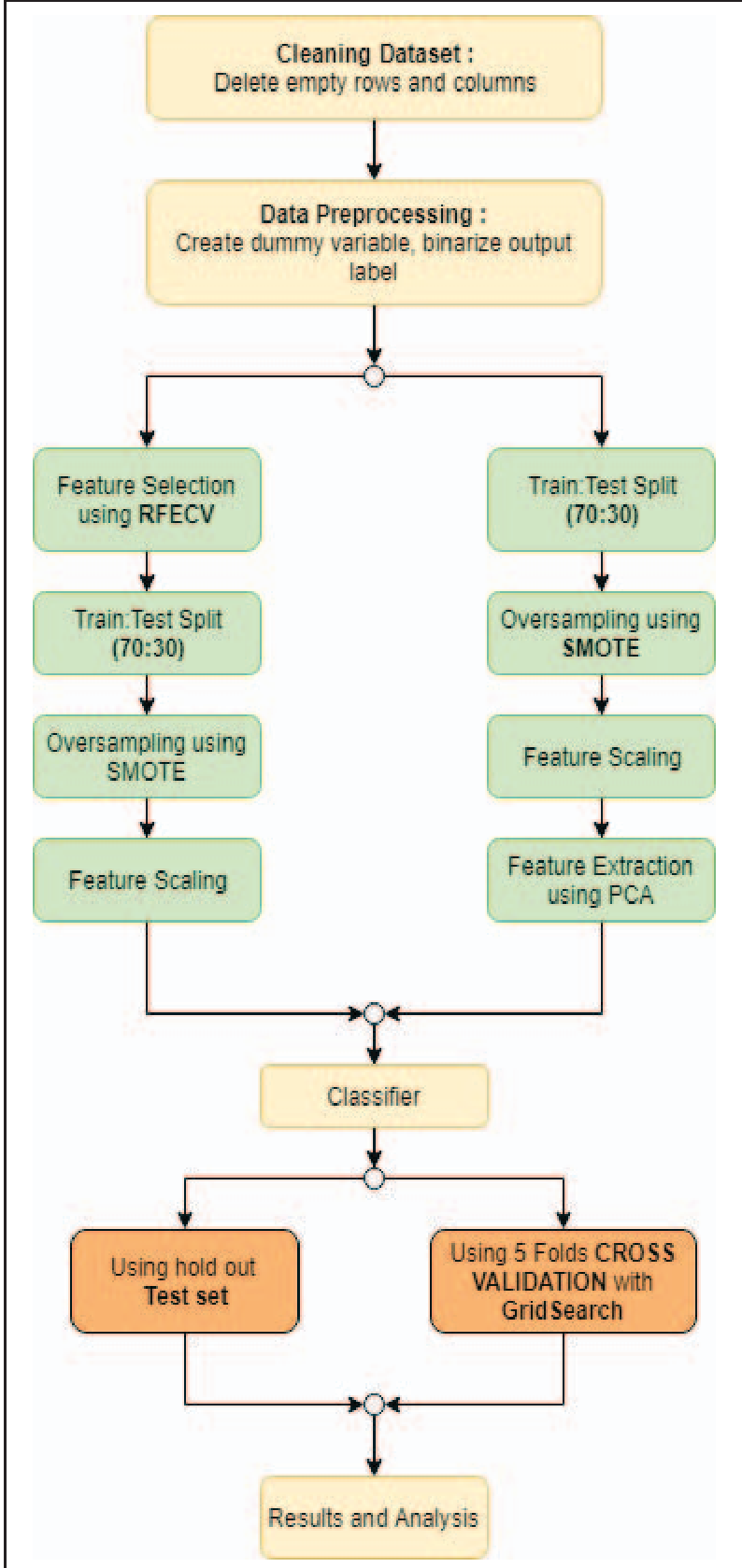 Figure 1: The proposed workflow from dataset preprocessing to final evaluation.
Battle of the Algorithms: Why SVM Won
The study compared four heavyweights: Logistic Regression (LR), Random Forest (RF), XGBoost (XGB), and Support Vector Machine (SVM).
While tree-based models (RF and XGB) were computationally faster, the Tuned SVM achieved the highest performance. SVMs work by finding the optimal "hyperplane" that separates classes in a high-dimensional space. By using the "kernel trick" and optimizing the penalty parameters via GridSearch, the SVM was able to find a cleaner separation between defaulters and non-defaulters than the ensemble methods.
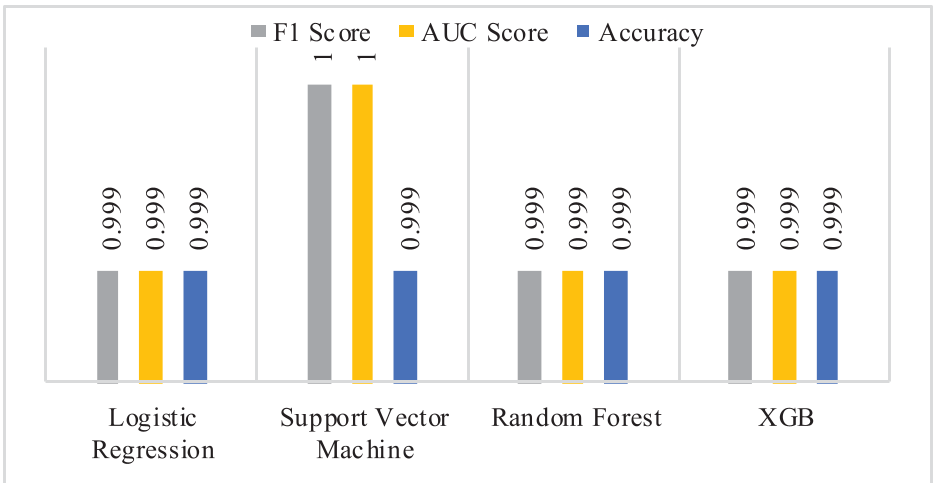 Figure 2: Performance metrics showing the dominance of the RFECV-based pipeline.
Key Experimental Insights:
- RFECV > PCA: Across all algorithms, Recursive Feature Elimination resulted in higher scores than Principal Component Analysis. This suggests that in credit risk, specific individual features (like debt history) are more valuable than mathematical combinations of features.
- Stability: The SVM model showed the lowest variance (0.00012) in 5-fold cross-validation, meaning its performance is extremely consistent and not a result of "lucky" data splits.
Critical Analysis & Looking Ahead
The results are impressive, reaching near-perfect metrics. However, a PhD-level critique must note a few things:
- The "Lending Club" Context: The dataset is historical. In a real-world shift (like a sudden recession), the patterns learned by this model might "drift."
- Interpretability: While SVMs are accurate, banks often require "Explainable AI" (XAI) to tell a customer why they were rejected. Future work could integrate SHAP or LIME values to explain these SVM decisions.
Conclusion
This paper serves as a prelude to Smart Banking, proving that with the right combination of feature selection and hyperparameter tuning, machine learning can almost perfectly anticipate financial risk. For practitioners, the takeaway is clear: don't just reach for the latest Deep Learning model; sometimes, a well-tuned SVM with the right features is all you need.