
Forecasting Economic Growth via Agriculture: A GRU-Based Approach to Hungary's FAO Data
Machine Learning based Prediction of GDP using FAO Agricultural Data Set for Hungary
This paper presents a comparative study of deep learning architectures for predicting Hungary's Gross Production Value (GPV)—a proxy for GDP—using FAO agricultural data. By evaluating Feed-Forward Neural Networks (FFNN), LSTMs, and GRUs, the authors demonstrate that gated recurrent units (GRU) achieve the highest predictive accuracy (85%) in modeling time-series economic indicators.
TL;DR
Predicting national economic trajectories is a high-stakes challenge. This study focuses on Hungary, proving that high-precision modeling of agricultural metrics—specifically wheat production—can predict Gross Production Value (GPV) with an impressive 85% accuracy. By leveraging Gated Recurrent Units (GRU), the researchers bypassed the limitations of traditional statistics to unlock insights from time-series agricultural data.
Problem & Motivation: The Non-Linearity of Growth
Economic indicators are inherently sequential. Traditional models often assume a linear relationship between input (e.g., crop yield) and output (GDP). However, the real world is messy: political stability, climate change, and market fluctuations create non-linear dependencies.
The authors identified that Standard Artificial Neural Networks (ANNs) struggle with "memory"—they treat each year as an isolated event. While Recurrent Neural Networks (RNNs) were designed for sequences, they fall victim to the Vanishing Gradient Problem (GVP), where information from distant years effectively "disappears" during model training.
Methodology: Gating the History
To solve the memory issue, the team turned to gated architectures: LSTM and GRU.
1. Data Consolidation
The study fused four critical variables from FAO (Food and Agriculture Organization) records:
- Area (Hectares): Land used for wheat.
- Quantity (Tonnes): Total output.
- Yield (hg/ha): Efficiency of production.
- GPV (USD): The target economic response variable.
2. Why GRU?
The core insight was the transition from FFNN to GRU. While the LSTM uses three gates (input, forget, output), the GRU simplifies this into two gates (reset and update). This reduces computational complexity without sacrificing the ability to retain long-term dependencies.
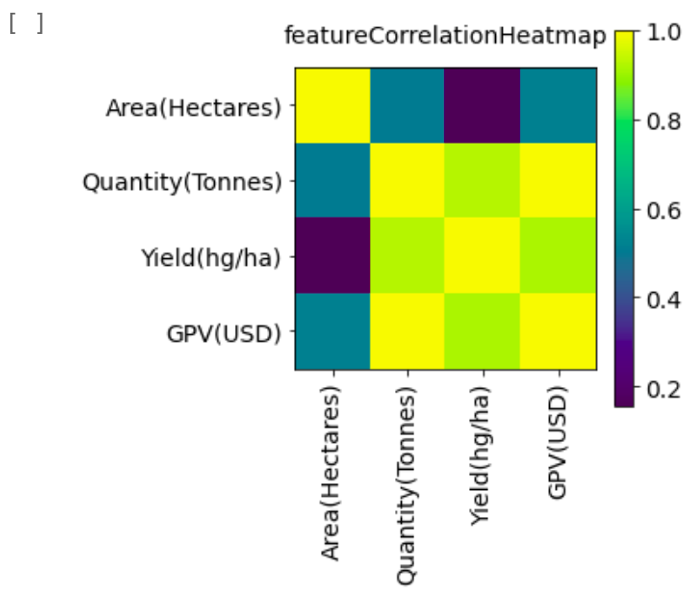 Figure 1: Feature Heatmap showing the strong correlation between land area, quantity, and economic value.
Experiments & Results: The Superiority of Recurrence
The authors trained the models over 150 epochs. The results were definitive:
- Feed-Forward Networks (FFNN) failed to capture the temporal trend, yielding high error rates.
- LSTMs performed well but showed some instability/fluctuations during training.
- GRUs reached a state of minimal loss before the 100th epoch, providing the most stable and accurate predictions.
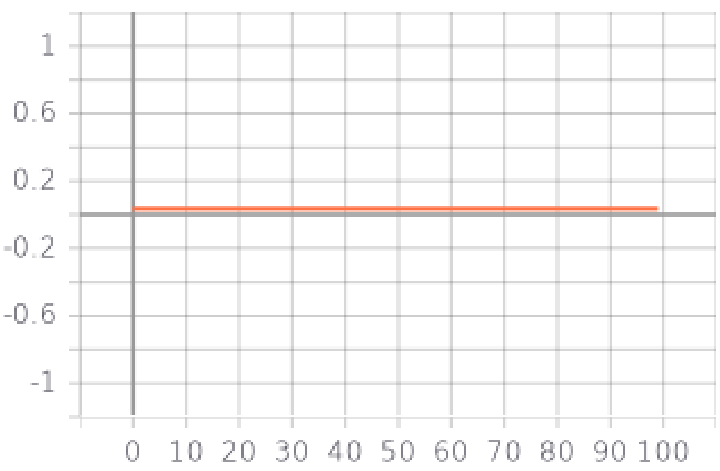 Figure 2: Training loss comparison. Notice the rapid decline in GRU/LSTM error compared to the baseline.
The model achieved an 85% accuracy rate, validating that the "long-short memory" mechanism is essential for economic forecasting where past performance heavily dictates future potential.
Critical Analysis & Conclusion
The Takeaway
For any nation where agriculture is a pillar of the economy, GPV is a critical surrogate for GDP. This paper proves that we don't need hundreds of parameters to get a reliable estimate; high-quality agricultural data paired with gated recurrent architectures is sufficient for high-level planning.
Limitations & Future Work
The study is currently limited to wheat data. While wheat is a primary crop for Hungary, a truly robust economic model would require a multi-crop ensemble (corn, sunflower, etc.) and the inclusion of external shocks like the COVID-19 impact mentioned in the literature review.
In the future, the authors aim to move from "modeling" to "real-life prediction," potentially integrating real-time weather data and global commodity price fluctuations into the GRU framework.