
T-BMSVM: Redefining Lung Cancer Staging via Big Data Healthcare Frameworks
Classification of lung cancer stages with machine learning over big data healthcare framework
The paper introduces a big data healthcare framework for lung cancer stage classification using Apache Spark and specialized Support Vector Machine (SVM) variants. It proposes T-BSVM (Threshold-Binary SVM) for initial malignancy detection and WTA-SVM (Winner-Takes-All Multi-class SVM) to categorize cancer stages and severity, ultimately achieving a classification accuracy of 86%.
TL;DR
This research tackles the computational bottleneck of early lung cancer diagnosis by merging Apache Spark's distributed architecture with a novel Threshold-based Multi-class Support Vector Machine (T-BMSVM). By processing sputum cell images through a Map-Reduce pipeline, the system achieves 86% accuracy in classifying both malignancy and specific cancer stages, outperforming traditional rule-based and individual classifier models.
Background & Motivation: Beyond Binary Diagnosis
In the landscape of oncology, the difference between "benign" and "malignant" is only the first step. For effective treatment, clinicians need to pinpoint the stage of progression. However, processing large-scale, unstructured medical imagery (like sputum cell scans) is computationally expensive.
The authors identify a critical gap: existing methods like Artificial Neural Networks (ANN) or standard SVMs often suffer from poor scalability and high misclassification rates when forced to move from binary classification to complex multi-stage diagnosis. Their insight was to combine Big Data engineering (Spark) with Structural Risk Minimization (SVM) to handle high-dimensional feature spaces more gracefully.
Methodology: The T-BMSVM Framework
The architecture is divided into a specialized pipeline designed for high-throughput medical analytics.
1. Hybrid Map-Reduce Pipeline
Before classification, raw images undergo feature extraction (area, perimeter, NC ratio, circularity). The authors use a Map-Reduce framework implemented via MATLAB and PySpark to ensure that as the dataset grows "in leaps and bounds," the system remains stable.
2. T-BMSVM Architecture
The core of the classification engine uses a two-tier approach:
- T-BSVM with RBF: A non-linear SVM using the Radial Basis Function kernel to handle complex, non-linearly separable data.
- WTA-SVM (Winner-Takes-All): A multi-class strategy where labels are determined by weights. The label is assigned via the
argmaxof the decision values, effectively mapping the input to a higher-dimensional hyperplane.
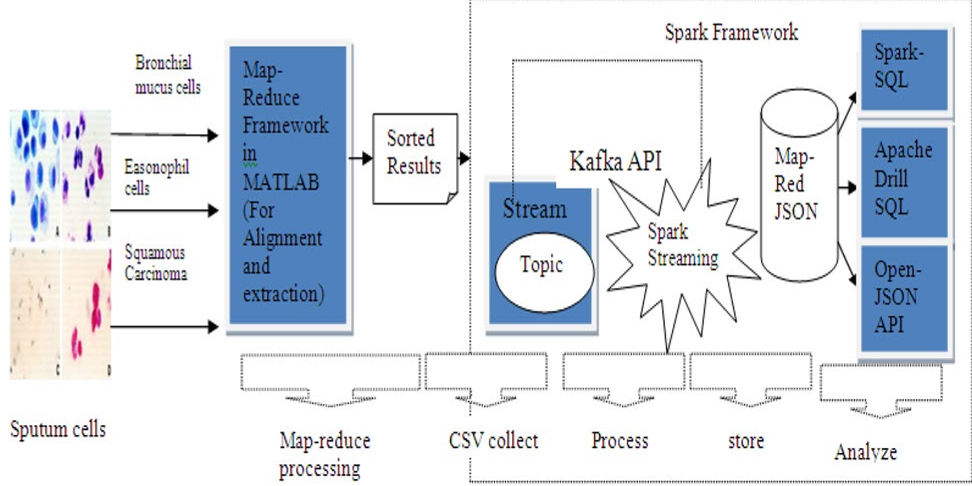 Figure 1: The proposed Spark-based architecture for high-dimensional medical data processing.
3. The Slack Variable & Thresholding
To handle imbalanced datasets, the authors introduce a slack variable () and a regularization parameter (). By setting a specific threshold () for features like the NC ratio (0.35) and Circularity (1.5), the model filters noise and focuses on the most discriminative biological markers of malignancy.
Experimental Insights & Results
The model was validated using sputum color images. Key performance indicators prove the superiority of the distributed SVM approach:
- Accuracy: 86.2% across multiple features.
- Generalization: An AUC of 0.88, indicating strong diagnostic reliability.
- Scalability: Unlike traditional models that slow down exponentially, the T-BMSVM showed superior convergence speeds during training across 500+ processed images.
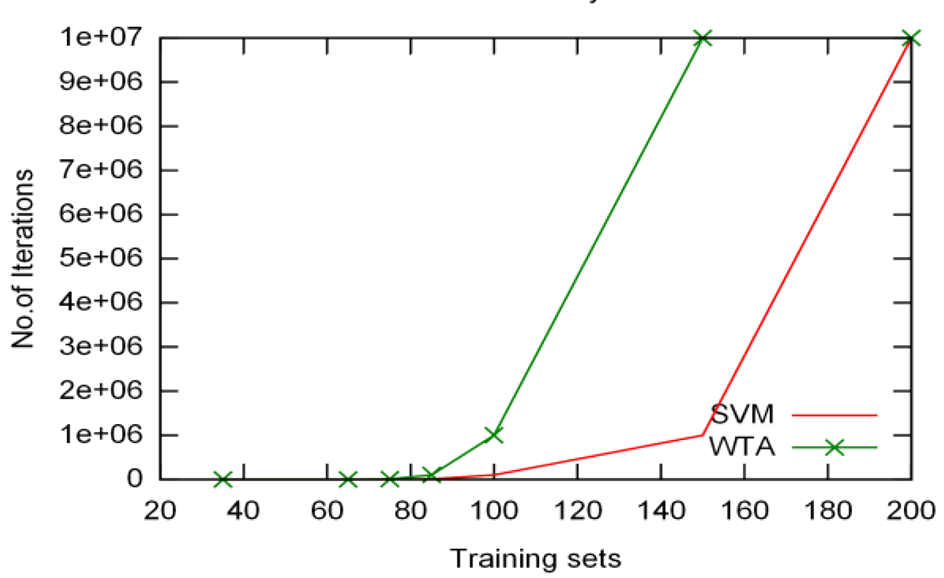 Figure 2: Reduced misclassification rates and cross-validation scores for the proposed model.
The ablation-style comparison shows that the WTA-SVM strategy significantly reduces the misclassification rate compared to individual classifiers or standard binary SVMs.
Critical Analysis: A Promising Tool for Digital Pathology
The significance of this work lies in its Infrastructure-Algorithm Co-design. Most medical ML papers focus solely on the algorithm; here, the use of Apache Spark and Kafka ensures that the method is "production-ready" for hospitals dealing with gigabytes of daily scan data.
Limitations & Future Work
While the accuracy is impressive for SVM-based methods, the 86% ceiling suggests room for improvement—likely through the integration of Deep Learning (CNNs/Transformers) within the Spark framework. The authors suggest that future iterations will focus on even larger datasets and potentially real-time streaming diagnostics.
Conclusion
By leveraging the "best of both worlds"—the robust theoretical foundation of SVMs and the massive throughput of Apache Spark—this research provides a viable roadmap for the next generation of automated cancer staging tools.