
Intelligent Cloud Operations: Leveraging LSTM and BIRCH for Precision Job Analytics
Machine Learning Based Prediction and Classification of Computational Jobs in Cloud Computing Centers
This paper introduces an integrated machine learning framework for predicting and classifying computational jobs in cloud data centers. Utilizing LSTM neural networks for time-series forecasting and the BIRCH hierarchical clustering algorithm for unsupervised job categorization, the study achieves state-of-the-art performance on the Google Cluster dataset.
TL;DR
Researchers from Tsinghua University have developed a dual-pronged approach to cloud resource management. By using LSTM Neural Networks to predict job arrivals and BIRCH Clustering to categorize jobs before they even run, they achieved up to 68% better accuracy in resource prediction compared to traditional statistical methods. This work turns raw Google Cluster traces into actionable insights for proactive data center scheduling.
Problem & Motivation: The Chaos of Concurrency
In the era of cloud-native applications, data centers are no longer just "servers in a room"; they are massive, dynamic organisms. The core challenge lies in volatility. Job arrivals are non-linear and non-stationary, often characterized by sudden "spikes" that crash traditional Auto-Regression (AR) models.
Existing solutions often look at jobs in isolation or rely on post-execution data. The authors identified a critical gap: predicting the future (Time-series) and understanding the nature of the work (Classification) must happen prior to execution to allow the scheduler to allocate resources like CPU, RAM, and Disk capacity efficiently without over-provisioning.
Methodology: Prediction meets Hierarchy
The paper attacks the problem from two technical angles:
1. Robust Time-Series Forecasting with LSTM
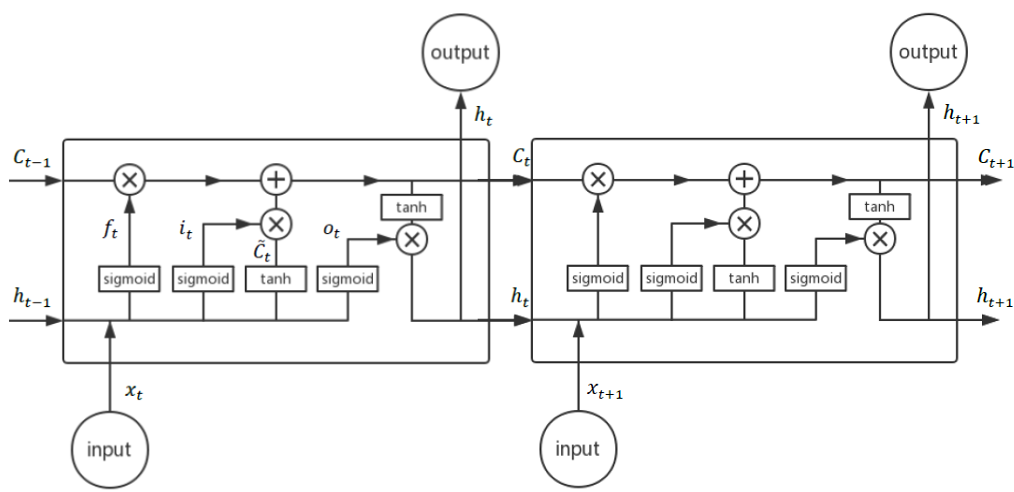
Traditional fractal models struggle with the "memory" of long-term patterns. The authors designed two LSTM variants:
- Arrival Interval Model: A 2-layer LSTM that captures the temporal spacing between incoming jobs.
- Resource Request Model: A hybrid architecture that uses a Convolutional Layer on top of the LSTM to fuse the spatial relationships between CPU, RAM, and Disk requests within a 5-minute time slot.
2. Ahead-of-Execution Clustering (BIRCH)
Instead of K-Means (which requires pre-defining the number of clusters and struggles with massive datasets), the authors used BIRCH (Balanced Iterative Reducing and Clustering using Hierarchies).
- Key Insight: By using only features known at the time of submission (parallelism degree and requested limits), they can classify a job's "DNA" before it starts.
- The CF Tree: BIRCH builds a Cluster Feature tree that is highly memory-efficient, making it ideal for the millions of entries in the Google dataset.
Experiments & Results: Crushing the Baselines
The evaluation on the Google ClusterData2011 dataset provides clear evidence of the superiority of deep learning over classical statistics.
Performance Gains
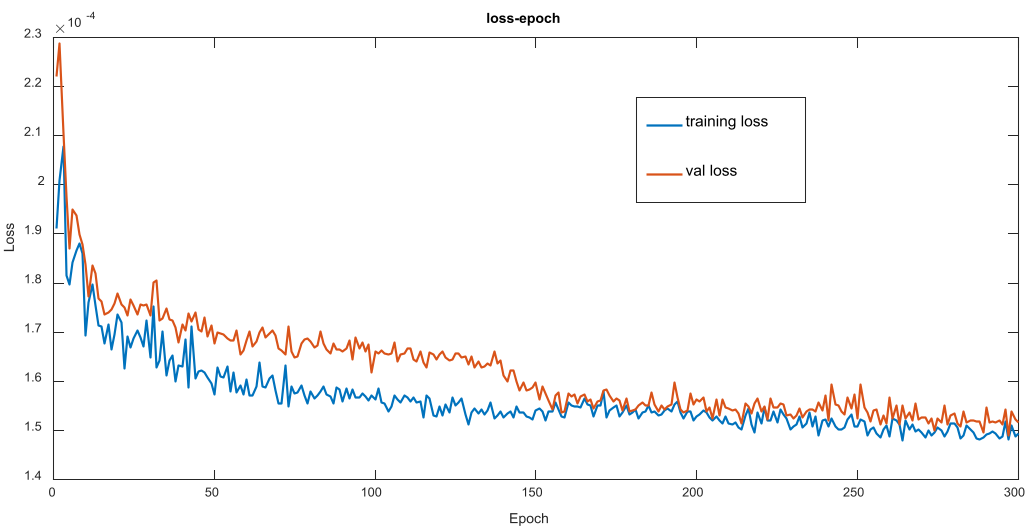
- Accuracy: The LSTM model showed a massive 68.7% and 68.5% improvement in CPU and RAM prediction accuracy over AR methods.
- Spike Handling: Unlike previous models, the LSTM successfully tracked the "peak" values of resource requests, which is crucial for preventing system outages.
Interpretability of Clusters
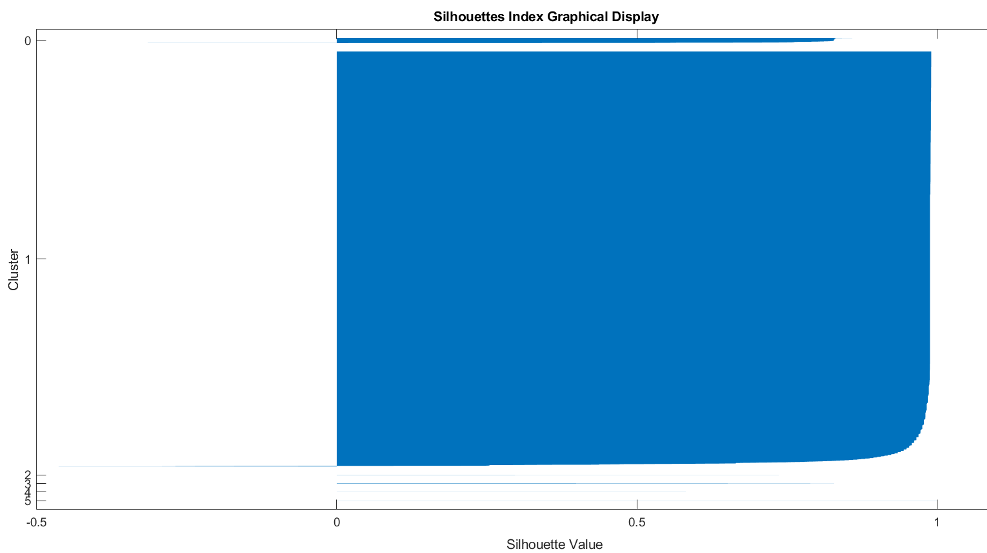
The clustering identified 5 distinct types of jobs (from "Compute Intensive" with large CPU needs to "Lightweight" tasks). Most importantly, the authors verified that these "ahead-of-execution" clusters actually matched the subtasks' real-world behavior during execution.
| Job Cluster | Key Features | Scheduling Implication |
|---|---|---|
| Cluster 2 | Massive CPU/RAM/Disk | Needs high-priority, powerful nodes |
| Cluster 1 | Minimal footprint | Ideal for "packing" into underutilized nodes |
Critical Analysis & Conclusion
Takeaway
This paper demonstrates that the "black box" of cloud workloads is actually quite predictable if you use the right tools. LSTM provides the "when" (arrival timing), and BIRCH provides the "what" (resource profile).
Limitations
While the LSTM performed excellently, the paper notes a slight (3.3%) decrease in performance on certain CPU prediction tasks compared to the fractal model. This suggests that while LSTMs are great for general trends, there may still be room for hybrid models that combine fractal theory with deep learning for ultra-fine-grained CPU forecasting.
Future Outlook
The next step for this research is moving from analytics to action. Can we feed these LSTM predictions directly into a Reinforcement Learning (RL) agent to automate data center load balancing in real-time? Given the high precision reported here, the answer seems to be a resounding yes.