
Beyond the Apology: The Emotional Architecture of Online Service Recovery
Management Responses on Third-Party Review Websites: A Focus on Emotions and Service Recovery
This study investigates hotel management responses to TripAdvisor reviews, focusing on the intersection of emotional regulation and service recovery strategies. By analyzing 443 reviews and responses through quantitative content analysis and Justice Theory, the researchers identify critical gaps in how service providers emotionally engage with complaining guests to prevent brand damage.
TL;DR
Responding to a negative TripAdvisor review is more than just saying "sorry." Research by Dickinger and Lalicic reveals a startling gap in the hospitality industry: while managers generally try to stay positive, they frequently vent their own frustration, anger, or disgust when addressing service failures. This lack of emotional regulation can lead to a "double deviation," where the response itself becomes a second, more damaging failure.
Background: The High Stakes of Webcare
In the digital age, a hotel room is no longer just a physical space; it is a lived experience broadcasted to millions. When service fails, the "service encounter" shifts from the hotel lobby to the public square of third-party review sites. The authors position this work as a critical intervention in Webcare Management, arguing that the emotional tone of a manager's response is just as vital as the refund or the room upgrade offered.
The Problem: The Emotional Vacuum in Service Recovery
Most managers view service recovery through a functional lens: A was broken, we fixed it with B. However, the study points out that prior work often ignores the Interactional Justice—the empathy, politeness, and sensitivity required to restore the customer’s dignity.
The core insight is that managers are human; they often mirror the negativity of the reviewer. If a guest is angry, the manager might defensively respond with subtle (or overt) irritation, effectively failing the customer twice.
Methodology: Mapping Emotions and Justice
The researchers combined two robust frameworks to analyze 443 TripAdvisor interactions:
- The Emotional Dictionary: Using WordStat, they tracked terms associated with Joy, Fear, Sadness, Disgust, Anger, and Surprise.
- Justice Theory: They coded responses based on three dimensions:
- Procedural Justice: Was there an explanation? Was effort made?
- Distributive Justice: Was a solution or compensation offered?
- Interactional Justice: Was the response helpful? Did it show genuine concern?
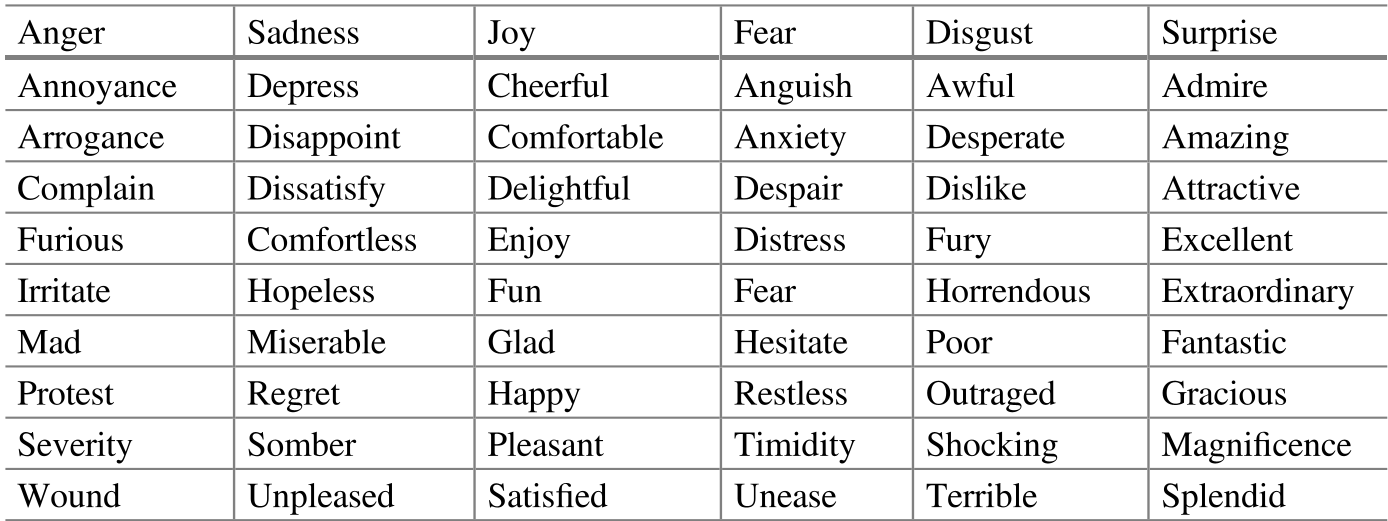 The dictionary approach allows for a quantitative snapshot of the underlying sentiment in professional responses.
Key Results: The 5-Star Paradox
The study produced several counter-intuitive findings:
- The Negativity Trap: Managers use terms related to Sadness (regret, disappointment) significantly more in responses (6.8%) than guests do in reviews (4.2%), which is an appropriate "coping" mechanism. However, the presence of Anger and Disgust in management responses highlights a failure in professional regulation.
- The Luxury Fail: One might assume 5-star hotels have better-trained staff. Paradoxically, the data showed that Anger was more prevalent in 5-star hotel responses (6.9%) than in 1-star hotels (2.6%). This suggests that luxury brands may react more defensively to reputation threats.
- Justice Distribution: While 80.4% of answers were deemed "helpful" (Interactional Justice), only 6.8% offered actual compensation (Distributive Justice). Most hotels rely on words rather than tangible "redress."
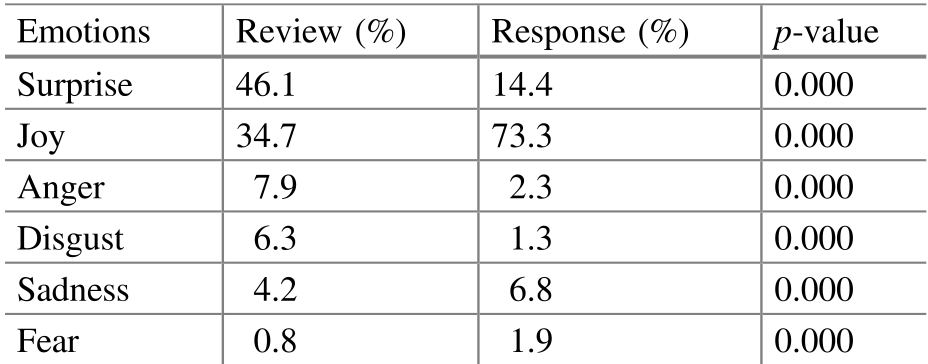 Note the stark contrast: Managers are 73.3% 'Joyful' compared to 34.7% for guests, yet they frequently miss the mark during actual conflict resolution.
Critical Insight: The Double Deviation Effect
When a customer complains, they are in a state of loss. If the manager’s response lacks Interactional Justice—or worse, shows Anger—the customer experiences a second loss of status. This "Double Deviation" is the primary driver of negative online images.
The study suggests that managers must be trained not just in "how to use TripAdvisor," but in emotional intelligence. They must learn to recognize their own defensive triggers to avoid responding to fire with fire.
Conclusions & Future Outlook
The hospitality industry is currently "functionally proficient but emotionally deficient."
Strategic Recommendations:
- Emotional Regulation Training: Staff should be trained in "affective delivery," viewing the response as a performance of empathy.
- Integrate CRM with Webcare: Responses should not be isolated events but part of a broader customer relationship strategy.
- Algorithmic Assistance: Future studies (and tools) should move toward AI-driven sentiment detection that flags high-risk, "angry" drafts before a manager hits "publish."
In summary, a successful service recovery on social media requires a delicate balance of admitted sadness (empathy) and structural solutions (justice). Anything less isn't just a missed opportunity—it's a liability.