
Beyond Individual Newcomers: Why Most Online Community Mergers Fail (and How One Succeeded)
Managing Organizational Culture in Online Group Mergers
This paper presents a six-month comparative ethnography of online group mergers within World of Warcraft (WoW) raid guilds. Using organizational culture theory, it identifies why one merger thrived (Sun Bros) while another collapsed (Divinity), ultimately proposing strategies for collective newcomer socialization.
TL;DR
When online groups merge, they don't just bring people; they bring baggage—specifically, organizational culture. This paper explores two World of Warcraft guilds: one that "won" the merger by aligning values and one that "imploded" due to a clash of leadership styles. The secret isn't better players; it's better cultural management.
The "Invisible" Barrier: Why Mergers are Contentious
In social computing, we usually think of community growth as a one-by-one process. But in the real world (and the virtual one), groups often join in batches. These groups have their own "common sense"—shared assumptions about how to lead, how to talk, and how to win.
The authors argue that a merger unsettles culture. It turns "the way we do things" into a site of conflict. Without active management, this "culture shock" leads to what we see in many failed startups: attrition, resentment, and total collapse.
Methodology: A Tale of Two Guilds
The researchers spent six months following two specific merger cases in the high-stakes environment of "Progression Raiding" in World of Warcraft.
1. The Successful Case: Sun Bros (Salty Dogs + Fragment)
These groups shared a Democratic culture. They voted on where to go, played other games together, and intentionally chose each other because their "vibes" (cultural artifacts and assumptions) matched.
2. The Failed Case: Divinity (Divinity + Mirage)
This was a "Barracks" vs. "Community" clash. Divinity’s leaders treated the guild like a top-down business ("I’m the coach, follow orders"). The newcomers from Mirage came from a background of democratic friendship. The result? Public shouting matches, insubordination, and the guild disbanding in weeks.
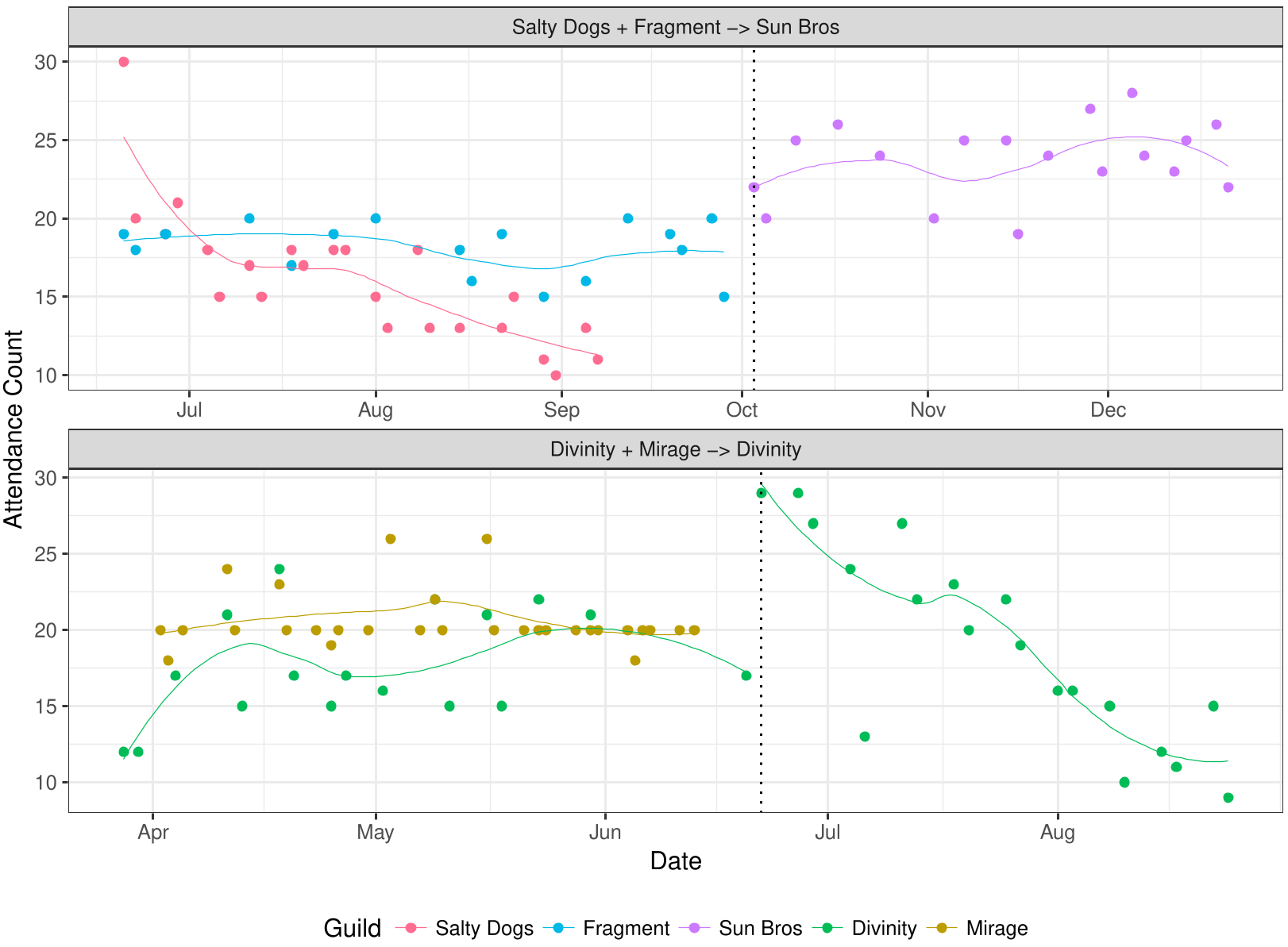 Note: The bottom graph shows the rapid collapse of Divinity+M compared to the stable growth of Sun BrosSD+F in the top graph.
The "Toolkit" for a Successful Merger
The paper identifies three core mechanisms that the successful "Sun Bros" used to navigate the transition from an unsettled to a settled culture:
- Strategic Selection: They didn't just merge with the "best" players. They "trialed" three different guilds and picked the one where the attitude matched. One guild was rejected for being too "crude," even if they were skilled.
- Intentional Socialization: They co-created a new identity. They even spent real-world money to rename the guild to a neutral, new name (Sun Bros) rather than forcing one group to adopt the other's name.
- The "Third Place" Strategy: This is the most crucial insight. Progression raiding is "work." Sun Bros created "Normal Raid Nights"—low-stakes, fun-oriented events where hierarchy was blurred. This built the social "glue" needed to survive the frustration of failing at hard bosses later.
Critical Insight: The "Work-Play" Paradox
In high-performance online groups, play becomes work. You have schedules, performance metrics (DPS logs), and bosses (Guild Masters).
The failure of the Divinity merger happened because the leaders refused to create "Third Places." They saw extra social time as "burnout" risk. Ironically, by treating the group purely as a workforce, they ensured people had no reason to stay when the "work" got difficult.
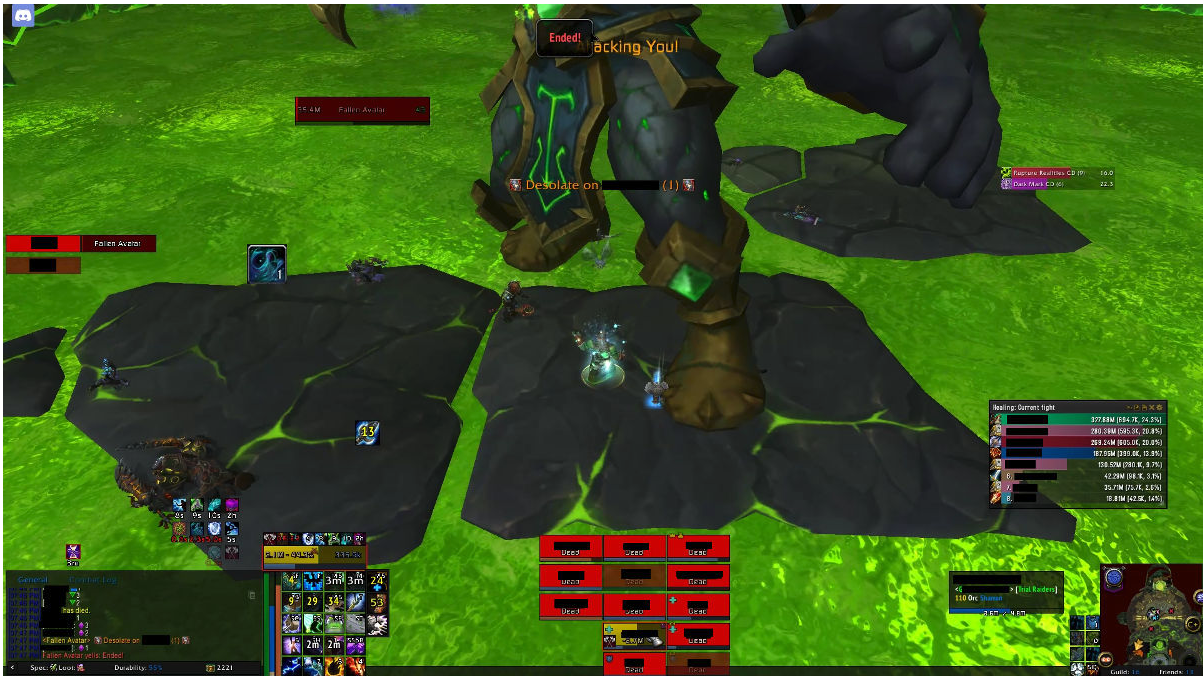 Failure (a 'wipe') is inevitable. Organizational culture determines if the team tries again or quits.
Conclusion & Future Outlook
This study moves the needle from "individual onboarding" to "collective integration." Whether you are managing a Discord server, an open-source project, or a corporate M&A, the lesson is clear:
- Don't ignore the "unsettled" phase. Conflict is guaranteed; management is optional but necessary for survival.
- Culture is a toolkit. If the tools don't match (Top-down vs. Democratic), the project will break.
- Invest in "Third Places". Social bonds are the only thing that prevents attrition when the task-oriented goals (the "work") hit a wall.
Limitations: The study is limited to the WoW ecosystem and a 6-month window. Future research should look at how these dynamics play out in decentralized autonomous organizations (DAOs) or professional remote workspaces where "organizational culture" is even harder to cultivate.